

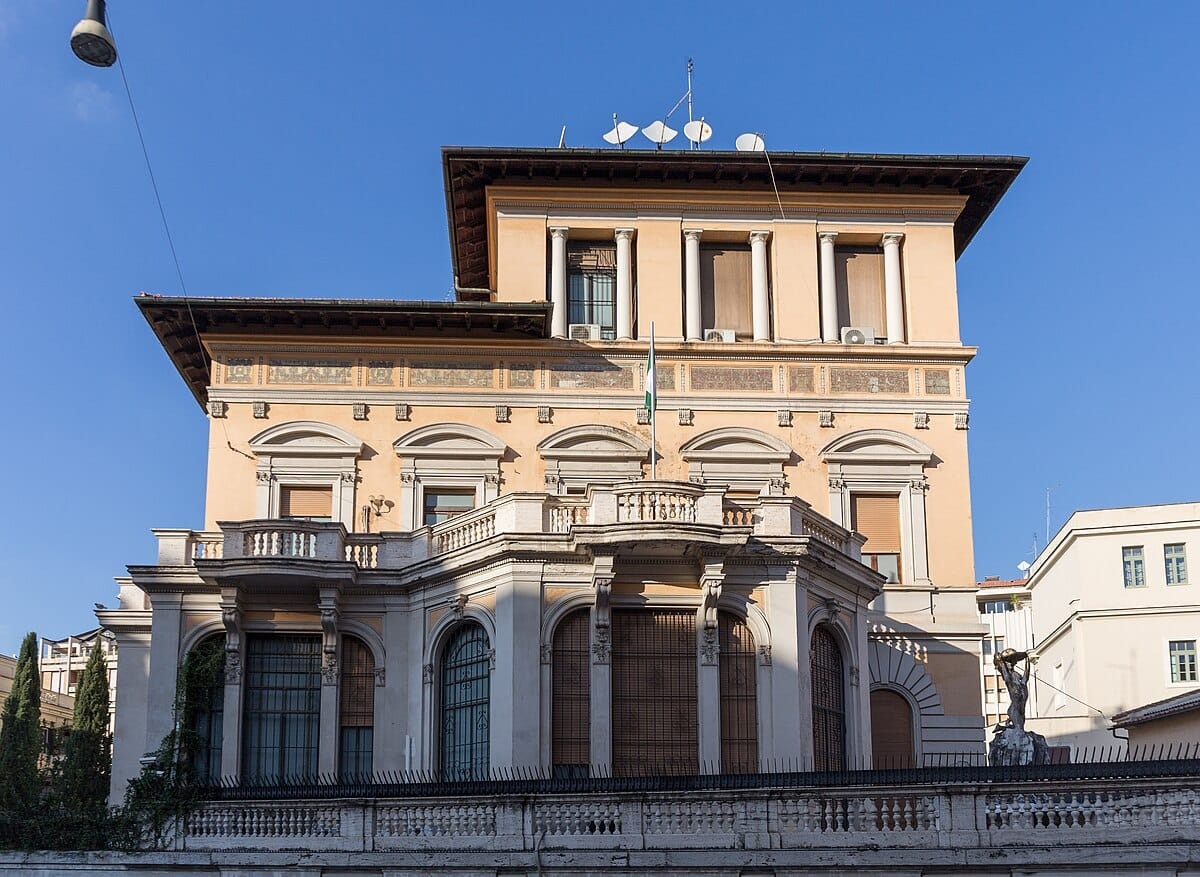
For months, whispers had drifted through Rome’s Nigerian community: salaries delayed, service days cut short, tension within the embassy walls, and murmurs of external service providers threatening to withdraw support. But in late 2024, those whispers became headlines — revealing one of the most troubling operational crises faced by a Nigerian foreign mission in recent years.
Reports from diaspora-focused publications painted a worrying picture: embassy staff allegedly owed nearly a year’s salary, and questions beginning to surface about whether external bodies — contractors, suppliers, and service agencies — had also gone unpaid.
This is the story behind the diplomatic turbulence no one expected, and the silence that made it worse.
THE FIRST CRACKS: A YEAR OF UNPAID SALARIES
In December 2024, AfroLife Magazine published a report that sent shockwaves through diaspora circles. The story alleged that staff at the Embassy of Nigeria in Rome had not been paid for about a year, with the arrears reportedly dating back to November 2023.
While the Nigerian community had long complained about slow services, appointment delays, and passport bottlenecks, few imagined the dysfunction went this deep.
Inside sources — speaking only on condition of anonymity — described:
-
Demoralized employees struggling to commute to work
-
Mounting personal debts
-
Low morale affecting service delivery
-
Internal tensions over lack of communication from Abuja
For many staffers, the silence from home was as painful as the unpaid wages.
WHAT ABOUT THE EXTERNAL BODIES?
The Quiet Fear Behind the Walls**
Beyond the salary dispute, a new concern has been circulating: were external contractors and service providers also being affected?
Though no public document has explicitly confirmed unpaid debts to contractors, multiple indicators suggest the possibility:
-
Embassy insiders hint at “pending obligations” to external maintenance and support companies.
-
Diaspora organizations in Italy speak of “contractors expressing frustration privately.”
-
Community leaders suggest that delays in embassy operations may be linked not only to staff morale, but to service interruptions from unpaid external bodies.
From janitorial firms and ICT service providers to security contractors, embassies rely heavily on external organizations to function smoothly.
When payments are delayed, these partners often respond quietly at first —
then firmly.
One community observer summarized it this way:
“When a foreign mission starts slowing down, it’s rarely about just one thing. Staff, suppliers, contractors — all of them are part of the chain. When the money stalls, everything else stalls too.”
While these concerns remain unverified by official channels, the pattern is familiar: Nigerian embassies have faced past crises when funding from Abuja arrived late, triggering ripple effects across entire diplomatic operations.
THE HUMAN COST: WHEN DIPLOMATS STRUGGLE, CITIZENS SUFFER
The consequences of financial instability inside a foreign mission go beyond unpaid staff — they affect thousands of Nigerians abroad.
In Rome, community members have spoken of:
-
Passport renewals delayed for months
-
Appointments repeatedly rescheduled
-
Diasporans travelling long distances only to meet non-functional systems
-
Long queues extending outside embassy buildings
The embassy is the first point of contact for Nigerians in distress —
yet its own workforce was reportedly in distress.
The irony is painful.
THE SILENCE FROM OFFICIAL CHANNELS
Perhaps the most troubling dimension is the lack of an official, public explanation.
The Nigerian Ministry of Foreign Affairs did not issue a detailed statement addressing the salary claims.
The Rome mission did not publish a rebuttal or clarification.
Diasporans were left to piece the story together through:
-
Insider accounts
-
Diaspora blogs
-
AfroLife Magazine reports
-
Conversations within Nigerian associations
For a community relying on the embassy for passports, visas, welfare support, and documentation, the absence of transparency deepened frustration.
WHY THIS MATTERS: A DIPLOMATIC IMAGE AT STAKE
Embassies are not just administrative buildings —
they are symbols of national identity.
When foreign missions develop a reputation for internal dysfunction, it damages:
-
National credibility
-
Diaspora trust
-
Diplomatic relationships
-
Investment confidence
Italy hosts one of the largest Nigerian communities in Europe.
Ensuring that the Rome embassy functions smoothly is not optional —
it is essential.
WHAT COMES NEXT?
Whether Abuja has since resolved the salary backlog remains unclear.
Whether contractors were paid or remain unpaid is equally murky.
But what is crystal clear is this:
A mission cannot serve its citizens if its own foundation is cracking.
The Nigerian Embassy in Rome stands as a reminder that diplomacy requires more than flags and protocols —
it requires stable funding, accountability, and a commitment to transparency.
Until the issues are officially addressed, the questions will linger:
-
Has the salary crisis been resolved?
-
Are external bodies still owed?
-
What reforms will prevent this from happening again?
For now, the diaspora continues to watch — and wait.
BY samuel ajebo.