


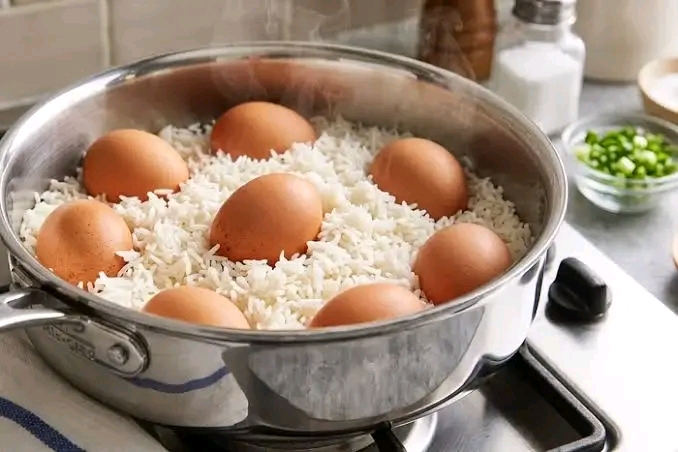
Why Nigerians Are Being Urged to Stop Boiling Eggs and Rice in the Same Pot.
A common cooking practice in many Nigerian households boiling eggs directly in the same pot with rice is drawing renewed attention from food and nutrition experts, who warn that the method may increase the risk of cross contamination when eggs are dirty, cracked or improperly handled.
The warning was highlighted in a September 29, 2026 which quoted registered dietician nutritionists advising Nigerians to cook eggs and rice separately as a safer food handling practice.
According to the experts, eggshells can carry microorganisms, including Salmonella and Escherichia coli (E. coli), particularly where eggs have been exposed to poultry droppings or contaminated surfaces. If an egg cracks during cooking, material from the shell or egg can also come into contact with the rice.
The concern is not that rice and eggs are nutritionally incompatible. In fact, the two foods can form an affordable and nutritious meal. Rather, the issue centres on hygiene and the possibility of transferring contaminants from the outside of an uncooked eggshell to food being prepared in the same cooking medium.
A 2023 study published in the IOSR Journal of Environmental Science, Toxicology and Food Technology examined rice cooked with unshelled eggs. Researchers reported detecting E. coli and Salmonella in rice prepared with unwashed eggs, while samples prepared with washed eggs recorded no detectable levels of the organisms tested. The researchers consequently recommended avoiding the practice of cooking rice and unshelled eggs in the same medium.
The findings provide an important distinction: the risk is linked largely to contamination and food-handling conditions, rather than the eggshell itself being poisonous.
Why the practice remains popular
For many households, placing eggs inside a pot of cooking rice is primarily a practical decision. It can save cooking time, water, utensils and, particularly amid high household energy costs, cooking fuel.
The Nation reported in July 2026 that boiling eggs directly with rice was common in Nigerian homes and was often viewed as a way of conserving time, gas and effort. The newspaper also reported that food experts recommended separating the cooking processes to reduce the possibility of cross-contamination.
Registered Dietitian Nutritionist James Oloyede, said food safety should take priority over the small amount of gas or time saved by preparing the two foods together. Another dietician, Charles Oguikpe, similarly warned that contaminants on eggshells could be transferred to rice during preparation.
Does boiling not kill the bacteria?
Boiling and thorough cooking are important controls against food borne pathogens. However, food safety also depends on what happens before and during cooking including how raw eggs are handled, whether shells are cracked, and whether contaminated surfaces or cooking water come into contact with other food.
The 2023 Nigerian study provides specific evidence relevant to the rice and egg practice, while broader food safety literature confirms that eggs can carry Salmonella on their shells and that poor handling can facilitate cross contamination.
This means the recommendation to cook eggs separately should be understood as a precautionary food-safety measure rather than a claim that every person who boils an egg with rice will become sick.
A safer approach
Nutrition and food safety experts quoted in the reports recommend cooking rice and eggs separately. Where households want to prepare both at the same time, The Nation reported that eggs could instead be steamed above the rice using a suitable sieve, steaming basket or heat resistant container, rather than placing the eggs directly into the rice water.
Good food hygiene also remains essential: wash hands and cooking surfaces after handling raw eggs, avoid using cracked or visibly dirty eggs, prevent raw egg material from contacting ready to eat food, and ensure foods are adequately cooked.
The message for Nigerian households is therefore straightforward: rice and eggs remain nutritious foods that can safely be eaten together, but separating their preparation can provide an additional layer of protection against avoidable contamination.