


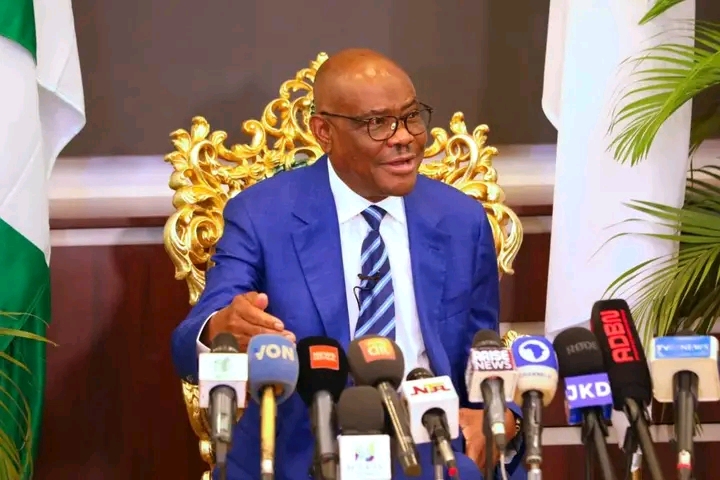
Wike: Tinubu’s Commitment to Free, Fair Poll Helped Adeleke Secure Osun Victory.
Federal Capital Territory Minister, Nyesom Wike, has reportedly attributed Governor Ademola Adeleke’s victory in the Osun State governorship election to President Bola Ahmed Tinubu’s decision to allow what he described as a free and fair electoral process.
The claim has renewed attention on the conduct of the Osun governorship election and the role of the Federal Government in ensuring a credible contest, particularly given the intense political rivalry surrounding the poll.
Adeleke, who contested under the Accord Party, secured re election after a closely watched campaign against the All Progressives Congress (APC) candidate, Bola Oyebamiji, and other contenders. The election attracted significant national attention because of Osun’s political importance and its potential implications for Nigeria’s wider political landscape ahead of the 2027 general elections.
The credibility of the electoral process had been a major issue throughout the campaign. Adeleke had repeatedly called on President Tinubu and security agencies to guarantee a peaceful and transparent election. In the weeks leading to the poll, his campaign also raised allegations of intimidation and arrests involving members and supporters of the Accord Party. The police, however, rejected some of the allegations and said arrests made during the period were based on intelligence and suspected offences.
The Independent National Electoral Commission (INEC) also publicly stressed the importance of preventing malpractice and ensuring the smooth conduct of the election. Reports ahead of the poll indicated that election officials, security personnel and sensitive materials were deployed under arrangements intended to minimize logistical problems and electoral irregularities.
Wike’s reported assessment comes against the backdrop of his increasingly prominent political relationship with President Tinubu. The former Rivers State governor has openly supported the President on several national political issues, while continuing to maintain his membership of the Peoples Democratic Party (PDP). Wike has previously described Tinubu as a leader capable of advancing Nigeria’s development, a position that has placed him at odds with sections of the opposition.
The political relationship between Wike, Tinubu and Adeleke has also been shaped by the prolonged crisis within the PDP. Adeleke ultimately contested the 2026 Osun election on the Accord platform after the national crisis within the PDP complicated his political future. The Guardian previously reported on the political tensions involving Wike and the consequences of the PDP’s internal divisions for Adeleke’s electoral strategy.
The 2026 contest also carried historical significance. Adeleke’s political rise in Osun has been closely linked to the disputed 2018 election and his eventual victory in 2022. In the 2022 election, he defeated then incumbent Governor Gboyega Oyetola, with subsequent legal challenges eventually failing to overturn his victory. Contemporary reporting attributed the 2022 outcome to several factors, including Adeleke’s popularity, internal divisions within the APC and the use of the BVAS technology during the election.
While Wike’s reported comments present Tinubu’s conduct as a factor in Adeleke’s victory, electoral outcomes ultimately reflect a combination of voter preferences, campaign organisation, candidate popularity, party structures and the conduct of the electoral process. Any assessment of the Osun result should therefore distinguish between political interpretations and independently established facts.
The broader significance of the election extends beyond Osun State. With Nigeria already moving toward the 2027 general elections, the conduct of off cycle elections such as Osun’s is likely to remain an important measure of public confidence in the country’s democratic institutions.