



Reported by Musa Antiketu,| Journalist at Obaland magazine.
Knowledge has long been recognised as one of the most powerful instruments available to societies seeking meaningful progress. It enables individuals to understand the world around them, question established systems, participate in public affairs and demand better outcomes from institutions entrusted with public responsibility. In Africa, where many countries continue to confront challenges linked to governance, inequality, insecurity, limited access to quality education and weak public accountability, the relationship between knowledge and sustainable development has become increasingly important.
At the heart of this relationship is a simple but consequential principle: an informed citizen is better positioned to participate meaningfully in society.
The importance of knowledge extends beyond academic achievement. It encompasses access to reliable information, civic education, media literacy, critical thinking and the ability to understand public policies and decisions. When citizens possess these tools, they are more capable of engaging with government, questioning official actions, recognising misinformation and contributing to solutions affecting their communities.
This broader understanding of knowledge is particularly relevant to the work of institutions such as the PUNCH Media Foundation (PMF), a Nigerian non-profit organisation established in 2019 to promote a just, inclusive and thriving civic space through investigative and accountability journalism, public policy advocacy and media development. The foundation is the development arm of PUNCH Nigeria Limited, publisher of The PUNCH and related publications.
For organisations operating at the intersection of journalism, public education and civic engagement, information is not simply a commodity. It is a means through which citizens can better understand the decisions, institutions and policies that shape their lives.
Knowledge as a Foundation for an Informed Society
A society cannot effectively address its challenges when large sections of its population are excluded from reliable information.
Knowledge equips people with the ability to ask important questions. Why are public resources being spent in a particular way? Are government policies delivering their intended outcomes? What rights do citizens have under the law? How can communities participate in decisions affecting their welfare?
These questions form part of the foundation of accountable governance.
An informed population is more likely to engage in constructive public debate, scrutinise public institutions and demand transparency. Conversely, where access to credible information is limited, misinformation and disinformation can fill the vacuum, creating confusion and weakening public trust.
For this reason, journalism and public education have an important role to play in democratic societies. Investigative reporting can draw attention to issues that might otherwise remain hidden, while explanatory journalism can help citizens understand complex policies and development challenges.
The PUNCH Media Foundation has positioned accountability journalism, policy advocacy and media development among its core areas of work. Its stated mission is to stimulate a just, inclusive and thriving civic space, while its vision emphasises active public engagement, transparency, accountability, good governance and free enterprise.
This approach reflects a wider understanding of journalism as more than the daily transmission of events. At its strongest, journalism can provide citizens with the information required to make informed decisions and hold institutions to account.
Education and the Expansion of Civic Participation
Education is another critical pillar of civic empowerment.
A quality education does more than prepare individuals for employment. It can strengthen critical thinking, improve awareness of rights and responsibilities, and provide citizens with the confidence to participate in public affairs.
Civic participation can take many forms. It may involve voting, attending community meetings, engaging policymakers, monitoring public projects, participating in civil society organisations or simply asking questions about decisions that affect everyday life.
However, meaningful participation requires knowledge.
Citizens must understand the issues before they can effectively engage with them. They need access to accurate information about government programmes, public finances, elections, health, education, environmental concerns and other areas of public interest.
This is particularly significant in Nigeria, Africa’s most populous country, where the scale and complexity of governance challenges require active participation from citizens, civil society, journalists and other stakeholders.
The role of education, therefore, extends beyond classrooms. Public education initiatives, media literacy programmes and accessible journalism can complement formal schooling by helping people understand issues that directly affect their communities.
The PUNCH Media Foundation’s programmes have included public education and capacity-building initiatives alongside journalism and policy engagement. Its 2025 institutional review reported that it trained and supported more than 160 professionals and educators across areas including ethical journalism, civic education, public-sector communication and institutional effectiveness.
Such initiatives illustrate the connection between knowledge and institutional development. Strengthening the capacity of individuals can ultimately strengthen the institutions in which they work.
Information and the Fight for Accountability
Accountability is difficult to achieve in an environment where information is inaccessible or unreliable.
Public institutions must be subject to scrutiny, but scrutiny is only effective when citizens and journalists have access to relevant facts. This is where investigative and accountability journalism can make a significant contribution.
Through detailed reporting, journalists can examine public spending, investigate failures in service delivery and bring attention to issues affecting vulnerable communities. Such reporting does not replace the responsibility of government institutions, but it can help create the public pressure necessary for authorities to respond.
The experience of PUNCH Media Foundation demonstrates how accountability journalism can be connected to public-interest outcomes. In its review of activities in 2025, the organisation highlighted reports addressing issues in healthcare, public infrastructure and environmental concerns, noting instances where published investigations prompted responses from relevant authorities and institutions.
Its PUNCH HealthWise platform, for example, has focused on health, gender and environmental reporting, combining journalism with public education. The foundation reported that the platform published more than 3,000 reports in 2025, while its multimedia initiatives sought to simplify complex public-interest issues for broader audiences.
These efforts demonstrate an important principle: information becomes more powerful when it is accessible.
A highly technical policy document may be valuable to specialists, but the average citizen may struggle to understand it. Public-interest journalism can bridge that gap by translating complex issues into language that ordinary people can understand without compromising accuracy.
Enlightenment and the Strengthening of Communities
Enlightenment, in the civic sense, is about creating awareness that enables people to understand their circumstances and recognise their capacity to influence them.
An informed community is better equipped to identify problems and seek solutions. It can question harmful practices, demand better services and engage with authorities constructively.
This does not mean that information alone can solve every social challenge. Structural problems such as poverty, unemployment, inadequate infrastructure and insecurity require sustained policy interventions and institutional reforms.
However, knowledge can strengthen the ability of communities to respond to these challenges.
When people understand how public institutions operate, they are better positioned to identify where responsibilities lie. When they understand their rights, they are more capable of defending them. When they understand public policies, they can assess whether those policies are delivering meaningful results.
This is why civic education should not be regarded as an optional component of development. It is part of the infrastructure of democratic society.
The Media’s Responsibility in an Age of Misinformation
The rise of digital platforms has transformed how people access information. Citizens can now receive news instantly through social media, messaging applications and online platforms.
While this development has expanded access to information, it has also created new challenges.
False information can spread rapidly, often reaching audiences before facts can be verified. Misleading headlines, manipulated images and fabricated claims can influence public opinion and deepen social divisions.
The response cannot simply be to provide more information. The information must be accurate, credible and responsibly presented.
This places a significant responsibility on media organisations and journalists. Professional journalism must prioritise verification, fairness, context and accountability. It must distinguish between fact and opinion and provide audiences with enough context to understand complicated issues.
For an organisation such as Obaland magazine, this responsibility is particularly important in an African media environment where the public increasingly relies on digital platforms for news and analysis.
A Pan-African media voice must not only report what happened. It should help audiences understand why it happened, who is affected, what the broader implications are and what citizens should know.
That approach is consistent with the principle that information should empower rather than manipulate.
From Awareness to Action
The ultimate value of knowledge lies in its ability to inspire responsible action.
Awareness without action may have limited impact. Citizens may know that a problem exists but lack the tools or opportunities to respond.
This is why civic engagement must be supported by institutions that are open to public participation.
Governments have a responsibility to provide channels through which citizens can express concerns and contribute to policymaking. Civil society organisations can facilitate community engagement. Educational institutions can promote critical thinking. Journalists can provide credible information and investigate issues of public interest.
Together, these actors can contribute to a healthier civic environment.
The PUNCH Media Foundation’s stated vision of a civic space characterised by public engagement, transparency, accountability and good governance reflects this interconnected approach. Its work has included journalism, public education, professional training, policy discussions and partnerships designed to encourage broader engagement with development issues.
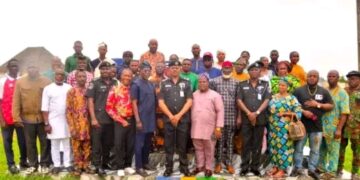
The foundation has also reported capacity-building programmes involving journalists, educators and public institutions. One example is a 2025 programme designed to strengthen communication and community relations among police officers, with the stated objective of improving trust between citizens and the police.
Such initiatives highlight an often-overlooked dimension of accountability: institutions themselves require knowledge and capacity to perform effectively.
Knowledge, Justice and Sustainable Development
Justice and sustainable development are also closely connected to access to knowledge.
Sustainable development requires societies to make decisions that address present needs without undermining the ability of future generations to thrive. This involves education, healthcare, environmental protection, economic opportunity, responsible governance and social inclusion.
Citizens must be able to participate in conversations about these issues.
Consider environmental protection. Communities that understand the consequences of pollution, deforestation or biodiversity loss are more likely to recognise the importance of conservation. Similarly, citizens who understand public health risks are better positioned to adopt preventive measures and demand effective healthcare services.
Knowledge can therefore influence behaviour at both individual and institutional levels.
At the policy level, decision-makers need reliable evidence to design effective interventions. At the community level, citizens need accessible information to understand how those policies affect them.
This creates a cycle in which knowledge supports participation, participation strengthens accountability, accountability improves governance and better governance creates conditions for sustainable development.
A Pan-African Imperative
Across Africa, the need for informed and engaged citizens remains significant.
The continent is home to diverse political systems, cultures and economic realities. Yet many African societies share common challenges involving governance, education, inequality, access to information and institutional accountability.
A stronger culture of public knowledge can contribute to addressing these challenges.
African media organisations have an opportunity to move beyond event-driven reporting and invest in journalism that explains, educates and empowers. Educational institutions can strengthen civic learning. Governments can improve transparency and public access to information. Civil society can help communities understand and exercise their rights.
The goal should not be to create citizens who agree on everything. Rather, it should be to build societies where people have enough reliable information to disagree constructively, participate peacefully and hold institutions accountable.
That is the foundation of a healthy civic space.
Conclusion: Building Societies Through Knowledge
The idea that knowledge equips societies with the tools to question, reform and rebuild is more than an abstract statement. It reflects a fundamental reality of democratic and sustainable development.
Education fuels awareness. Information strengthens participation. Journalism can expose failures and amplify public concerns. Civic engagement creates channels for citizens to influence decisions. Accountability helps institutions perform their responsibilities more effectively.
None of these elements operates in isolation.
The challenge for Africa is therefore not merely to increase the volume of information available to citizens, but to ensure that the information is accurate, accessible, relevant and capable of producing meaningful understanding.
For institutions such as the PUNCH Media Foundation, whose stated mission centres on accountability journalism, public policy advocacy and media development, the connection between information and civic empowerment is central to their work.
For the wider media ecosystem, including Pan-African publications such as Obaland magazine, the responsibility is equally significant: to provide journalism that informs without misleading, investigates without prejudice, challenges power without abandoning fairness, and gives citizens the context they need to understand the forces shaping their lives.
Ultimately, an informed citizen is not merely a consumer of news. That citizen can become an active participant in the life of a community, a watchdog of public institutions and a contributor to the search for solutions.
Knowledge may not solve every problem. But without knowledge, societies are less equipped to identify their problems, challenge injustice, demand accountability or build sustainable solutions.
That is why enlightenment remains essential to justice, education remains central to opportunity, and credible information remains one of the most important foundations upon which accountable societies can be built.
Sources and Further Reading
- PUNCH Media Foundation (Official) — Information on the organisation’s mission, vision, core values and institutional mandate.
- PUNCH Media Foundation — 2025 Institutional Review — Details of its accountability journalism, public education, capacity-building and policy engagement activities.
- PUNCH Media Foundation — The Journey So Far — Background on PMF’s establishment, programmes and journalism and capacity-building initiatives.
- PUNCH Media Foundation — 2024 Impact Review — Information on partnerships, accountability initiatives and public-interest journalism activities.
- PUNCH Media Foundation — Police Communication and Community Trust Programme — Background on its 2025 capacity-building initiative involving police officers.
Knowledge, education and credible information are vital to civic participation, accountability and sustainable development. Obaland Magazine examines how public enlightenment and journalism can empower African citizens and strengthen democratic societies.