



Reported by Musa Antiketu,| Journalist at Obaland magazine.
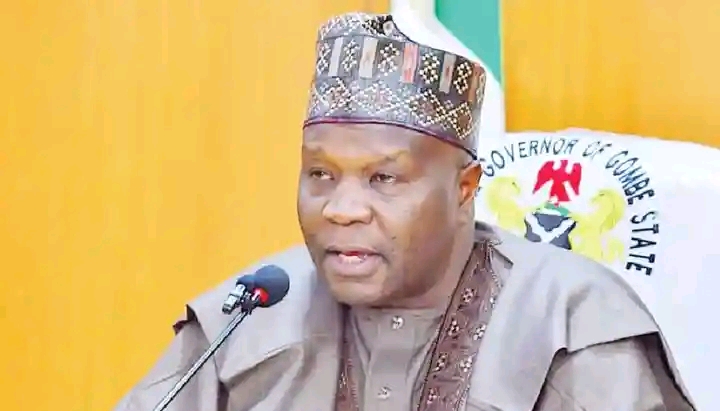
GOMBE — Gombe State Governor, Muhammadu Inuwa Yahaya, has continued to reshape the administrative structure of his government through appointments, redeployments and the reorganisation of key public institutions, as his administration enters the final phase of its tenure.
However, claims circulating that the governor has approved the appointment of 19 new permanent secretaries require caution. As of the latest information available from reputable Nigerian media reports reviewed by Obaland magazine, there is no sufficiently corroborated report establishing that 19 new permanent secretaries were appointed in the latest exercise.
What has been independently reported is that Yahaya’s administration has undertaken several significant changes within the state civil service and executive structure in 2026, including the redeployment of permanent secretaries across Ministries, Departments and Agencies (MDAs), the dissolution and subsequent reconstitution of the State Executive Council, and the inauguration of new political and administrative appointees.
The developments have placed renewed attention on the role of permanent secretaries in maintaining continuity, professionalism and institutional memory within the Gombe State Government.
Permanent secretaries remain central to Gombe’s civil service
Permanent secretaries occupy a critical position in Nigeria’s public administration system. Unlike political office holders whose tenure is generally tied to an elected administration, career civil servants are expected to provide institutional continuity irrespective of changes in political leadership.
This role became particularly important in Gombe following Governor Yahaya’s decision in April 2026 to dissolve the State Executive Council.
Reports by Punch and the Voice of Nigeria stated that commissioners were directed to hand over the affairs of their respective ministries to permanent secretaries. The move was presented as a measure intended to guarantee administrative stability and prevent disruption in government operations.
The subsequent redeployment of permanent secretaries across key MDAs further demonstrated the administration’s reliance on the senior civil service as an institutional bridge during the transition.
According to the Voice of Nigeria, the redeployment was approved by Governor Yahaya and communicated by the Head of the Civil Service, Professor Muazu Shehu. The government said the exercise was designed to improve public-service management, strengthen policy coordination and enhance institutional performance.
Punch similarly reported that the redeployment was intended to strengthen service delivery and improve governance efficiency across the state’s MDAs.
Cabinet dissolution created a bigger role for career officials
The importance of Gombe’s permanent secretaries became more visible after the governor dissolved his cabinet in April.
The decision brought the tenure of the then-serving commissioners to an end and temporarily shifted greater administrative responsibility to the permanent-secretary level.
The Voice of Nigeria reported that Governor Yahaya directed commissioners to hand over the affairs of their ministries to permanent secretaries by April 10, 2026, describing the arrangement as necessary for continuity in governance and administrative stability.
The development was significant because permanent secretaries were required to keep ministries functioning while the political leadership structure was being reorganised.
In a public administration system where political transitions can sometimes create uncertainty within government institutions, the ability of career officials to maintain operations is particularly important.
New executive council inaugurated in July
Gombe subsequently reconstituted its executive structure.
On July 18, 2026, Governor Yahaya inaugurated a new State Executive Council featuring 23 commissioners, 13 special advisers, one permanent secretary and a new Head of Civil Service, according to reports by the Voice of Nigeria and Channels Television.
The restructuring also expanded the number of ministries from 18 to 23, with new portfolios including the Ministry of Humanitarian Affairs and Poverty Reduction and the Ministry of Livestock Development.
The expansion reflects an attempt by the administration to align its government structure with emerging policy priorities, particularly poverty reduction, humanitarian intervention and livestock development.
The governor told the new appointees that they had limited time to make an impact, as his administration was entering its final year.
Punch reported that Yahaya warned the appointees that there was “absolutely no time” for prolonged institutional adjustment, urging them to immediately begin implementing government policies and programmes.
Yahaya warns against corruption and abuse of office
The governor has also used the latest inauguration to emphasise accountability.
According to Punch, Yahaya warned the newly inaugurated commissioners, special advisers and permanent secretaries against corruption, indiscipline and abuse of office.
He said government resources and authority must be used for the benefit of the people rather than individuals or groups.
The governor also described permanent secretaries as the institutional backbone of government, stressing that political office holders may change while career civil servants provide the structural continuity required for effective governance.
That distinction is important in understanding the place of permanent secretaries in Gombe’s current administrative reforms.
While commissioners are politically appointed and responsible for providing policy direction within their ministries, permanent secretaries generally oversee the continuity of the administrative machinery and the implementation of government policies through the civil service.
Earlier appointment of five permanent secretaries
The latest developments also follow an earlier appointment exercise.
Punch reported in January 2025 that Governor Yahaya swore in five new permanent secretaries and charged them to maintain a zero-tolerance approach to corruption, indiscipline, incompetence and wastefulness.
The January 2025 exercise demonstrates that appointments to the permanent-secretary cadre have been taking place under the Yahaya administration, but it does not substantiate the current claim of 19 new permanent secretaries.
This distinction matters because inaccurate figures in reports concerning public appointments can create confusion about the size, composition and direction of a state government’s civil service.
Why the 19-person claim needs verification
The figure of 19 permanent secretaries may have originated from a different appointment story or could represent a misunderstanding between appointments, redeployments or other categories of public officials.
Indeed, a search of established Nigerian media reports shows that the number 19 has appeared in previous stories concerning permanent-secretary appointments in other states.
For example, The Guardian and Punch reported in March 2021 that then-Ondo State Governor Rotimi Akeredolu approved the appointment of 19 permanent secretaries, alongside other senior education and statistical positions.
That historical reporting is unrelated to the current Gombe administration and should not be conflated with recent developments in Gombe State.
For a publication committed to independent journalism, distinguishing between confirmed information and circulating claims is essential.
What the current reforms mean for Gombe
Regardless of the disputed figure, the recent changes point to an administration attempting to strengthen the machinery of government during its final phase.
The redeployment of permanent secretaries across MDAs suggests an emphasis on administrative performance and institutional coordination.
At the same time, the expansion of the cabinet from 18 to 23 ministries indicates a broader restructuring of policy responsibilities. The creation of portfolios dedicated to humanitarian affairs, poverty reduction and livestock development could give the government more specialised institutional channels for addressing social and economic challenges.
But administrative restructuring alone does not necessarily translate into better outcomes for citizens.
The real test will be whether the changes produce measurable improvements in service delivery, public-sector efficiency, transparency, financial management and implementation of development programmes.
For Gombe residents, the significance of any appointment or redeployment should ultimately be judged by its impact on government performance rather than the number of officials appointed.
Final-year pressure on Yahaya administration
Governor Yahaya’s latest administrative decisions are unfolding as his administration enters its final year, making implementation speed and institutional effectiveness increasingly important.
The governor has publicly acknowledged the limited time available to the new political appointees and has repeatedly urged them to begin work without delay. Vanguard, Punch, Channels Television and the Voice of Nigeria all reported aspects of the July inauguration and the administration’s emphasis on performance and accountability.
For the civil service, however, the challenge extends beyond the remaining months of the political administration.
Permanent secretaries and other career officials will remain within the administrative system after the current political leadership leaves office. Their ability to preserve institutional knowledge, implement policies professionally and maintain continuity will therefore remain central to the long-term effectiveness of Gombe’s public service.
Obaland Magazine’s assessment
The reported appointment of 19 permanent secretaries in Gombe cannot, at present, be independently established from the reputable sources reviewed by Obaland magazine.
What is firmly supported by available reporting is that Governor Muhammadu Inuwa Yahaya has undertaken significant administrative changes in 2026, including the redeployment of permanent secretaries, the dissolution and reconstruction of the state cabinet, and the inauguration of a new executive council with 23 commissioners, 13 special advisers, one permanent secretary and a new Head of Civil Service.
These developments demonstrate a continuing effort to reorganise Gombe’s governance structure and improve administrative coordination.
The next measure of success will not simply be how many officials occupy senior positions, but whether the new structure delivers more efficient institutions, faster implementation of public programmes, greater accountability and tangible improvements in the lives of Gombe residents.
For now, Obaland magazine will continue to distinguish between confirmed appointments and unverified claims, in keeping with its commitment to accurate, independent and responsible journalism.
Sources
- Punch Newspapers
- Voice of Nigeria (VON)
- Channels Television
- Vanguard Newspapers
Governor Muhammadu Inuwa Yahaya has undertaken major administrative reforms in Gombe State, including permanent-secretary redeployments and a new executive council, amid unverified claims of 19 new appointments.