



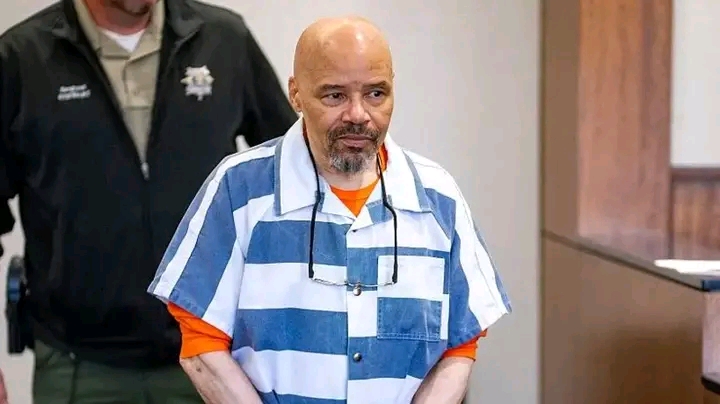
Utah Man Released After 41 Years on Death Row as New DNA Evidence Excludes Him From 1985 Murder.
A 71 year old Utah man, Douglas Stewart Carter, has been released on bail after spending 41 years in custody, including decades on death row, following new DNA analysis that excluded him as a possible source of genetic material recovered from the scene of the 1985 murder for which he was convicted.
Carter was released on Monday, September 28, 2026, after a judge in Utah County ordered his release while he awaits a new trial. He is required to wear a GPS monitoring device. The development follows prosecutors’ decision to withdraw their earlier plan to seek the death penalty against him.
Carter was convicted in 1985 of murdering Eva Olesen, a Provo woman and aunt of the city’s police chief at the time. Olesen was found dead in her home after being stabbed and shot. Carter has consistently maintained his innocence and said a confession he signed was obtained through coercive police interrogation.
According to the Associated Press, there was no physical evidence initially linking Carter to the crime scene. His conviction relied substantially on the signed confession and testimony from two witnesses who later recanted their accounts. The witnesses subsequently alleged that police and prosecutors had pressured them and offered financial assistance in connection with their testimony.
The case was later subjected to renewed judicial scrutiny. Utah’s Supreme Court ordered a new trial after findings concerning investigative misconduct. More recently, DNA testing of evidence from the crime scene excluded Carter as a possible match to blood found on a doorknob and genetic material recovered from the handle of a knife believed to have been used in the killing.
The new DNA findings have significantly weakened the prosecution’s case, but authorities have stopped short of declaring Carter legally exonerated. Utah County prosecutors have maintained that the DNA results do not, by themselves, establish that Carter could not have committed the murder. The aggravated murder charge remains pending, and a retrial has been scheduled for 2027.
Carter’s release has also prompted differing reactions. His defence team is seeking further legal relief, including dismissal of the remaining charge, while members of Olesen’s family have expressed concerns about his release and said they continue to seek justice for the victim.
The case has renewed attention on the role of modern forensic technology in reviewing decades old convictions, particularly where earlier prosecutions relied heavily on confessions and witness testimony. Carter’s legal battle now moves forward outside prison, but the question of whether the remaining charge will proceed remains unresolved.