


Nasarawa Unveils Mobile Toilet Initiative, Targets Open Defecation Across 13 LGAs.
The Nasarawa State Government has unveiled a mobile toilet initiative aimed at tackling open defecation and improving access to safe sanitation facilities across the state’s 13 Local Government Areas.
The initiative forms part of the government’s renewed commitment to improving public hygiene, protecting the environment and reducing sanitation-related diseases among residents.
The Commissioner for Environment, Solid Minerals and Mining, Dr Margaret Elayo, announced the initiative on Thursday, November 12, 2026, during a media briefing in Lafia ahead of the 2026 World Toilet Day, scheduled for November 19.
Elayo described open defecation as a serious public health emergency and declared the state government’s zero-tolerance position on the practice under Governor Abdullahi Sule’s administration.
According to the commissioner, the mobile toilets will be provided at strategic public locations, including markets, motor parks, schools and other areas where residents have limited access to proper toilet facilities.
She explained that the intervention would also prioritise the needs of women, children and persons living with disabilities, stressing that access to safe sanitation is essential for protecting public health, personal dignity and individual safety.
The commissioner further disclosed that the government would collaborate with local government authorities, traditional rulers and community leaders to encourage communities to achieve open defecation free status.
She also called on schools and teachers to strengthen hygiene education and ensure proper maintenance of available toilet facilities.
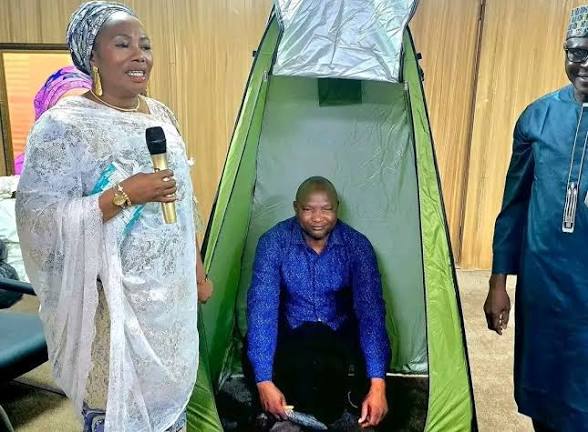
As part of the initiative’s unveiling, Elayo presented a mobile toilet and recycling materials, expressing the government’s intention to extend similar interventions to schools and other public spaces, particularly institutions facing inadequate sanitation infrastructure.
She emphasised that the absence of functional toilets in schools could expose female students to unnecessary risks and discomfort, potentially affecting their safety, privacy and educational participation.
The initiative comes against the backdrop of persistent sanitation challenges in Nigeria. According to UNICEF’s 2021 Nasarawa State Water, Sanitation and Hygiene (WASH) profile, approximately 46 per cent of the state’s population practiced open defecation at the time of the assessment.
Poor sanitation increases the risk of water contamination and the spread of preventable diseases, including cholera, typhoid and diarrhoeal infections. Children, particularly those under five, remain among the most vulnerable to the consequences of unsafe water and inadequate sanitation.
Beyond providing mobile toilets, the effectiveness of the intervention will depend on sustained maintenance, reliable waste management, public awareness and consistent access to clean sanitation facilities.
The development also aligns with Nigeria’s broader commitment to ending open defecation by 2030, making sustained investment and cooperation between federal, state and local authorities essential.
As Nasarawa prepares to mark World Toilet Day 2026, the government’s latest intervention highlights the importance of treating sanitation not merely as an environmental concern but as a fundamental public health, safety and development priority.
However, the long term success of the initiative will ultimately depend on how effectively the facilities are distributed, maintained and made accessible to communities across the state.