



BAGHDAD — Iraq says it had no prior knowledge of, and did not approve, deadly US-Saudi strikes on its territory that killed at least 20 militants, including Iranians.
Government spokesperson Haider al-Aboudi told state TV on Thursday that Baghdad was not consulted before the attacks.
“The government did not have any knowledge” of the strikes and “did not approve any attacks on specific sites or groups in Iraq,” Aboudi said.
According to the Hashed al-Shaabi, Iraq’s Popular Mobilisation Forces that include pro-Iran armed groups, the US-Saudi strikes took place on Wednesday in Diyala province in central Iraq.
The group said at least 20 militants were killed, including five Iranians. Funerals were held in Baghdad on Tuesday for those killed.
The US and Saudi Arabia said the strikes were carried out in response to recent attacks. Riyadh said its air defenses had intercepted drones targeting oil facilities and blamed Iran-backed groups operating in Iraq. Washington said the strikes were also in response to attacks on US forces in the region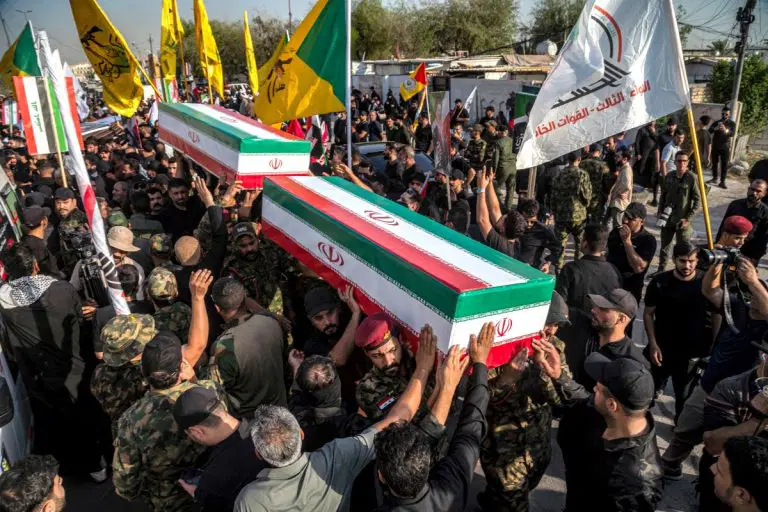
A Fox News correspondent, after speaking with US President Donald Trump, reported that Trump claimed the strikes “were coordinated with the Iraqi government.” Baghdad disputes that.
The strikes have already had diplomatic consequences. Aboudi said Iraqi Prime Minister Ali al-Zaidi has suspended a planned visit to Saudi Arabia because of the attacks.
Zaidi came to power earlier this year with backing from Washington and has publicly pledged to push Iran-backed armed groups to hand over their weapons. Those groups, operating under the banner of the Islamic Resistance in Iraq, came under increased US pressure after they launched attacks on US facilities during the recent Middle East war in support of Tehran.
The groups have denied attacking Saudi Arabia. In a statement after the strikes, they warned that a response to the attacks in Iraq was “inevitable.”
The incident highlights Iraq’s difficult position between its two main allies, Washington and Tehran.
The US maintains troops in Iraq and provides security assistance. Iran has deep political and military ties through the Hashed al-Shaabi and other allied groups. That rivalry has repeatedly turned Iraq into a proxy battleground, forcing successive governments to try to balance relations with both powers.
US pressure on Baghdad to disarm Iran-backed militias has intensified in recent months. The latest strikes are likely to deepen tensions between the Iraqi government, the US, and Saudi Arabia, while also raising questions about sovereignty and coordination on military operations inside Iraq.
As of Thursday, there had been no further strikes reported. Security in Baghdad and other major cities remained tight amid fears of retaliation.