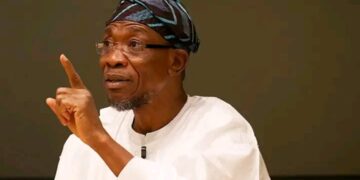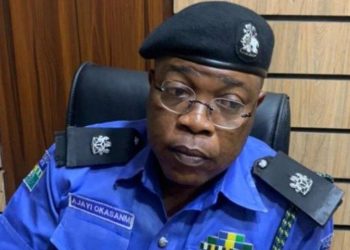



A broad coalition of civil society organisations, trade unions, youth groups, community associations, social movements, faith-based organisations, and concerned citizens has declared June 12, 2026, as a day of nationwide protest and mass action against worsening insecurity, economic hardship, and the deteriorating standard of living across Nigeria.
The declaration, announced on June 10 by human rights lawyer and Senior Advocate of Nigeria, Femi Falana, comes amid rising public frustration over the country’s security crisis, runaway inflation, and what organizers describe as the erosion of democratic accountability three years into President Bola Tinubu’s administration.
The choice of June 12 is deliberate. The date marks Nigeria’s Democracy Day, commemorating the annulled 1993 presidential election widely regarded as the freest and fairest in the country’s history. For decades, June 12 has been used by activists to reflect on the sacrifices made for democracy and to demand better governance.
“June 12 is not just a holiday,” Falana said at a press briefing in Lagos. “It is a day that reminds Nigerians of the struggle for justice, accountability, and the right to choose leaders freely. Today, we are back on the streets because those same rights are under threat by insecurity, poverty, and bad governance.”
The coalition, which cuts across ideological and regional lines, says it is not affiliated with any political party. Instead, it describes itself as a citizens’ movement driven by the lived realities of millions of Nigerians facing kidnapping, banditry, terrorism, food inflation, and unemployment.
A central trigger for the planned protest is the escalation of violence across Nigeria. In the North West and North Central, bandit groups continue to attack villages, abduct schoolchildren, and block farming communities, deepening food insecurity. In the North East, Boko Haram and ISWAP maintain pockets of control despite military operations. In the South East, clashes involving the Eastern Security Network and security forces have left communities traumatized. Kidnapping for ransom has also spread to the South West and South, with highways and rural areas becoming danger zones.
Civil society leaders argue that the government’s response has been inconsistent and reactive. “Nigerians are being killed daily, children are being abducted from schools, farmers cannot go to their farms, and yet the official narrative is that things are improving,” said Aisha Yusuf, coordinator of the Women for Peace Initiative, one of the groups in the coalition. “We are saying enough is enough.”
The protest also targets the economic pain many Nigerians continue to endure. Since 2023, the Tinubu administration has implemented major reforms: removal of the fuel subsidy, liberalization of the naira, and passage of new tax laws. Government officials say these measures are stabilizing the economy and laying the foundation for growth, pointing to GDP figures of 4.07% in Q4 2025 and 3.89% in Q1 2026.
But for many citizens, the reforms have translated into higher costs without corresponding improvements in income or services. Fuel prices have tripled since subsidy removal, driving up transport and food costs. Inflation hit 15.7% in April 2026, according to the National Bureau of Statistics. The International Monetary Fund recently noted that while reforms have improved macroeconomic indicators, poverty now affects 63% of Nigerians, and over 27 million people faced food insecurity in 2025.
“GDP growth means nothing if the average family cannot afford a bag of rice or safe transport to work,” said Joe Ajaero, President of the Nigeria Labour Congress, which is mobilizing members for the June 12 action. “Workers’ salaries have not kept pace with inflation. Pensioners are dying because they are not paid. Students cannot afford school. That is the reality we are protesting.”
Beyond insecurity and the economy, organizers say the protest is also about protecting democratic freedoms. They point to recent clampdowns on dissent, allegations of media intimidation, and delays in prosecuting cases of abuse of power. The coalition is calling for respect for freedom of assembly, protection of journalists, and an end to the use of security agencies to suppress criticism.
“We are not calling for a breakdown of law and order,” Falana emphasized. “We are exercising our constitutional right to peaceful assembly. Section 40 of the Constitution guarantees the right to assemble freely. Any attempt to block these protests will be challenged in court.”
The group also plans to use June 12 to push for electoral reforms ahead of the 2027 general elections, including faster transmission of results, greater independence for the Independent National Electoral Commission, and stricter penalties for vote-buying and electoral violence.
According to the organizers, protests will take place in all 36 states and the Federal Capital Territory. Key locations include Eagle Square in Abuja, Freedom Park in Lagos, Pleasure Park in Port Harcourt, and Tafawa Balewa Square in Kano. Student groups, market associations, and faith leaders have been asked to mobilize peacefully.
The coalition has published a code of conduct for participants, urging non-violence and cooperation with security agencies. “We are Nigerians who love this country,” said Samson Itodo, Executive Director of Yiaga Africa. “This is not about destroying property. It is about demanding that the government hears the people and acts.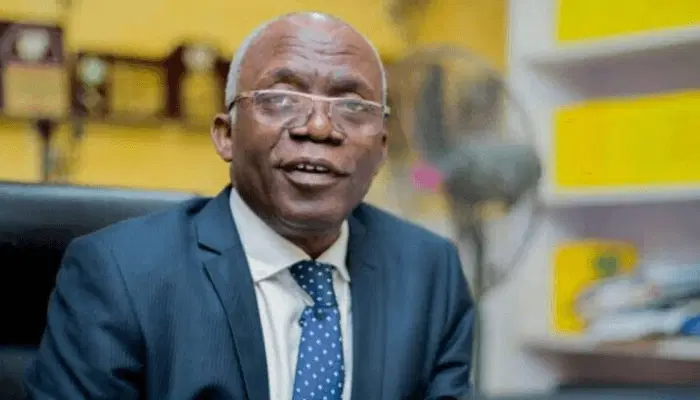
Security agencies have not yet issued an official response to the planned protest. However, police authorities in Lagos and Abuja have previously warned against gatherings that could disrupt public order. Civil society groups say they have notified the police in line with legal requirements.
The Federal Government has repeatedly defended its reform agenda, arguing that short-term pain is necessary for long-term gain. At a Democracy Day press conference on June 9, Secretary to the Government of the Federation, George Akume, acknowledged the hardship but insisted that evidence shows Nigeria is “moving in the right direction.” He highlighted increased student loan disbursements, expanded healthcare coverage, and gains in anti-corruption efforts.
The Presidency has not directly addressed the June 12 protest call, but officials have urged citizens to engage through dialogue rather than street action.
Analysts say the success of the June 12 protest will depend on turnout and whether it remains peaceful. Past nationwide protests in Nigeria have produced mixed results – some forcing policy reversals, others ending in clashes or being dismissed by government.
For now, the coalition is betting that the combination of economic pain, insecurity, and the symbolic weight of June 12 will bring Nigerians to the streets. Whether the government responds with policy shifts or more repression will likely shape the political climate heading into 2027.
“This is not the end,” Falana said. “It is the beginning of a sustained campaign to reclaim Nigeria for the Nigerian people. If our voices are ignored on June 12, we will return, louder and larger, until justice is done.”
As June 12 approaches, all eyes will be on whether the protest becomes a turning point in Nigeria’s democratic journey or another moment of unmet expectations.