


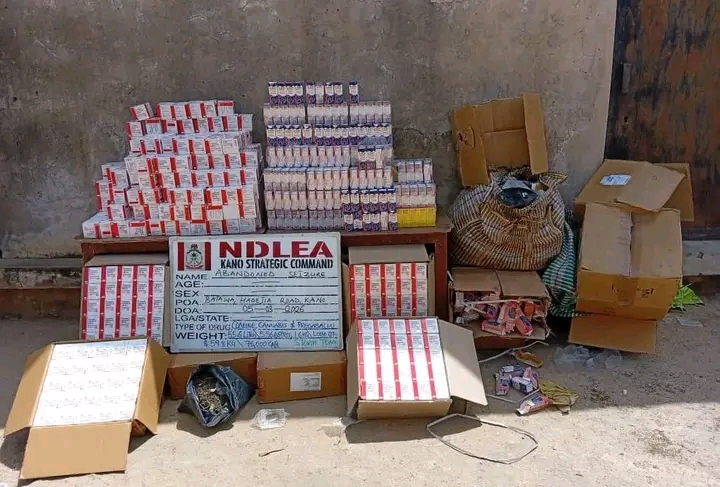
“NDLEA Intercepts Massive Drug Shipment in Kano Ahead of Sallah, Seizes 75,000 Pregabalin Capsules and Codeine Bottles”
The National Drug Law Enforcement Agency (NDLEA) has announced a significant breakthrough in its ongoing crackdown on illicit drug trafficking in northern Nigeria, following the seizure of 75,000 pregabalin capsules and 556 bottles of codeine-based syrup in Kano. Authorities say the intercepted substances were allegedly intended for illegal distribution during the upcoming Sallah festivities, a period often associated with increased drug circulation.
According to officials from the NDLEA Kano State Command, the operation was carried out through intelligence led surveillance targeting suspected supply routes used by traffickers. The agency noted that the confiscated pregabalin capsules a prescription medication frequently abused for its psychoactive effects alongside codeine syrup, represent substances widely linked to substance abuse concerns among Nigerian youths. NDLEA operatives reportedly intercepted the shipment before it reached local markets, preventing what authorities described as a potentially large scale distribution network.
NDLEA commanders emphasized that the seizure forms part of a broader nationwide strategy aimed at curbing drug abuse, dismantling trafficking syndicates, and safeguarding public health during major festive periods. The agency reiterated warnings to traffickers exploiting religious celebrations for illicit trade, stressing that enforcement operations have been intensified across key transit hubs and urban centers. Public health experts have repeatedly warned that misuse of opioids and controlled pharmaceuticals continues to pose social and security risks across several Nigerian states.
Security analysts say the development highlights growing collaboration between intelligence units and enforcement agencies in addressing Nigeria’s evolving narcotics landscape. Observers also note that sustained enforcement, combined with community awareness and rehabilitation initiatives, remains critical to reducing demand and preventing addiction, particularly among young populations vulnerable to substance misuse.