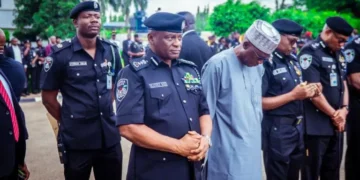



Retired Lt. Col. Tony Nyiam, a key figure in the 1990 Orkar coup attempt, says Nigeria’s centralised security architecture is “fundamentally incapable” of handling the country’s complex insecurity and is calling for far-reaching restructuring.
Speaking in an interview, Nyiam argued that decades of structural imbalance, colonial-era frameworks, and internal contradictions have weakened Nigeria’s response to terrorism, banditry, kidnapping, and communal violence.
Nyiam said Nigeria continues to ignore what he called the “Natural Resource Curse,” where nations rich in minerals, crude oil, gas, and timber see worse development outcomes and instability. He singled out Zamfara as one of the states most affected.
“Instead of our rich resources fueling shared prosperity among our people, it has become the cause of political and economic instability, worse practices of corruption and associated violent conflicts,” he said. He added that “Western neo-colonialists” and China often back the instability.
According to Nyiam, the goal of “behind-the-scenes perpetrators” is to take Nigeria’s natural resources cheaply. He claimed they form alliances with “older colonialists” and arm Fulani ethnic militias and Boko Haram to displace indigenous communities from resource-rich ancestral lands.
“Most members of the Fulani ethnic militias are from the Sahel region of Africa, which has been most affected by global warming,” he said. “It is indeed these Sahel-originated Fulani’s desire for land-grabbing of the indigenous Nigerian ancestral landed property that has made them the willing tools of the rogue elements of the Western powers and their Chinese equivalent.”
He likened the visible attacks to “waves of an ocean,” while the funding and arming of groups are the unseen “undercurrent.” “What we Nigerians see are heavily armed and sophisticated transnational Fulani ethnic or Boko Haram militias. The providers of the funding and arms, we ignore to our detriment.”
Nyiam said corruption linked to the resource curse has affected some personnel in the Armed Forces and other security agencies. “The consequential corrupting mindset of many armed services personnel, and those within the other security services, who are much more loyal to their ethnicity’s hegemonic pursuit than to Nigerians’ well-being, account for the ‘compromised military’ that we have been dealing with.”
He also pointed to elite compromise, saying foreign powers have long cultivated Nigerian public officials as “intelligence assets or agents.” He suggested the current surge in insecurity could be tied to political maneuvering ahead of the 2027 presidential election, similar to what he said was used against President Goodluck Jonathan.
Nyiam described the current setup as “garbage in, garbage out.” He said Nigeria lacks a strategy to identify and expose international sources funding and arming groups like Boko Haram and Fulani militias.
He noted the absence of high-tech capabilities such as Signal Intelligence, cryptology, and advanced cybersecurity. “We have intelligent Nigerian youths but lack the national security institutions to harness the tech talents of our young ones,” he said, pointing to models like the UK’s GCHQ and the US NSA. Such capacity, he argued, would make the National Intelligence Agency more effective.
He also cited the military’s struggle with asymmetric warfare. “For over 20 years I have been warning about the danger of getting a mainly conventional armed forces that the Nigerian federal government, solely possess, stuck in an asymmetric warfare which, as we are experiencing, they cannot win.”
He referenced the deaths of senior officers in ambushes, including Brigadier-General Oseni O. Braimah on April 9, 2026, Brigadier-General Samaila Uba on November 14, 2025, and Brigadier-General Dzarma Zirkusu on November 13, 2021, as examples where “the compromised nature of the Nigerian security system was taken advantage of by the terrorists and their Nigerian and foreign backers.”
Nyiam advocates a multi-layered, decentralised security architecture: federal forces, state-based formations, and locally rooted defence units operating in a coordinated framework.
“The present arrangement is such that it is compromised. When you have individuals within the system whose loyalty is not entirely to the Nigerian state but to other interests, you create a situation where operational plans are leaked, intelligence is compromised, and the enemy is always a step ahead,” he said.
He warned against turning the police into a combat force. “The police are a civil force. Its primary responsibility is to maintain law and order, enforce the law, and ensure public safety. It is not trained, equipped, or structured to engage in full-scale combat operations against insurgents.”
On regional outfits like Amotekun, he said they are “a step in the right direction” but have been “deliberately limited in operational capacity.” “These are people who understand their environment, who know the terrain, who know the communities, and who have a direct stake in defending their homeland. Yet, they are not allowed to carry the kind of arms that would make them truly effective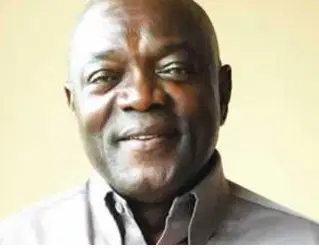
He pointed to the US National Guard model, where locally based forces can support federal operations. “That model allows for flexibility, local ownership of security, and rapid mobilisation. That is the kind of system we should be studying.”
“Until we address the structural foundation of our security challenges, we will continue to go in circles,” Nyiam said. “It is not just about changing strategies or leadership; it is about changing the system itself so that it reflects the realities of our society and empowers the people to be part of their own security.”