

“Obi Kwankwaso Alliance Gains Momentum as ‘OK Movement’ Emerges Ahead of ADC 2027 Presidential Primary”
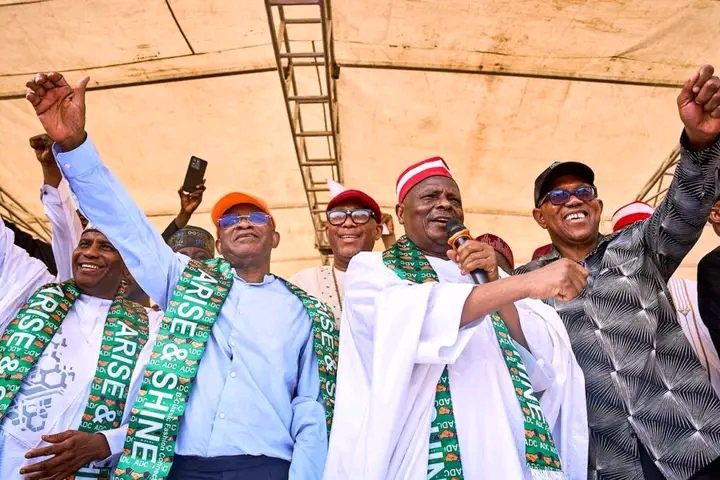
Supporters of Peter Obi and Rabiu Kwankwaso have formally unveiled the “OK Movement,” a new political coalition positioning itself ahead of the African Democratic Congress (ADC) presidential primary for the 2027 general elections. The initiative signals early realignment efforts within Nigeria’s opposition landscape as political actors begin to consolidate influence well ahead of the electoral cycle.
According to organisers, the Obi Kwankwaso (OK) Movement aims to mobilise grassroots support, particularly among youth voters and urban constituencies, while promoting a unified reform-driven agenda. The coalition draws from the strong support bases of both leaders Obi’s appeal among young, reform oriented voters and Kwankwaso’s established political machinery, especially in northern Nigeria.
Political observers say the emergence of the OK Movement reflects ongoing efforts to build a viable third-force alternative capable of challenging Nigeria’s dominant political parties. While neither Obi nor Kwankwaso has formally declared a joint ticket or alliance under the ADC, the mobilisation of their supporters suggests increasing pressure for strategic collaboration ahead of party primaries.
The ADC, a smaller but steadily visible political platform, has in recent election cycles attracted interest from reform minded politicians seeking alternatives outside the traditional power blocs. Analysts note that early coalition-building could prove decisive in shaping the party’s presidential primary and broader electoral competitiveness in 2027.
However, questions remain over the sustainability of the alliance, particularly given Nigeria’s complex political dynamics, regional considerations, and the history of fragile opposition coalitions. Stakeholders within both camps have yet to provide detailed frameworks for leadership structure, policy alignment, or power sharing arrangements.
As the 2027 election horizon approaches, the unveiling of the OK Movement underscores intensifying political recalibration across Nigeria’s opposition space, with potential implications for party alignments, voter mobilisation, and the overall trajectory of democratic competition in Africa’s largest democracy.