


Reported by Musa Antiketu,| Journalist at Obaland magazine.
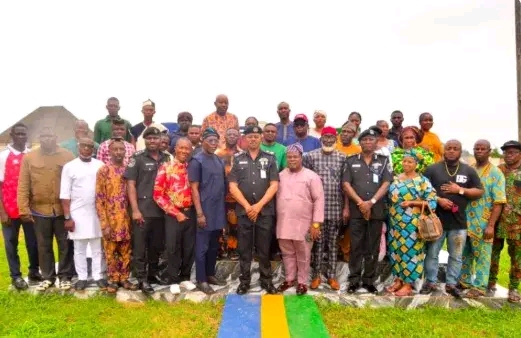
AKURE, ONDO STATE — The Igbo community in Ondo State has visited the state Commissioner of Police following public concern generated by a viral video that allegedly captured police officers making ethnically insensitive remarks during a stop-and-search encounter along the Lagos–Benin Expressway.
The engagement between representatives of the Igbo community and the police authorities comes amid growing public scrutiny over the conduct of the officers involved in the incident and renewed conversations about ethnic profiling, professionalism, accountability and public trust in Nigeria’s security institutions.
The viral footage, which circulated widely on social media, reportedly showed a tense exchange between police officers and a motorist during a roadside stop. According to reports by several Nigerian media organisations, the motorist challenged the officers over the circumstances surrounding the search, while allegations of intimidation, attempted extortion and ethnic profiling emerged during the confrontation.
Of particular concern was an alleged reference to the Igbo ethnic group, which triggered widespread reactions online and raised questions about whether ethnic identity had been improperly introduced into the exercise of police duties.
The incident subsequently attracted the attention of the Ondo State Police Command, which confirmed that four officers captured in the video had been identified and taken into custody pending investigation.
The officers were identified in reports as Assistant Superintendent of Police Elomore Sodayo, Inspector Adefila Adewale, Inspector Olorunfemi Opeyemi and Inspector Odusola Peter.
The police action followed the circulation of the footage and the public reaction that accompanied it. The command said the officers were being investigated over alleged unprofessional conduct and remarks capable of undermining public confidence in the Nigeria Police Force.
The visit by the Igbo community to the Commissioner of Police therefore represents another dimension to the unfolding matter, placing the incident within the broader context of community relations and the need for citizens to feel protected and treated equally by law enforcement agencies, regardless of ethnic background.
Community engagement follows public concern
The meeting between the Igbo community and the police authorities is understood to have focused on concerns arising from the viral footage and the wider implications of the alleged remarks.
For many Nigerians, the issue extends beyond the individuals seen in the video. It touches on a fundamental question at the heart of policing in a multi-ethnic country: whether every citizen can expect equal treatment when interacting with law enforcement officers.
Nigeria is home to hundreds of ethnic groups and languages, with the Igbo, Hausa and Yoruba among the country’s largest population groups. The country’s constitutional framework guarantees equality before the law, while the responsibilities of security agencies require officers to carry out their duties professionally and without discrimination.
Against that background, any suggestion that a person’s ethnic identity could influence how they are treated during a police encounter is likely to attract serious public concern.
The viral video has consequently generated debate over the importance of maintaining professionalism during stop-and-search operations and ensuring that law enforcement decisions are based on legitimate security considerations rather than ethnic identity.
The police have not, however, publicly concluded that the officers are guilty of ethnic discrimination. The command’s response has been framed around an investigation designed to establish the facts and determine the level of responsibility of each officer involved.
That distinction is important. While the footage has generated significant public reaction, the final determination of what occurred and whether any officer breached police regulations remains subject to the outcome of the investigation and disciplinary process.
Police move to investigate officers
The Ondo State Police Command’s decision to take the officers into custody reflects the seriousness with which the authorities have treated the controversy.
According to reports published by The Guardian, The Punch, The Nation, Vanguard and other Nigerian media outlets, the officers were apprehended after the video became widely circulated.
The command’s spokesperson, DSP Jimoh Abayomi, said Commissioner of Police Felix Ohagwu had ordered a thorough investigation into the circumstances surrounding the incident.
The police leadership also reiterated that the Nigeria Police Force does not condone misconduct, incivility or actions capable of promoting ethnic division or damaging public confidence in the institution.
The command reportedly emphasised that police officers are expected to operate with professionalism, respect for human dignity and compliance with established codes of conduct and standard operating procedures.
That position places the investigation under significant public scrutiny. The outcome will be watched not only by the individuals involved but also by community leaders, civil society groups and Nigerians who have expressed concern about police accountability.
For the police, the incident presents an opportunity to demonstrate that disciplinary procedures can be applied transparently when officers are accused of misconduct.
For the public, the expectation is that the investigation will be fair, impartial and based on evidence rather than public pressure.
The wider question of ethnic profiling
The controversy has also revived a longstanding national conversation about ethnic profiling and identity-based discrimination.
In a country as diverse as Nigeria, ethnicity can be a sensitive subject, particularly when it becomes associated with access to public services, security, employment, political representation or law enforcement.
Ethnic profiling occurs when individuals are subjected to suspicion or differential treatment primarily because of their perceived ethnic, religious or cultural identity rather than because of objective evidence or legitimate security considerations.
The principle of impartial policing is therefore central to maintaining public confidence. Citizens must be able to approach or encounter security personnel without fearing that their ethnicity, religion, language or place of origin will determine how they are treated.
The concerns raised by the viral video are particularly significant because policing relies heavily on public cooperation. Citizens are more likely to report crimes, provide information and cooperate with investigations when they trust that security agencies will treat them fairly.
Where trust is weakened, the consequences can extend beyond a single incident.
A perception that certain communities are more likely to be targeted, stereotyped or treated differently can deepen social divisions and make cooperation between citizens and law enforcement more difficult.
This is why the engagement between the Igbo community and the Ondo State Police Command is significant. Dialogue between community representatives and security authorities can help address grievances before they develop into broader tensions.
Social media and the speed of public accountability
The incident also demonstrates the growing influence of social media in shaping accountability in Nigeria.
The video reportedly spread rapidly across social media platforms, allowing members of the public to view and discuss the encounter before the police command publicly responded.
In recent years, smartphones and social media have increasingly become tools through which citizens document encounters with public institutions. In some cases, such recordings have prompted authorities to investigate allegations that might otherwise have received limited attention.
At the same time, viral content can create challenges for responsible journalism and public discourse. Short video clips may not always provide the complete context surrounding an incident, while social media commentary can quickly move from legitimate criticism to unverified claims, misinformation or ethnic generalisations.
For this reason, the responsibility of journalists and media organisations is particularly important.
Professional reporting must distinguish between what is visible in a recording, what witnesses or participants allege, what authorities confirm and what remains unproven.
The Ondo incident reinforces the need for careful reporting that neither dismisses legitimate concerns nor reaches conclusions before due process has been completed.
For Obaland Magazine, the central issue remains the need for accountability, professionalism and equal treatment under the law.
Community relations and the responsibility of security agencies
The relationship between security agencies and local communities is a critical component of effective policing.
Police officers are often the most visible representatives of government encountered by ordinary citizens. Their conduct can therefore influence public perceptions of the state as a whole.
When officers demonstrate professionalism, respect and restraint, they can strengthen public confidence. Conversely, allegations of harassment, intimidation, corruption or discrimination can quickly damage trust.
This is particularly important in a country where security challenges already place significant pressure on relationships between citizens and law enforcement agencies.
The police must therefore ensure that investigations into controversial incidents are conducted promptly and transparently.
The same principle applies to the public.
Community leaders have a responsibility to pursue lawful channels of engagement, while citizens should avoid retaliatory actions, inflammatory rhetoric or collective blame against individuals or ethnic groups.
The alleged conduct of individual police officers should not become a justification for hostility toward the wider police institution, just as criticism of police conduct should not be interpreted as hostility toward law enforcement itself.
The goal should be to strengthen institutions and ensure that officers who violate professional standards are held accountable through established procedures.
A test of institutional credibility
The investigation into the Ondo video will ultimately serve as a test of institutional credibility.
If the allegations are substantiated, appropriate disciplinary action would demonstrate that the police leadership is prepared to enforce its own professional standards.
If the investigation finds that some claims were inaccurate or taken out of context, the authorities will also have a responsibility to communicate those findings clearly and transparently.
Either way, the public deserves a credible account of what happened.
The visit by the Igbo community should therefore be viewed as part of a broader process of engagement rather than as a confrontation between an ethnic group and the police.
At its best, such engagement can help create a channel through which concerns are expressed peacefully and addressed institutionally.
It can also reinforce an important principle: every community in Nigeria has a stake in the integrity of the country’s security institutions.
The Igbo community in Ondo State, like other ethnic communities across the country, has a legitimate interest in ensuring that residents and visitors are treated fairly and with dignity.
Similarly, the police have a responsibility to protect all citizens and maintain public order without discrimination.
The road ahead
As the investigation progresses, attention will remain focused on the outcome of the disciplinary process involving the four officers.
The police command has said that its inquiry will establish the facts surrounding the encounter and determine the individual responsibility of the officers involved.
For the affected community and the wider public, the most important expectation is that the process will be transparent, impartial and consistent with established police procedures.
The episode also provides an opportunity for a broader conversation about police training, community relations and the management of Nigeria’s ethnic diversity.
Training programmes that reinforce professional communication, conflict de-escalation and respect for human dignity can help reduce tensions during roadside checks and other encounters between officers and citizens.
Likewise, clear and accessible mechanisms for reporting police misconduct can strengthen accountability and give citizens confidence that complaints will be taken seriously.
Ultimately, the issue is bigger than a single viral video.
It is about the kind of relationship Nigerians want between citizens and the institutions responsible for their security. It is about whether public officers can be trusted to act impartially and whether citizens can raise concerns without fear of retaliation or ethnic tension.
Nigeria’s diversity is a defining feature of its national identity. Managing that diversity requires institutions that operate on the basis of fairness, professionalism and equality.
The Ondo incident has once again placed those principles under public examination.
As the police investigation continues and the Igbo community engages with the authorities, the focus should remain firmly on facts, due process and accountability.
The objective should not be to deepen ethnic divisions but to ensure that every Nigerian, regardless of identity or origin, can expect to be treated with dignity and equal protection under the law.
For Obaland Magazine, the episode underscores a fundamental principle of democratic governance: public trust is built when institutions are accountable, when grievances are heard and when justice is applied without fear or favour.
The outcome of the investigation will therefore be important not only for the officers involved and the community that raised concerns, but also for the broader effort to build a more professional, inclusive and trusted policing system in Nigeria.
Sources and Related Reports
- The Guardian Nigeria — Reported that four Ondo police officers were arrested following a viral video involving alleged ethnic slurs and unprofessional conduct.
- The Punch — Reported the arrest of four officers after a viral video sparked public outrage over alleged ethnic bias during a stop-and-search operation.
- The Nation Newspaper — Reported that the Ondo State Police Command arrested four officers and launched an investigation following the viral video.
- Vanguard — Reported the identities of the four officers and the police command’s position that misconduct and actions capable of promoting ethnic division would not be tolerated.
- Independent Nigeria — Reported on the public outrage surrounding the alleged ethnic remark and the police disciplinary process.
The Igbo community in Ondo State has engaged the Commissioner of Police after a viral video allegedly showed officers making ethnically insensitive remarks during a stop-and-search encounter, prompting an investigation and renewed debate over police accountability, ethnic profiling and public trust.