


Reported by Musa Antiketu,| Journalist at Obaland magazine.
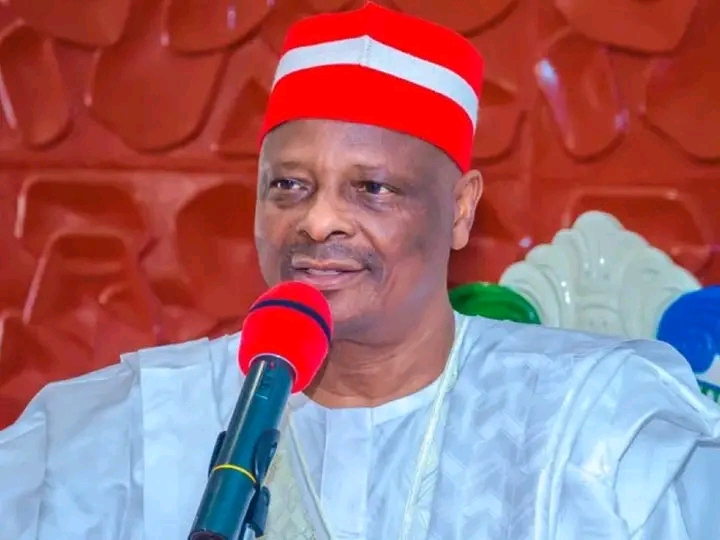
Rabiu Musa Kwankwaso, the vice-presidential candidate of the Nigeria Democratic Congress (NDC), has explained why he accepted to run alongside Peter Obi in the 2027 presidential election, saying his decision was influenced by confidence that the former Anambra State governor would treat him as a genuine governing partner rather than a ceremonial deputy.
Kwankwaso made the remarks during the News Agency of Nigeria (NAN) Personality Interview Series in Abuja, where he discussed his political partnership with Obi and preparations for the 2027 general elections.
The former Kano State governor said his experience in different political positions had shaped his understanding of the importance of an effective relationship between a president and vice-president. He argued that deputies can only make meaningful contributions when they are given defined responsibilities and allowed to participate actively in governance.
The development comes after Obi formally selected Kwankwaso as his running mate on the NDC platform. Obi had earlier pledged that Kwankwaso would operate as a partner in government rather than a “spare tyre”, a phrase commonly used in Nigeria to describe deputies who have limited influence in government.
Why Kwankwaso Backed the Obi Partnership
Kwankwaso’s decision reflects a broader political realignment ahead of Nigeria’s 2027 presidential election. Both politicians contested the 2023 presidential election separately, with Obi finishing third and Kwankwaso fourth. Their decision to work together therefore represents a significant shift from their previous electoral rivalry.
In July, Kwankwaso described Obi as someone Nigerians could rely on, saying that he had come to know the former Anambra governor better since the 2023 election and had developed greater confidence in his leadership qualities and commitment to Nigeria.
The partnership has also been presented by both camps as being rooted in overlapping political priorities, including economic development, education, poverty reduction, human-capital development and improved governance.
Obi separately explained that he chose Kwankwaso because both men shared a philosophy centred on lifting Nigerians out of poverty and using education as a tool for transforming society.
One-Term Agreement Adds Another Dimension
Another important component of the Obi-Kwankwaso arrangement is a reported written agreement concerning the duration of an Obi presidency.
Kwankwaso disclosed in a July interview with Channels Television that Obi had signed an agreement committing to a single four-year term if elected president in 2027. According to Kwankwaso, the arrangement would subsequently allow power to return to Northern Nigeria, reflecting the political understanding surrounding rotational leadership.
The claim has also been reported by The Guardian, which said Kwankwaso confirmed the existence of the written pact and expressed confidence that Obi would honour it.
The agreement has become part of the wider political conversation surrounding the 2027 election, particularly debates over zoning, regional balance and the structure of Nigeria’s presidential politics.
NDC Intensifies 2027 Preparations
The Obi-Kwankwaso ticket is now being accompanied by efforts to strengthen the NDC’s political structure ahead of the election.
In August, Obi and Kwankwaso met with the party’s governorship candidates from Bauchi, Sokoto and Borno in Abuja as part of preparations for the 2027 polls. The meeting reportedly focused on electoral strategy and coordination.
The party has also held strategic consultations involving its leadership and the two presidential candidates as it prepares for the formal campaign season.
However, the alliance faces the broader challenge of converting the political popularity and regional networks of both men into a nationwide electoral coalition capable of competing effectively across Nigeria’s 36 states and the Federal Capital Territory.
The political landscape remains fluid, with opposition parties and politicians continuing to negotiate alliances, while the ruling All Progressives Congress (APC) prepares for the incumbent President Bola Tinubu’s 2027 re-election campaign.
For Kwankwaso, however, his choice to run with Obi appears to be grounded in a calculation that the partnership can provide both men with complementary political strengths while offering Nigerians an alternative political platform.
As the 2027 election approaches, the durability of that partnership, the ability of the NDC to build a national campaign structure, and the response of voters across Nigeria’s geopolitical zones will be critical factors in determining the strength of the Obi-Kwankwaso ticket.
Sources: Channels Television; PUNCH; The Guardian Nigeria; TVC News; Premium Times; PM News Nigeria; News Agency of Nigeria (NAN), as cited in reports above.
Rabiu Kwankwaso explains why he chose to run with Peter Obi in the 2027 presidential election, citing confidence in their partnership, shared priorities and a written one-term agreement.