


“Atiku Condemns Alleged Detention of El-Rufai Ahead of Eid, Demands Immediate Release”
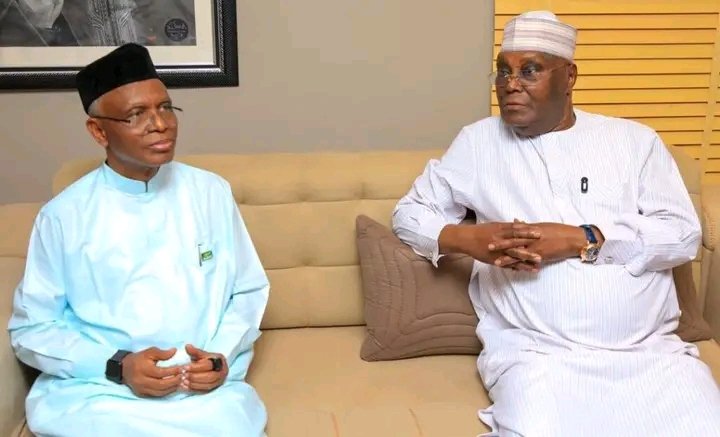
Former Nigerian Vice President Atiku Abubakar has condemned the alleged detention of former Kaduna State governor Nasir El-Rufai ahead of the Eid-el-Kabir celebrations, describing the situation as “cruel, unjust, and politically troubling.”
In a strongly worded reaction, Atiku called for El-Rufai’s immediate release, arguing that any action perceived as politically motivated or targeted at opposition voices undermines Nigeria’s democratic principles and constitutional freedoms. The former presidential candidate stressed that no citizen should be subjected to unlawful detention or intimidation, especially during a significant religious period marked by peace, unity, and reflection among Muslims across the country.
According to Atiku, detaining a prominent political figure without transparent legal justification raises serious concerns about civil liberties, the rule of law, and the protection of democratic institutions in Nigeria. He urged relevant authorities to act within constitutional boundaries and ensure that justice is not compromised by political considerations.
The controversy surrounding El-Rufai’s reported detention has generated widespread public attention and political debate, with supporters and critics expressing differing opinions across social and traditional media platforms. Political observers note that the development comes amid heightened political tensions and increasing scrutiny of opposition figures in Nigeria’s evolving democratic landscape.
Atiku further warned that actions capable of eroding public trust in democratic governance could deepen political divisions and damage Nigeria’s international image. He maintained that democracy thrives where citizens are free to express dissenting opinions without fear of persecution or arbitrary restrictions.
While authorities have yet to provide comprehensive public clarification regarding the circumstances surrounding the alleged detention, civil society groups and political stakeholders have continued to call for transparency and adherence to due process.
The development has also reignited conversations around political tolerance, human rights protections, and the broader state of democratic freedoms in Africa’s most populous nation. Analysts say the handling of politically sensitive cases remains critical to strengthening Nigeria’s democratic credibility both domestically and internationally.