


Reported by Musa Antiketu,| Journalist at Obaland magazine.
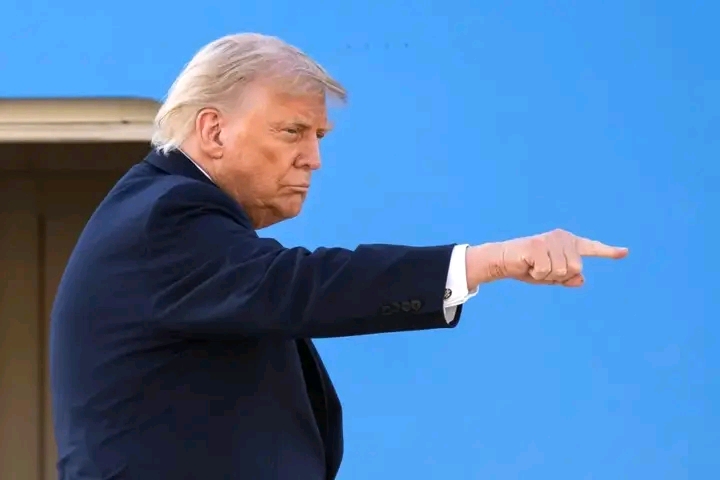
WASHINGTON — US President Donald Trump has threatened to declare the strategically vital Strait of Hormuz “territory of the United States” if Iran is defeated, adding a new and potentially far-reaching dimension to the escalating confrontation between Washington and Tehran.
Trump made the remarks on Friday, August 14, 2026, as tensions over the major international shipping route remain high and diplomatic efforts to resolve the US-Iran conflict continue to face difficulties. The president argued that the United States had effectively established control over the waterway through its military presence and blockade, while portraying Iran as severely weakened by the conflict.
The Strait of Hormuz, located between Iran and Oman, is one of the world’s most important maritime corridors. It serves as a major route for global energy shipments, with roughly one-fifth of the world’s oil supply passing through the waterway under normal conditions. Disruption to shipping through the strait therefore carries consequences far beyond the Middle East, potentially affecting crude oil prices, transportation costs, inflation and energy security across Africa, Asia and Europe.
Trump signals possible US territorial claim
Trump’s latest declaration goes beyond his administration’s previous threats to blockade Iranian shipping and impose economic pressure on Tehran.
According to reports by The Guardian and MarketWatch, Trump said the United States could declare the Strait of Hormuz US territory after what he described as the defeat of Iran. However, he did not provide details about the legal or diplomatic process through which such a territorial claim could be implemented.
Any attempt by Washington to unilaterally convert the international waterway into US territory would raise significant questions under international law and could trigger opposition from Iran, Oman and other countries with interests in the Persian Gulf.
Iran has already rejected American claims to control the waterway. Iranian officials have repeatedly maintained that the strait’s status cannot be determined by Washington.
The latest confrontation comes after months of military escalation and competing claims over who has authority to regulate maritime traffic through the passage.
Shipping traffic remains severely disrupted
The strategic importance of Trump’s statement is underscored by the continuing decline in maritime traffic through Hormuz.
Reuters reported on Friday that commodity vessel traffic through the strait remained well below its August average. Nine commodity vessels were recorded crossing on Thursday, compared with five the previous day and an August average of about 12 per day, according to shipping-data provider Kpler.
The disruption is occurring against a backdrop of renewed attacks and heightened military activity. The Associated Press reported that two oil tankers operated by the United Arab Emirates’ state-owned Abu Dhabi National Oil Company were attacked by drones while transiting the strait on Friday. No casualties were reported. The UAE blamed Iran for the attacks, an allegation that forms part of the wider dispute over maritime security in the region.
The United States has maintained that its military actions are intended to protect navigation and pressure Iran, while Tehran has continued to assert its own authority over the waterway.
Global energy markets feel the pressure
The continuing uncertainty around Hormuz has already affected global energy markets.
Reuters reported that Brent crude rose by $1.45 to $88.52 a barrel on Friday, while US West Texas Intermediate increased by $1.15 to $82.40. Both benchmarks were on course for substantial weekly gains as investors assessed the impact of tanker attacks and the lack of progress in peace negotiations.
For African economies, sustained disruption could have particularly serious implications. Many African countries remain exposed to international oil-price movements through fuel imports, transportation costs, foreign-exchange pressures and inflation.
Nigeria, Africa’s largest oil producer, could potentially benefit from higher crude prices through increased export earnings, but the gains could be complicated by domestic fuel costs, exchange-rate pressures and broader inflationary effects. The wider economic impact will depend on the duration and scale of the disruption.
Diplomatic stalemate persists
The territorial threat comes as attempts to reach a durable settlement between Washington and Tehran remain stalled.
Reuters reported that Iran has refused to fully reopen the waterway under the current circumstances, linking its position to demands including the lifting of US sanctions, compensation for wartime damage and the release of frozen Iranian assets.
The deadlock has increased concerns that the Strait of Hormuz could remain a central flashpoint in the wider conflict.
Earlier US actions had already included a naval blockade directed at Iranian shipping. Reuters reported in July that Trump ordered the reinstatement of a blockade and proposed a 20% charge on cargo passing through the strait, although his administration subsequently moved away from the broader shipping-fee proposal.
The latest territorial statement therefore represents a significant escalation in rhetoric, particularly because the strait is not simply a bilateral US-Iranian asset. Its waters and surrounding territories are connected to the sovereignty and maritime interests of countries including Iran and Oman.
What happens next?
Trump’s declaration is likely to intensify international scrutiny of Washington’s objectives in the region.
For the moment, the statement remains a political declaration rather than an established change in the legal status of the Strait of Hormuz. There is no indication that the United States has formally acquired sovereignty over the waterway.
The central concern for international markets is whether the rhetoric will translate into additional military measures or prolonged restrictions on commercial shipping.
As the United States and Iran remain locked in a confrontation over security, sanctions, nuclear issues and maritime control, the future of Hormuz will remain closely watched by governments, energy companies, shipping operators and financial markets worldwide.
For Africa, the stakes are equally significant. Any prolonged disruption to one of the world’s principal energy corridors could influence fuel prices, inflation, trade costs and economic stability across the continent.
Obaland magazine will continue to monitor developments around the Strait of Hormuz, the US-Iran conflict and their wider implications for Africa and the global economy.
Sources
Donald Trump threatens to declare the Strait of Hormuz US territory after defeating Iran, escalating tensions over the vital global energy corridor amid disrupted shipping and stalled diplomacy.