



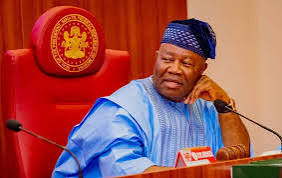
Senate President Godswill Akpabio has said Nigeria is recording progress under President Bola Ahmed Tinubu’s administration, arguing that the Federal Government’s economic reforms are beginning to produce results while insecurity is gradually declining.
Akpabio made the remarks after leading a delegation of the National Assembly to President Tinubu’s residence in Ikoyi, Lagos, as part of activities marking Nigeria’s 66th Independence Anniversary. The delegation included senior members of the National Assembly and used the occasion to reaffirm the legislature’s continued cooperation with the executive.
According to Akpabio, lawmakers believe the reforms introduced by the Tinubu administration are producing positive outcomes, particularly in the areas of the economy and national security. He also acknowledged that challenges remain in some parts of the country.
“We believe he is doing well. These reforms are working and, as far as we are concerned, insecurity is abating,” Akpabio said, according to reports of his interaction with journalists after the visit.
His comments come amid continuing public debate over the effects of the administration’s economic policies, including changes to taxation, foreign exchange management and the petroleum sector. The reforms have been presented by the government as measures intended to strengthen public finances, attract investment and create a more sustainable economic foundation.
The Secretary to the Government of the Federation, George Akume, separately said during Nigeria’s 66th Independence Anniversary celebrations that economic reforms had begun to contribute to improved economic stability. He cited World Bank figures showing real GDP growth of 4.2 per cent in the first half of 2026, compared with 3.9 per cent during the corresponding period of the previous year.
However, economic growth figures do not by themselves establish how reforms are affecting every household. Nigerians continue to face pressures associated with living costs, employment, purchasing power and the adjustment to structural economic changes. Akpabio’s assessment therefore represents the position of the National Assembly leadership and the administration’s supporters, rather than an uncontested measure of nationwide welfare.
On security, Akpabio’s assertion that insecurity is abating comes against the background of continuing military and security operations across parts of Nigeria. The Federal Government has repeatedly highlighted security operations and inter-agency cooperation as part of its broader national development agenda, while security challenges remain a significant concern in several communities.
The Senate President also reaffirmed the National Assembly’s commitment to working with the Tinubu administration. He pointed to legislative measures, including changes to existing laws and the government’s tax reform programme, as areas in which the legislature has been cooperating with the executive.
The National Assembly’s position reflects the constitutional relationship between the executive and legislative branches, with lawmakers responsible for legislation, oversight and representation while the executive implements government policies and programmes.
As Nigeria marks 66 years of independence, Akpabio has also called for greater national unity and collective responsibility. In his Independence Day message, he acknowledged that the country’s post-independence journey has included both achievements and serious challenges, while urging citizens to remain committed to national cohesion and peaceful coexistence.
The Federal Ministry of Information and National Orientation also reported that Akpabio had urged Nigerians to remain supportive of efforts aimed at transforming Nigeria’s economic potential into sustainable development. He cited economic growth, student financing, infrastructure projects and investment in the gas sector among areas he said were showing progress.
For Nigerians, the central question remains whether reported improvements in macroeconomic indicators, security operations and government reforms will translate into measurable improvements in household incomes, employment, public services, food security and personal safety.
Akpabio’s remarks therefore place renewed emphasis on the Tinubu administration’s reform agenda and the National Assembly’s stated willingness to support it, while the effectiveness of those policies will continue to be assessed through economic performance, security outcomes and their practical impact on citizens.
Senate President Godswill Akpabio says President Bola Tinubu’s reforms are producing results and insecurity is declining as the National Assembly pledges continued support.