Bangkok Protests Challenge IMF and World Bank Over Poverty, Inequality and Rising Household Debt.
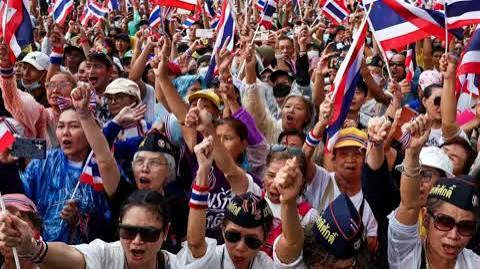
Demonstrators took to the streets of Bangkok on Thursday, October 15, 2026, to protest poverty, economic inequality, environmental destruction and rising household debt as global financial leaders gathered in the Thai capital for the 2026 Annual Meetings of the International Monetary Fund (IMF) and the World Bank Group.
The demonstrations brought public concerns about the cost of living, economic hardship and the consequences of global financial policies into focus alongside discussions among international policymakers about economic growth, financial stability and development.
According to the Associated Press, protesters criticised the economic and social conditions affecting ordinary people, drawing attention to inequalities they believe are being worsened by existing economic policies. The demonstration also reflected dissatisfaction with the Thai government and the broader international financial system.
The protests took place during the annual meetings, scheduled for October 12–18, which have brought together finance ministers, central bank governors, development officials, private-sector representatives and civil society organisations to discuss major global economic challenges.
Protesters Highlight Economic Hardship and Environmental Concerns
Poverty, rising household debt and environmental degradation featured prominently in the demonstrators’ grievances. Their concerns reflect wider debates about whether economic growth and international development policies are delivering sufficient benefits to low-income households and vulnerable communities.
Household debt remains a significant economic challenge in Thailand, where financial pressures have affected consumer spending and complicated efforts to strengthen domestic demand. Economic growth has also faced structural constraints, raising concerns about the country’s ability to deliver sustained improvements in living standards.
Environmental challenges have added to these pressures, particularly for communities exposed to flooding, extreme weather and other climate related disruptions.
The demonstrations also highlighted a broader question confronting policymakers: how can governments pursue economic growth while ensuring that the benefits reach people struggling with rising living costs, debt obligations and limited economic opportunities?
Although the IMF and World Bank have different mandates, both institutions play influential roles in shaping international economic policy. The IMF focuses primarily on global monetary cooperation, financial stability and economic surveillance, while the World Bank Group concentrates on development financing and poverty reduction.
Their policies and financing arrangements have periodically attracted criticism from civil society groups concerned about debt sustainability, inequality and the social consequences of economic reforms.
Global Debt and Economic Uncertainty Dominate Discussions
The protests coincided with growing international concern over public debt, elevated borrowing costs, energy prices and geopolitical instability.
In its coverage of the Bangkok meetings, News reported that the economic consequences of the conflict involving the United States, Israel and Iran, alongside rising debt levels and energy-market pressures, were among the major issues confronting global financial leaders.
These challenges are particularly significant for developing economies, where governments often face competing demands to service external debts, finance public infrastructure and maintain essential services such as healthcare, education and social protection.
For many low and middle income countries, higher borrowing costs can reduce the resources available for development programmes. When governments devote a substantial share of public revenue to debt repayments, their capacity to respond to poverty, unemployment and environmental emergencies can become increasingly constrained.
The concerns are relevant across Africa, where several countries continue to navigate debt pressures, limited fiscal space and demands for greater investment in productive sectors.
African policymakers and development advocates have repeatedly emphasised the importance of affordable financing, sustainable debt arrangements and reforms that support job creation and inclusive economic growth.
The Bangkok discussions therefore carry implications beyond Thailand, particularly for developing countries seeking to balance financial stability with urgent social and economic needs.
Calls for More Inclusive Development
The demonstrations have renewed attention to questions about the accountability of international financial institutions and the effectiveness of development policies in addressing inequality.
For critics, the challenge is not simply to increase economic output but to ensure that growth translates into improved living standards, decent employment, accessible public services and greater economic security.
The IMF and World Bank have both identified poverty reduction, economic resilience and inclusive development as important areas of their work. Their annual meetings provide a platform for governments, researchers, civil society organisations and private sector representatives to exchange views on these priorities.
The World Bank’s programme for the 2026 meetings includes public discussions on mobilizing private investment for employment and development, alongside forums intended to facilitate engagement with civil society groups.
However, translating international commitments into measurable improvements remains a central challenge, particularly for communities facing persistent poverty, environmental risks and mounting household financial obligations.
For protesters in Bangkok, the demonstrations provided an opportunity to draw attention to the gap they perceive between high level economic discussions and the daily realities experienced by ordinary people.
Implications for Developing Economies
The events in Bangkok underscore the importance of placing social welfare, environmental sustainability and debt management at the centre of international economic discussions.
For African countries, the issues raised are particularly relevant as governments seek financing for infrastructure, agriculture, industrialisation, healthcare and education while managing debt-servicing obligations and external economic shocks.
The outcome of the IMF and World Bank meetings will be closely watched for indications of how international institutions and national governments intend to respond to these overlapping pressures.
Ultimately, the challenge facing global financial leaders extends beyond maintaining economic stability. It also involves ensuring that development policies deliver tangible benefits to communities most vulnerable to economic disruption.
As the meetings continue through October 18, the Bangkok protests serve as a reminder that global economic decisions have consequences far beyond conference halls, affecting household finances, employment opportunities and the quality of life of millions of people.