


BOA Deepens Women Farmers’ Finance Drive, Targets 3 Million Beneficiaries Through New Agricultural Support Programme.
The Bank of Agriculture (BOA) has strengthened its intervention for women farmers in Nigeria through a new partnership with the Federal Ministry of Women Affairs and Social Development aimed at widening access to affordable agricultural finance, inputs, mechanisation and markets.
The initiative, formalized through a Memorandum of Understanding (MoU) signed in Abuja, is being implemented under the Renewed Hope Women Agro Value Expansion (RH WAVE) Programme. The partnership is expected to reach at least three million women farmers across Nigeria over the next three to five years.
Under the arrangement, BOA and the ministry will work to address some of the longstanding barriers confronting women in agriculture, particularly limited access to credit, productive inputs, mechanisation, processing facilities and reliable markets. The programme is designed to support women beyond primary production by connecting them to wider agricultural value chains.
The first phase will provide concessional input financing to 10,000 women farmers through Farmer Aggregation Companies, with interest rates below 10 per cent annually. A dedicated financing window for greenhouse farming is also planned to encourage year round and climate smart agricultural production.
The partnership will also establish women led agricultural hubs equipped with tractors, solar powered dryers and processing facilities. According to details of the agreement, participating women are expected to benefit from the Federal Government’s 40 per cent subsidy on agricultural equipment, while financing arrangements will allow beneficiaries to acquire productive assets and repay over an extended period.
Another component focuses on market access. Women’s aggregation channels are expected to provide stronger links to buyers and establish minimum purchase prices above prevailing market rates, a move intended to give farmers greater income stability and reduce some of the risks associated with selling produce in fragmented agricultural markets.
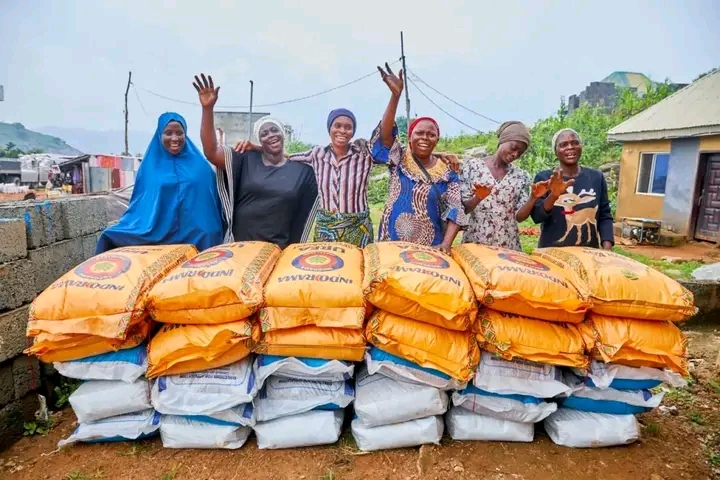
BOA Managing Director and Chief Executive Officer, Ayodeji Sotinrin, said the bank would initially support about 200,000 women with financing and productivity enhancing tools, including improved seedlings and extension support. He said more than 33,000 women had already expressed interest during the programme’s pilot phase.
Implementation is expected to begin in Plateau, Kaduna, Katsina, Kano, Sokoto, Bauchi and Nasarawa states before expanding to other parts of the country. The partnership will operate through a Joint Steering Committee, Programme Management Unit and State Coordination Nodes to oversee implementation and coordination.
The intervention comes amid broader efforts by BOA to expand agricultural financing and input delivery. In July, the Federal Ministry of Agriculture and Food Security reported that BOA was supporting a nationwide programme expected to reach two million smallholder farmers, with more than 1.1 million bags of fertiliser and 16,470 metric tonnes of improved seeds being deployed through Farmer Aggregation Companies across more than 20 states. About one third of beneficiaries were reported to be women.
The focus on women farmers also reflects a longstanding financing challenge in Nigeria’s agricultural sector. Previous research has identified limited access to credit, land, quality inputs, extension services and markets as major constraints affecting women’s agricultural productivity. A 2020 study of female farmers in Ekiti State found that 77.8 per cent of surveyed beneficiaries reported increased production capacity after accessing BOA loans, although respondents also reported challenges including bureaucratic delays and difficulties obtaining credit.
The latest BOA initiative therefore places considerable emphasis on moving from isolated credit interventions towards a broader value chain model that combines financing with inputs, mechanisation, processing and market opportunities. Its success, however, will depend on transparent beneficiary selection, timely disbursement, effective monitoring and the ability of participating farmers to access the promised services beyond the initial financing stage.
The partnership is part of a wider government push to position women as central participants in Nigeria’s agricultural transformation. The Federal Ministry of Information has previously reported that its collaboration with BOA is intended to expand women’s access to finance, land, agro processing facilities, markets and sustainable agricultural value chains.
For millions of women whose livelihoods depend on agriculture, the immediate test will be whether the new financing architecture can translate policy commitments into affordable credit, quality inputs, productive assets and dependable markets at the grassroots.