Category: news

  • Team Nigeria ended its campaign at the 2026 Common wealth Games

    Team Nigeria ended its campaign at the 2026 Common wealth Games

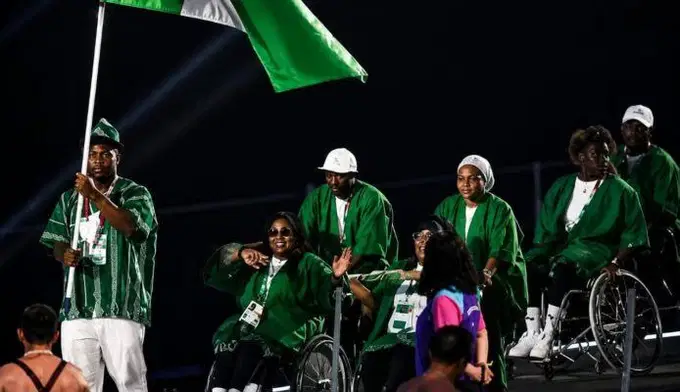
    Team Nigeria ended its campaign at the 2026 Common wealth Games in Glasgow on a high, finishing 7th on the overall medals table and emerging as Africa’s best-performing nation.
    The Nigerian contingent left Scotland with 24 medals — 10 gold, 7 silver, and 7 bronze— across athletics, weightlifting, para-sports and judo. That placed Nigeria ahead of other African giants South Africa and Kenya, and marked one of the country’s strongest showings at the Games in recent history.Team Nigeria ended its campaign at the 2026 Commonwealth Games
    Australia dominated as hosts, topping the standings with *171 medals including 70 gold*. England came second with 110 medals, followed by Canada in third. India, Scotland and New Zealand rounded out the top six.
    For Nigeria, 7th place was a statement. It reflected depth, not just in one sport, but across track, field, strength and para-athletics.
    Track and field delivered the biggest headlines for Nigeria in Glasgow, with a mix of historic firsts and personal bests.
    made history in the men’s 400m. Running a time of 44.25 seconds, he became the first Nigerian man to win Commonwealth gold in the event. His powerful finish in the final announced him as one of the world’s rising quarter-milers.
     wrote his name into the record books. He won the men’s 400m hurdles, becoming the first Nigerian man to claim the Commonwealth title in that race. It was a breakthrough moment for an athlete many had tipped for big things.
     gave Nigeria another first. His gold in the men’s shot put was the country’s first-ever Commonwealth gold in the event. The thrower has been consistent on the global stage for years, and Glasgow finally brought him a Commonwealth crown.
     silver in the women’s long jump with one of the best leaps of her career. Her performance showed Nigeria’s continued strength in horizontal jumps.
    On the track, *Udodi Onwuzurike* upgraded from his 6th place finish in Birmingham 2022 to win silver in the men’s 200m. The sprint showed his growth and maturity over the last four years.
    delivered one of the most emotional moments for Nigeria. Her bronze in the women’s 400m ended a 32-year wait for a Nigerian woman to medal in the event at the Commonwealth Games.
     world record holder in the 100m hurdles, added bronze to her collection. While gold would have been the target, another Commonwealth medal keeps her as one of Nigeria’s most decorated athletes.
     continued Nigeria’s tradition of strength, picking up multiple medals across weight categories. *Para-athletes* again proved to be a reliable source of gold, with Nigerian powerlifters and track athletes delivering under pressure.
    The spread of medals across four different sports shows a shift. Nigeria is no longer relying on just one or two disciplines to carry it.
    For the athletes, the atmosphere was electric. For Nigeria, it was also a chance to reassert itself on the Commonwealth stage after a mixed outing in Birmingham 2022.
    Finishing 7th and topping Africa will boost confidence ahead of the 2028 Olympics and future world championships.
    The performances of Ogazi, Nathaniel, Enekwechi and Onojuvwevwo point to a new generation stepping up. Veterans like Amusan provide the experience and standard.
    Officials will also take lessons on funding, preparation, and athlete welfare. Many of the medalists spoke about better training camps and support in the lead-up to Glasgow. Sustaining that will be key.
    Sports analysts say the results should push more investment into grassroots development, coaching, and facilities. With weightlifting, para-sports and judo also delivering, there’s an argument for spreading resources beyond football.
    Back home, Nigerians celebrated the results online and in viewing centers. For a country that loves sports, seeing the flag raised 10 times for gold was a moment of pride.
    Team Nigeria’s Chef de Mission called the performance “a testament to hard work, resilience and the talent we have.”
    From Ogazi’s historic 400m to Enekwechi’s first shot put gold, from Usoro’s long jump silver to Onojuvwevwo breaking a 32-year drought, Glasgow 2026 gave Nigerian fans plenty to cheer about.
    Nigeria didn’t just compete. It announced itself. And as Africa’s best in Glasgow, the message is clear: the future of Nigerian sports is bright.
  • The Federal Government has rejected claims that it is ceding Nigeria’s solid minerals to Chinese companies,

    The Federal Government has rejected claims that it is ceding Nigeria’s solid minerals to Chinese companies,

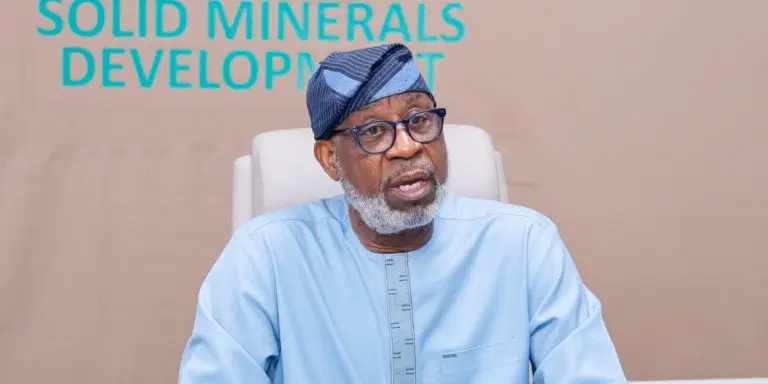
    ABUJA — The Federal Government has rejected claims that it is ceding Nigeria’s solid minerals to Chinese companies, insisting that the mining sector remains open to investors from across the world under strict compliance with local laws.
    Kehinde Bamigbetan, Special Adviser on Media and Strategy to the Minister of Solid Minerals Development, Dr. Dele Alake, said the allegations were false and part of a deliberate attempt to discredit the minister.The Federal Government has rejected claims that it is ceding Nigeria’s solid minerals to Chinese companies,
    Bamigbetan was responding to a publication by Steve Kefas titled _“How Nigeria’s Mineral Wealth is Being Handed Over to the Chinese.”_ The article alleged that the Tinubu administration was favoring Chinese firms in the allocation of mining rights.
    According to Bamigbetan, the controversy stems from the recent revocation of mining licences belonging to Basin Mining Limited, described as a Nigerian subsidiary of British-Australian company Jupiter.
    He explained that the licences were withdrawn after the company failed to pay statutory annual service fees.
    “The outstanding fees stood at N1.223 billion and later accumulated to N2.494 billion before the revocation,” he said.
    Rather than settle the debt, Bamigbetan said Jupiter dragged the Federal Government to an international arbitration court. At the same time, he alleged, the company launched a media campaign to pressure the ministry into reversing its decision.
    “That is where this so-called report is coming from. It is not about China. It is about a company that refused to comply with Nigerian law,” he stated.
    He said since taking office, the minister has held engagements with investors from Europe, America, Canada, Australia and other regions.
    “Dr. Alake has visited China only twice — once as part of President Bola Tinubu’s state visit and again to attend China Mining Week 2025 at the invitation of the Chinese government,” Bamigbetan noted.
    He added that the minister has also been to the London Mines and Money conference, Mining Indaba in Cape Town, and made investment trips to Australia.
    The presidential aide said the core of the current reforms is local value addition — compelling mining companies to process minerals in Nigeria instead of exporting raw ore.
    Under this policy, several Chinese companies have already set up processing plants in the country. But Bamigbetan stressed that the door remains open to all compliant investors.
    “Nigeria has about 44 minerals in commercial quantities. We need technology, capital and expertise. We are not going to limit ourselves to one country,” he said.
    He noted that more than 300 companies from Europe, America, Canada and Australia are already active in different segments of Nigeria’s solid minerals sector.
    Bamigbetan argued that foreign participation in mining did not start with the Tinubu administration.
    He traced the liberalisation of the sector to the 1990s, with the establishment of the Nigerian Investment Promotion Commission and other reforms that opened the economy to foreign capital.
    “What we are doing differently now is insisting on beneficiation. We don’t want to remain a country that just digs and ships out raw materials,” he said.
    The aide acknowledged Nigeria’s long-standing economic ties with China in trade, infrastructure, technology and investment. He said the decision to elevate relations to a “strategic partnership” under President Tinubu has also led to increased investment commitments.
    He defended collaboration with China in mining as a global reality, given the country’s dominance in processing critical minerals like lithium, cobalt and rare earths.
    Bamigbetan also cited ongoing technical cooperation between the Nigeria Geological Survey Agency and the China Geological Survey Agency on geological mapping and exploration.
    But he was quick to add: “That does not mean we are shutting out the West. Our policy is inclusive.”
    Our goal is to reposition the sector for economic growth, job creation and revenue diversification,” he said. “We want responsible investment — whether from China, Europe, America or Nigeria.”
    Bamigbetan said the ministry will not be distracted by what he called “mischievous narratives.”
    “Nigeria’s minerals belong to Nigerians. Our job is to ensure they are exploited transparently, legally, and in a way that benefits our people,” he concluded.
    As global demand for critical minerals rises, the Tinubu administration says it is betting on reforms, enforcement, and partnerships to make mining Nigeria’s next major economic pillar — not oil.
  • Iraq Denies Approving US-Saudi Strikes That Killed 20 Militants on Its Soil*

    Iraq Denies Approving US-Saudi Strikes That Killed 20 Militants on Its Soil*

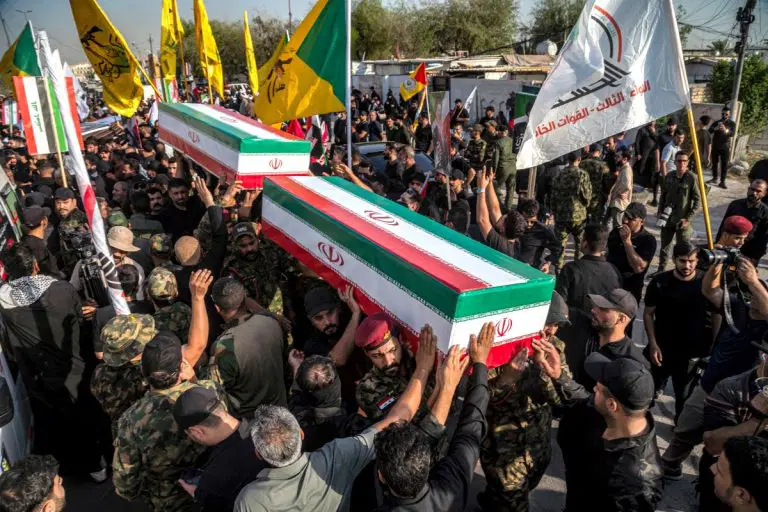
    BAGHDAD — Iraq says it had no prior knowledge of, and did not approve, deadly US-Saudi strikes on its territory that killed at least 20 militants, including Iranians.
    Government spokesperson Haider al-Aboudi told state TV on Thursday that Baghdad was not consulted before the attacks.
    “The government did not have any knowledge” of the strikes and “did not approve any attacks on specific sites or groups in Iraq,” Aboudi said.
    According to the Hashed al-Shaabi, Iraq’s Popular Mobilisation Forces that include pro-Iran armed groups, the US-Saudi strikes took place on Wednesday in Diyala province in central Iraq.
    The group said at least 20 militants were killed, including five Iranians. Funerals were held in Baghdad on Tuesday for those killed.
    The US and Saudi Arabia said the strikes were carried out in response to recent attacks. Riyadh said its air defenses had intercepted drones targeting oil facilities and blamed Iran-backed groups operating in Iraq. Washington said the strikes were also in response to attacks on US forces in the regionNigeria:Iraq Denies Approving US-Saudi Strikes That Killed 20 Militants on Its Soil
    A Fox News correspondent, after speaking with US President Donald Trump, reported that Trump claimed the strikes “were coordinated with the Iraqi government.” Baghdad disputes that.
    The strikes have already had diplomatic consequences. Aboudi said Iraqi Prime Minister Ali al-Zaidi has suspended a planned visit to Saudi Arabia because of the attacks.
    Zaidi came to power earlier this year with backing from Washington and has publicly pledged to push Iran-backed armed groups to hand over their weapons. Those groups, operating under the banner of the Islamic Resistance in Iraq, came under increased US pressure after they launched attacks on US facilities during the recent Middle East war in support of Tehran.
    The groups have denied attacking Saudi Arabia. In a statement after the strikes, they warned that a response to the attacks in Iraq was “inevitable.”
    The incident highlights Iraq’s difficult position between its two main allies, Washington and Tehran.
    The US maintains troops in Iraq and provides security assistance. Iran has deep political and military ties through the Hashed al-Shaabi and other allied groups. That rivalry has repeatedly turned Iraq into a proxy battleground, forcing successive governments to try to balance relations with both powers.
    US pressure on Baghdad to disarm Iran-backed militias has intensified in recent months. The latest strikes are likely to deepen tensions between the Iraqi government, the US, and Saudi Arabia, while also raising questions about sovereignty and coordination on military operations inside Iraq.
    As of Thursday, there had been no further strikes reported. Security in Baghdad and other major cities remained tight amid fears of retaliation.
  • Atiku to Tinubu: ‘You’re a Drowning Man’ — Wrestle Inflation, Not Opponents

    Atiku to Tinubu: ‘You’re a Drowning Man’ — Wrestle Inflation, Not Opponents

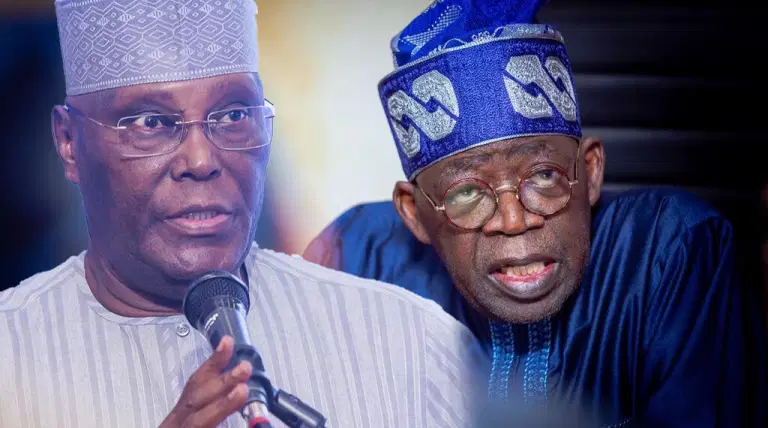
    ABUJA — Presidential candidate of the African Democratic Congress, ADC, Atiku Abubakar, has fired back at President Bola Tinubu over his “wrestle to the finish” remark, saying the President should focus on tackling Nigeria’s economic and security crises instead of political opponents.
    In a statement issued on Wednesday by his Senior Special Assistant on Public Communication, Phrank Shaibu, Atiku described Tinubu’s comment as “the lamentation of a drowning man” trying to divert attention from what he called an abysmal record in office.
    He said the comment was particularly troubling because it came in response to a solemn appeal by the Catholic Bishops’ Conference of Nigeria for credible, transparent and peaceful elections.
    According to Atiku, the President’s reply reflected “a prevailing sense of aloofness and a troubling lack of courtesy, humility and decorum expected of him during such a high-profile engagement with one of the country’s most respected moral institutions.
    The former Vice President argued that a leader presiding over what he called the worst cost-of-living crisis in recent memory should be focused on different priorities.
    “A president ought not to be talking about wrestling political opponents but about wrestling inflation to the ground, defeating hunger, restoring security, stabilising the naira and rebuilding public confidence in government,” he said.
    Atiku to Tinubu: ‘You’re a Drowning Man’ — Wrestle Inflation, Not Opponents
    “When leaders fail, they often resort to political theatre in the hope that loud rhetoric will drown out the cries of suffering citizens,” he stated.
    “These are the words of a drowning man. A government that has little to celebrate inevitably seeks refuge in chest-thumping. But Nigerians are no longer interested in political performances. They are interested in performance in government.
    Empty slogans cannot fill empty stomachs. Boastful declarations cannot lower food prices. Threats against political opponents cannot restore the value of the naira.”
    His greatest opponent is his own record. Every unpaid worker, every struggling business, every unemployed graduate, every victim of insecurity and every hungry family is a living testimony to the consequences of his administration’s choices. That is the contest he has consistently failed to win.”
    He added that democracy should be about ideas and accountability, not confrontation.
    “Democracy is a marketplace of ideas and accountability. In 2027, Nigerians will not be stepping into a wrestling arena. They will be stepping into polling units to deliver a constitutional verdict,” Atiku said.
    The ADC candidate urged President Tinubu to use the remainder of his tenure to address what he described as the nation’s deepening crises, rather than “manufacturing imaginary political battles.”
    He listed the key issues requiring urgent attention as rising inflation, food insecurity, unemployment, insecurity, and the continued depreciation of the naira.
    The statement marks the latest exchange between the opposition and the presidency ahead of the 2027 general elections, with economic hardship and governance remaining central points of debate
  • Tinubu Declines Meeting With South African Delegation as Nigeria Hardens Stand Against Xenophobic Attacks!

    Tinubu Declines Meeting With South African Delegation as Nigeria Hardens Stand Against Xenophobic Attacks!

    Reported by Musa Antiketu,| Journalist at Obaland magazine.

    ABUJA, Nigeria — President Bola Ahmed Tinubu has reportedly declined to personally receive a South African delegation that travelled to Nigeria amid heightened diplomatic concerns over renewed xenophobic attacks and growing fears about the safety of Nigerians living in South Africa.

    The delegation, reportedly led by South Africa’s Minister of International Relations and Cooperation, Ronald Lamola, is said to have arrived in Abuja carrying a message from South African President Cyril Ramaphosa. Rather than meeting the delegation directly, President Tinubu reportedly directed the officials to engage with Nigeria’s Minister of Foreign Affairs, Bianca Odumegwu-Ojukwu.

    The development, reported by Nigerian media outlets, comes against the backdrop of escalating concerns over attacks and anti-foreigner sentiments targeting Nigerians and other African migrants in South Africa. It also follows a series of diplomatic measures by the Nigerian government, including the establishment of crisis-response mechanisms for Nigerians at risk and the voluntary evacuation of citizens from areas affected by xenophobic violence.

    While the reported decision by President Tinubu to delegate the meeting has not, at the time of publication, been accompanied by a detailed official statement from the Nigerian presidency explaining the move, it has been widely interpreted as a sign of Abuja’s growing displeasure with the handling of attacks against Nigerians in South Africa.

    The reported diplomatic encounter also comes at a particularly sensitive moment in Nigeria-South Africa relations, two of Africa’s largest economies and most influential political powers. The relationship between both countries has historically combined economic cooperation and strategic partnership with periodic diplomatic disagreements, particularly over migration, crime allegations, business competition and xenophobic violence.

    Nigeria’s growing concern over attacks on its citizens

    Nigeria’s latest diplomatic posture follows months of concern over the treatment of Nigerians in South Africa.

    In May, President Tinubu directed Nigerian diplomatic missions in South Africa to establish a crisis notification unit to assist Nigerians facing threats amid renewed xenophobic tensions and anti-foreigner protests. The directive was disclosed by Foreign Affairs Minister Bianca Odumegwu-Ojukwu following a telephone conversation with her South African counterpart, Ronald Lamola.

    The Nigerian government also advised its citizens facing immediate threats to contact South African security authorities and seek assistance through diplomatic channels.

    The measures reflected Abuja’s concern that Nigerians living and doing business in South Africa were increasingly exposed to hostility and violence. Nigerian officials have repeatedly insisted that the safety and dignity of Nigerian citizens abroad remain a priority of the federal government.

    The issue subsequently escalated into a broader diplomatic concern. In June, the Federal Government warned that it could consider reviewing certain bilateral privileges with South Africa in response to what it described as an inadequate response to renewed attacks against Nigerians.

    Foreign Affairs Minister Odumegwu-Ojukwu reportedly said the government was deeply dissatisfied with the situation and rejected suggestions that the Nigerians targeted in the attacks were simply undocumented migrants. She maintained that Nigerian nationals had faced harassment, attacks on businesses and intimidation, raising concerns about the protection of foreigners under South African law.

    The government’s position has been that xenophobia cannot be justified by concerns about migration or criminality and that individual criminal conduct should not be used to stigmatise an entire nationality or migrant community.

    Evacuation of Nigerians underscores the gravity of the crisis

    The diplomatic tensions have been accompanied by concrete measures to protect Nigerians in South Africa.

    According to Reuters, Nigeria voluntarily evacuated 1,490 of its citizens from South Africa following a wave of xenophobic attacks. The evacuation operation was conducted in seven batches, with the latest flight bringing 305 Nigerians back from Johannesburg.

    The Nigerian government later confirmed that it had brought more than 1,490 citizens out of harm’s way and remained prepared to take further action where necessary.

    President Tinubu, represented by Vice President Kashim Shettima at the 69th Ordinary Session of the ECOWAS Authority of Heads of State and Government in Freetown, Sierra Leone, called on African countries to collectively condemn what he described as Afro-phobic attacks in South Africa.

    The Nigerian leader argued that a united African position would send a clear message that intolerance and violence against Africans on the continent should not be accepted.

    The statement was significant because it placed the issue beyond the narrow framework of Nigeria-South Africa bilateral relations. Instead, the Nigerian government framed xenophobia as a continental challenge requiring a coordinated African response.

    The position also reflects Nigeria’s longstanding diplomatic argument that African solidarity must extend beyond political rhetoric to include the protection of African citizens wherever they live, work or conduct legitimate business on the continent.

    A complicated relationship between two African powers

    Nigeria and South Africa have maintained a relationship that is both strategically important and occasionally strained.

    The two countries are among Africa’s most prominent political and economic powers, with significant populations, major markets and considerable influence in regional and continental affairs. Their governments have cooperated on matters ranging from trade and investment to peacekeeping, regional diplomacy and African Union initiatives.

    However, relations have periodically been tested by tensions involving migration and xenophobia.

    South Africa has experienced repeated outbreaks of violence and hostility directed at foreign nationals, particularly migrants from other African countries. Nigerians have often been among those affected, with reports over the years of businesses being attacked and foreign nationals being threatened during periods of anti-migrant unrest.

    For Nigeria, such incidents carry particular diplomatic weight because of the large number of Nigerians who live, work and operate businesses in South Africa.

    The Nigerian government has consistently maintained that South Africa has a responsibility to protect foreign nationals within its territory and prosecute those responsible for attacks.

    South African authorities, for their part, have historically faced the difficult task of balancing public concerns over irregular migration and unemployment with constitutional protections for foreign nationals and the country’s broader obligations under international law.

    That tension has often created a complicated political environment in which legitimate concerns about migration can become entangled with misinformation, economic frustration and anti-foreigner rhetoric.

    Tinubu’s position reflects a tougher diplomatic tone

    The reported decision by President Tinubu not to personally receive the South African delegation is likely to attract attention because presidential meetings often carry symbolic importance in international diplomacy.

    However, directing the delegation to the Foreign Affairs Ministry does not necessarily mean that diplomatic relations between Nigeria and South Africa have broken down.

    Foreign ministers routinely handle sensitive bilateral discussions, and the decision to refer the delegation to the minister responsible for foreign policy may indicate that Nigeria intends to manage the matter through formal diplomatic channels.

    At the same time, the reported development could signal that Abuja wants to communicate the seriousness with which it views the treatment of Nigerians in South Africa.

    The Nigerian government has already taken several steps in response to the crisis, including diplomatic engagement with Pretoria, the creation of emergency support mechanisms and the evacuation of vulnerable citizens.

    President Tinubu has also publicly called for a stronger continental response to xenophobia, suggesting that Nigeria sees the issue as one that goes beyond individual incidents and requires sustained political attention.

    Protecting citizens while preserving diplomatic relations

    The central challenge for Nigeria is balancing the protection of its citizens with the need to maintain constructive relations with South Africa.

    A diplomatic breakdown between the two countries could have wider consequences. Both nations play important roles in African trade, investment and political affairs. Their cooperation is also significant to the broader agenda of continental integration.

    For this reason, Nigeria’s response is likely to remain focused on diplomatic pressure rather than an immediate rupture in relations.

    The Federal Government has previously demonstrated that it is prepared to consider stronger measures if it believes Nigerian citizens are not adequately protected. However, it has also continued to engage South African authorities through diplomatic channels.

    This approach reflects the reality that thousands of Nigerians have built lives, careers and businesses in South Africa, while South African companies and interests also operate in Nigeria.

    A sustainable solution, therefore, requires more than diplomatic statements. It demands stronger law enforcement, effective prosecution of perpetrators, community engagement and a clear distinction between legitimate migration policy and collective hostility towards foreigners.

    The wider African dimension

    The latest diplomatic tension comes at a time when questions about African integration and the free movement of people remain central to the continent’s political agenda.

    The African Union and regional organisations have repeatedly promoted greater integration, economic cooperation and mobility across African borders. Yet recurring xenophobic attacks expose the gap between the ideals of Pan-African unity and the lived experiences of migrants in some African countries.

    For Nigeria, the treatment of its citizens in South Africa is particularly sensitive because of the country’s historical role in supporting liberation movements across the continent.

    President Tinubu, speaking through Vice President Shettima at the ECOWAS summit, stressed that South Africa’s freedom was achieved partly through the sacrifices and solidarity of other African nations. The argument reinforces Nigeria’s view that African countries should not turn against one another when citizens cross national borders in search of economic opportunities.

    The broader question is how African governments can reconcile national sovereignty with continental solidarity.

    Migration is unlikely to disappear as an issue. Economic inequality, unemployment and political instability will continue to drive people across borders. The answer, therefore, may lie in stronger regional cooperation, better migration management and policies that address criminality without encouraging discrimination against entire communities.

    What happens next?

    The reported meeting between the South African delegation and Nigeria’s Foreign Affairs Minister could provide an opportunity for both governments to address the immediate concerns surrounding the safety of Nigerians in South Africa.

    The Nigerian government is expected to continue demanding stronger protection for its citizens, while South African authorities will face pressure to demonstrate that attacks against foreign nationals are being taken seriously.

    The latest development also places renewed attention on the responsibility of both governments to prevent diplomatic disagreements from deepening public hostility between Nigerians and South Africans.

    For Obaland magazine, the issue is ultimately bigger than the question of whether one president received or declined to receive a visiting delegation. At its core is the question of whether African states can protect their citizens while building a continent where movement, trade and human interaction are governed by law rather than fear and prejudice.

    Nigeria’s response will therefore be closely watched across Africa. The country’s government must demonstrate that it can defend Nigerians abroad firmly and effectively while keeping diplomatic channels open.

    South Africa, meanwhile, faces the responsibility of ensuring that concerns about irregular migration or criminality do not become a justification for collective punishment or xenophobia.

    The immediate diplomatic exchange may eventually pass, but the underlying challenge will remain. Nigeria and South Africa have too much political and economic significance to allow recurring attacks on migrants to permanently damage their relationship.

    A durable resolution will require accountability, credible protection for foreign nationals and a sustained commitment by both governments to the principles of African solidarity and human dignity.

    As the two countries navigate the latest strain, the priority should remain clear: protect lives, uphold the law and ensure that diplomatic engagement produces concrete measures capable of preventing further attacks against Nigerians and other African nationals living in South Africa.

    Sources and Further Reading

    1. Reuters — Reported on Nigeria’s voluntary evacuation of 1,490 citizens from South Africa following xenophobic attacks.
    2. The State House, Abuja — Published Nigeria’s official position on Afro-phobic attacks and President Tinubu’s call for a united African response.
    3. Channels Television — Reported Tinubu’s condemnation of xenophobic attacks and his call for African countries to speak with one voice.
    4. Punch — Reported on the Nigerian government’s crisis-response measures for Nigerians affected by xenophobic tensions in South Africa.
    5. Punch — Reported Nigeria’s consideration of stronger diplomatic measures, including a possible review of bilateral privileges, over renewed attacks on Nigerians in South Africa.
    6. BigPen Nigeria — Reported that President Tinubu declined to personally receive a South African delegation led by Foreign Minister Ronald Lamola.

      President Bola Tinubu reportedly declines to receive a South African delegation amid renewed xenophobic attacks on Nigerians, escalating diplomatic concerns between Abuja and Pretoria.

  • FG Digitises Civil Service HR as New IPPIS Modules Automate Postings, Promotions and Leave Applications Across 508 MDAs!

    FG Digitises Civil Service HR as New IPPIS Modules Automate Postings, Promotions and Leave Applications Across 508 MDAs!

    Reported by Musa Antiketu,| Journalist at Obaland magazine.

    The Federal Government has launched the full Human Resource (HR) Modules of the Integrated Personnel and Payroll Information System (IPPIS), marking a significant expansion of Nigeria’s digital public-service reform agenda and moving the platform beyond its traditional role in payroll administration.
    The new system is designed to automate and integrate critical human-resource processes across federal Ministries, Departments and Agencies (MDAs), including staff postings, promotions, transfers, leave administration, employee self-service, personnel records and workforce data management.
    The development, unveiled in Abuja on Monday, July 27, 2026, is expected to change how the Federal Civil Service manages its workforce by reducing reliance on paper-based processes, improving access to personnel information and strengthening government oversight of staff movements and career progression.
    The rollout was announced by the Head of the Civil Service of the Federation (HCSF), Didi Esther Walson-Jack, who described the initiative as an important milestone in the Federal Government’s efforts to build a more modern, efficient and technology-driven civil service.
    According to reports by the News Agency of Nigeria (NAN) and The Nation, the harmonised platform currently covers 508 federal MDAs and is intended to bring human-resource functions that have historically operated across different administrative structures into a more integrated digital environment.
    The Federal Government’s latest move represents an important shift in the evolution of IPPIS. While the system has long been associated with payroll management, biometric verification and efforts to eliminate irregularities in government personnel records, the introduction of the HR modules seeks to expand its reach into the broader management of the federal workforce.
    From payroll administration to comprehensive workforce management
    IPPIS was introduced as part of Nigeria’s public-sector reform efforts to establish a centralised system for managing personnel and payroll information. Over the years, the platform has played a significant role in consolidating employee records and supporting government efforts to improve payroll accountability.
    The new HR modules now seek to address another aspect of public administration: how government manages its employees throughout their careers.
    The expanded platform covers areas including biometric enrolment and onboarding, establishment management, core human-resource processes, employee mobility, payroll administration, employee self-service, reporting and data analytics.
    The Office of the Head of the Civil Service of the Federation (OHCSF), which oversees the human-resource component of IPPIS, lists functions including confirmation and promotion management, disciplinary matters, leave and absence management, personnel records, exit and termination management, biometric enrolment and personnel audits among the system’s broader responsibilities.
    OHCSF
    The significance of the latest development, therefore, lies not simply in putting existing administrative procedures online, but in creating a more integrated system through which personnel decisions and transactions can be recorded, monitored and accessed digitally.
    For civil servants, this could mean a reduction in the time spent physically moving documents between offices for routine administrative requests. Leave applications, for example, can be processed through an electronic workflow, while eligible employees may be able to monitor the progress of requests and access relevant employment information through the self-service component.
    Similarly, promotions and transfers can be managed through standardised processes that create digital records of applications, approvals and decisions.
    The government says the system will also provide greater visibility into workforce demographics, staff distribution, establishment positions and employee movements, giving policymakers more reliable information for manpower planning and public-sector decision-making.
    508 MDAs brought into the digital framework
    One of the most notable figures associated with the rollout is the number of federal institutions covered by the system.
    According to the Accountant-General of the Federation, Shamseldeen Ogunjimi, IPPIS began in 2007 with seven pilot MDAs. It has since expanded to 508 MDAs, with 1,108,800 employee records onboarded, according to NAN’s report of the launch.
    The Nation similarly reported that the system now extends across 508 MDAs and that the new HR modules are intended to transform IPPIS into a more comprehensive human-capital management platform.
    The scale of this coverage is important because Nigeria’s federal civil service is a large and complex institution. Managing personnel across hundreds of ministries, departments and agencies creates significant administrative demands, particularly when information is fragmented between institutions or maintained through manual processes.
    A centralised digital system could make it easier for government to understand where its workforce is located, what positions are occupied, which vacancies exist and how personnel are distributed across different institutions.
    That information is particularly important for workforce planning. A government that lacks reliable and current data on its employees may struggle to determine where staffing shortages exist, where personnel may be underutilised or how future recruitment and succession planning should be approached.
    The new platform is therefore being presented not only as an administrative convenience but also as a tool for public-sector planning.
    Automation of postings and employee mobility
    The automation of staff postings and employee mobility is among the most closely watched aspects of the new system.
    According to NAN, the Head of the Civil Service said the employee mobility feature was designed to improve the management of staff movements and address longstanding challenges associated with posting processes. The Nation also reported that the new system is expected to support the digital management of transfers and postings.
    Posting decisions can have significant implications for civil servants, particularly because transfers between ministries, departments and agencies often involve multiple layers of administrative approval.
    By introducing standardised digital workflows, the government hopes to reduce delays, improve transparency and establish clearer records of decisions.
    However, the success of such a system will depend heavily on how its rules are implemented. Automation can make a process faster, but it does not automatically guarantee that the underlying decision-making process will be fair or efficient.
    This is an important distinction for public-sector reform. Digital technology can eliminate unnecessary paperwork and reduce opportunities for administrative bottlenecks, but it must operate alongside clear regulations, transparent criteria and effective oversight.
    For that reason, the effectiveness of the new IPPIS HR modules will ultimately be measured not only by how quickly applications are processed but also by whether civil servants have confidence in the fairness and accountability of the system.
    Promotions and leave applications move online
    The automation of promotions is another major component of the reform.
    Career progression in the civil service typically involves eligibility assessments, documentation, approvals and the maintenance of official personnel records. When these processes are heavily dependent on physical documentation, delays can occur when files are misplaced, approvals are held up or information has to be manually transferred between offices.
    The new HR modules are intended to standardise and digitise these processes.
    For civil servants, the potential benefits include easier access to employment records, improved tracking of applications and greater visibility into the status of administrative requests.
    Leave administration is similarly being brought into the digital workflow.
    Rather than relying entirely on physical forms and manual correspondence, employees will be able to submit certain requests electronically. Administrators, in turn, will have a digital record of applications and approvals.
    This could improve efficiency while reducing paperwork and making it easier to monitor leave records across government institutions.
    But as with all large-scale digital reforms, implementation will be crucial. The system must be accessible to employees across different levels of the civil service, including workers who may have limited digital experience.
    The government will also need to ensure that civil servants are properly trained and that adequate technical support is available in MDAs.
    Government warns against putting old bureaucracy into new technology
    At the launch, Walson-Jack reportedly cautioned that technology alone would not deliver the desired transformation.
    The Nation reported that the Head of Service warned against simply transferring inefficient bureaucratic procedures from paper to digital platforms. She stressed the need to simplify processes, clarify responsibilities and eliminate unnecessary delays.
    That warning is particularly relevant to Nigeria’s broader digital transformation agenda.
    Digitisation is often presented as a solution to inefficiency, but technology cannot independently resolve institutional problems. If an approval process requires unnecessary steps, converting those steps into digital forms may simply create a faster version of the same inefficient process.
    For the IPPIS HR modules to achieve their intended objectives, administrative reforms must therefore accompany technological reforms.
    This includes clearly defining who has authority to approve requests, establishing measurable timelines, maintaining accurate personnel records and ensuring that employees can challenge or correct inaccurate information.
    The system must also be protected against cyber threats and unauthorised access, given the sensitive nature of personnel information held on the platform.
    Indigenous technology at the centre of the reform
    Another notable feature of the initiative is the role of Nigerian technology expertise.
    The platform was developed by SoftAlliance and Resources Limited in collaboration with the Office of the Head of the Civil Service of the Federation and the Office of the Accountant-General of the Federation, according to reports by NAN and The Nation.
    The government has presented the platform as an example of Nigeria’s growing capacity to develop technology solutions for its own public institutions.
    SoftAlliance Managing Director Bisi Aina said the system was conceived, built, deployed and supported by Nigerians, describing the initiative as evidence of the ability of local technology companies to deliver large-scale enterprise solutions.
    The emphasis on indigenous technology also has implications beyond the immediate civil-service reform.
    If successfully maintained and continuously improved, locally developed systems could potentially reduce government dependence on foreign software and minimise exposure to foreign exchange fluctuations associated with technology licensing and support.
    There is also a strategic argument for retaining sensitive government personnel information within systems designed and managed under Nigeria’s regulatory and institutional framework.
    However, local ownership must be matched by strong technical standards, cybersecurity protections, reliable infrastructure and long-term investment in system maintenance.
    The importance of data integrity
    The success of the new IPPIS HR modules will ultimately depend on the quality of the data they contain.
    A centralised digital platform is only as useful as the accuracy of the information stored within it. Incorrect names, dates, employment histories, grade levels or posting information could create administrative problems for employees and government alike.
    The Chairman of the Federal Civil Service Commission, Prof. Tunji Olaopa, reportedly called attention to the importance of data integrity and verification, while also advocating stronger change management and support for workers who may require assistance in adapting to the nation
    This is an important consideration because the transition from fragmented or partly manual systems to a centralised digital platform can expose inconsistencies in existing records.
    Government will therefore need to establish effective mechanisms for correcting errors and resolving disputes.
    Civil servants should also have clear channels through which they can report inaccurate information, challenge administrative decisions and seek assistance where technical problems prevent them from accessing services.
    The credibility of the system will depend on whether employees view it as a reliable administrative tool rather than another layer of bureaucracy.
    A reform with broader implications for Nigeria’s public service
    The rollout of the IPPIS HR modules comes at a time when Nigeria is seeking to modernise public administration through digital technology.
    Across the world, governments are increasingly using digital platforms to manage personnel, deliver public services and improve access to administrative information.
    For Nigeria, the challenge is to ensure that digital transformation produces measurable improvements in the daily experience of citizens and public servants.
    The new IPPIS system could contribute to that objective if it succeeds in reducing delays, improving records and strengthening accountability.
    It could also provide government with better information for addressing long-standing questions about workforce distribution, manpower needs and institutional performance.
    Yet the reform should be viewed as an ongoing process rather than a single technological event.
    The government will need to monitor implementation across the 508 MDAs, evaluate the performance of the system, respond to technical challenges and ensure that all relevant stakeholders are properly trained.
    There will also be a need for regular independent assessments of whether the platform is delivering the promised improvements in efficiency and transparency.
    For Obaland magazine, the central issue is therefore not simply that government has launched a new digital platform. The more important question is whether the technology will translate into better governance.
    If implemented effectively, the expanded IPPIS could help Nigeria move closer to a civil service where personnel decisions are supported by accurate data, administrative processes are easier to track and routine services are delivered more efficiently.
    But the success of the reform will ultimately depend on the people and institutions operating it.
    A modern digital platform cannot replace accountability, professional ethics or effective leadership. Instead, it must reinforce those principles.
    The Federal Government’s decision to expand IPPIS into a comprehensive human-resource management system is consequently a significant step in Nigeria’s public-sector transformation journey. The next phase will be to ensure that the promise of automation is matched by practical improvements in service delivery, fairness, transparency and institutional performance.
    For millions of Nigerians who depend on an effective public service, the ultimate measure of the reform will not be the sophistication of the technology itself, but whether it helps government institutions work better and serve the public more efficiently.

    Sources
    News Agency of Nigeria (NAN) — “FG Unveils Harmonised IPPIS Human Resource Modules To Improve Performance, Accountability”
    The Nation — “FG tightens noose on wastage, inefficiency”
    Office of the Head of the Civil Service of the Federation — IPPIS Department
    Bureau of Public Service Reforms — Key Challenges of IPPIS

    The Federal Government has launched new IPPIS Human Resource Modules to digitise civil service postings, promotions, transfers and leave applications across 508 MDAs, strengthening personnel management, accountability and workforce planning.

  • Davido Reportedly Gifts Former Protégé Mayorkun a Tesla Cybertruck as Their Musical Bond Takes Fresh Turn!

    Davido Reportedly Gifts Former Protégé Mayorkun a Tesla Cybertruck as Their Musical Bond Takes Fresh Turn!

    Reported by Musa Antiketu,| Journalist at Obaland magazine

    Afrobeats superstar David Adeleke, popularly known as Davido, has reportedly surprised his former record-label signee, Adewale Mayowa Emmanuel, better known as Mayorkun, with a Tesla Cybertruck, according to reports circulating within Nigeria’s entertainment media space.

    The reported gift has sparked fresh interest in the longstanding relationship between two of Nigeria’s prominent Afrobeats figures, with fans revisiting the journey that began when Davido discovered Mayorkun as an emerging singer and subsequently signed him to Davido Music Worldwide (DMW).

    While the reported presentation of the vehicle has generated considerable attention online, details surrounding the exact model specification, purchase price, date of presentation and whether the Cybertruck has been officially registered in Mayorkun’s name have not been independently confirmed by Obaland magazine at the time of publication. The reported development should therefore be understood within that context.

    The story has nevertheless attracted significant public interest because of the history between the two musicians and the broader culture of high-value gifts and luxury automobiles that has become increasingly visible within Nigeria’s entertainment industry.

    Davido and Mayorkun: A Relationship That Began With a Viral Cover

    Mayorkun’s rise to prominence remains one of the notable discovery stories associated with the modern Nigerian music industry.

    Before becoming a household name, Mayorkun attracted attention after recording and sharing a cover of Davido’s hit song, “The Money.” The performance reportedly caught Davido’s attention and eventually opened the door for the younger artiste to meet the established Afrobeats star.

    According to accounts recently shared by Mayorkun’s mother, veteran Nollywood actress Toyin Adewale, the family initially approached Davido’s first contact with caution. She reportedly said the family feared that the person reaching out to Mayorkun might be an internet fraudster impersonating the famous singer.

    The concern was understandable given the prevalence of online scams and impersonation in Nigeria. However, the situation changed after Davido reportedly contacted Mayorkun directly, praised his musical performance and arranged to meet him.

    Mayorkun subsequently joined Davido Music Worldwide, one of the record labels that played a significant role in the expansion of Nigeria’s Afrobeats industry during the late 2010s.

    The Guardian reported that Mayorkun remained signed to DMW from 2016 to 2021, a period during which he established himself as one of the country’s leading young pop stars. TheCable Lifestyle and P.M. News also reported the account of Mayorkun’s early relationship with Davido, including his discovery following the viral cover and the gifts he received during their early interactions.

    Mayorkun’s time at DMW helped launch a career that would go beyond his association with Davido. He went on to release successful songs, build an independent identity and develop a fan base across Nigeria and the wider African music market.

    Although he eventually left DMW, the professional relationship between the two artistes has remained an important part of their public history.

    The Reported Tesla Cybertruck Gift

    The reported gift of a Tesla Cybertruck is particularly noteworthy because of the vehicle’s status as one of the most recognisable electric vehicles in the global automobile market.

    The Cybertruck, produced by Tesla, is distinguished by its angular exterior design and all-electric powertrain. Its unconventional appearance has made it a highly visible symbol of the changing global automobile industry, particularly the growing influence of electric vehicles.

    For Nigerian entertainment audiences, the reported gift also represents another intersection between the country’s rapidly expanding celebrity culture and the global luxury automobile market.

    Reports about the alleged gift have circulated amid renewed public interest in Davido and Mayorkun’s relationship. However, as of the time of publication, Obaland magazine has not found sufficiently authoritative independent confirmation establishing the precise circumstances under which the vehicle was allegedly gifted.

    It is therefore important to distinguish between the widely circulated claim and independently verified facts.

    The available reporting does establish that Davido has previously owned a Tesla Cybertruck. In November 2024, multiple Nigerian entertainment publications reported that the singer had acquired a Cybertruck for his personal collection. Naija News and Legit.ng reported that Davido shared the vehicle on social media and explained his decision in characteristically playful terms, saying he had been “bored” and decided to add the vehicle to his collection.

    Other entertainment reports subsequently placed the estimated value of Davido’s Cybertruck at hundreds of millions of naira, although such figures vary significantly depending on the vehicle’s specification, importation costs, exchange rates, shipping, duties and other associated expenses.

    This variation is important when discussing the possible value of a Cybertruck in Nigeria.

    How Much Does a Tesla Cybertruck Cost in Nigeria?

    The estimated cost of a Tesla Cybertruck in Nigeria is difficult to state as one fixed figure.

    Unlike vehicles officially sold through established local dealerships with standard Nigerian pricing, a Cybertruck imported into Nigeria may carry a substantially different final cost depending on its purchase price in the United States, the variant selected, shipping expenses, insurance, customs duties, taxes, exchange rates and other logistics.

    Some Nigerian entertainment publications have previously estimated the value of a Cybertruck imported into the country at approximately ₦224 million to ₦254 million. Those figures, however, should be treated as media estimates rather than an officially confirmed purchase price for the vehicle reportedly gifted to Mayorkun.

    The final landed cost can also differ considerably from the manufacturer’s original price because of international transportation and import-related expenses.

    For this reason, it would be misleading to state definitively that the alleged gift is worth a particular amount without knowing the exact model, configuration and importation history.

    The Cybertruck has been offered in different configurations, and prices have changed over time. The cost of a vehicle purchased earlier may therefore differ from the price of a similar vehicle acquired later.

    In the Nigerian context, luxury imported vehicles can also become significantly more expensive once shipping, customs and other charges are included.

    Consequently, while previous media reports have placed the estimated Nigerian value of a Cybertruck in the region of ₦224 million to ₦254 million, Obaland magazine cannot independently confirm that the particular vehicle allegedly gifted to Mayorkun is worth either figure.

    More Than a Luxury Gift

    Beyond its financial value, the reported development has revived conversations about mentorship, talent discovery and professional relationships in Nigeria’s entertainment industry.

    Davido’s influence on Mayorkun’s early career is well documented. The younger artiste’s transition from an emerging performer to a commercially successful musician illustrates the impact that established artistes and record labels can have on developing talent.

    At the same time, Mayorkun’s subsequent career demonstrates that talent discovery is only one part of an artiste’s journey. Sustained success requires songwriting, performance, branding, audience development and the ability to evolve beyond an initial platform.

    The reported Cybertruck gift, if confirmed, would therefore be viewed by many fans as another chapter in a relationship that began with music rather than simply a transaction involving a luxury vehicle.

    It also reflects the highly visible nature of celebrity relationships in the digital era. A luxury gift between two prominent musicians can quickly become a major entertainment story, particularly when it involves a vehicle as distinctive as the Cybertruck.

    Davido’s Reputation for High-Value Luxury Purchases

    Davido has long been associated with luxury automobiles and an extravagant lifestyle that frequently attracts public attention.

    His automobile collection has featured several high-end vehicles, and his acquisition of a Tesla Cybertruck in 2024 was widely reported by Nigerian entertainment media.

    In November 2024, reports emerged that Davido had arranged for his Cybertruck and a Rolls-Royce Spectre to be shipped to Nigeria. Gistreel reported that the vehicles were transported to the country following their acquisition, further increasing public interest in the singer’s luxury car collection.

    These reports provide context for why the alleged presentation of another Cybertruck or the transfer of a vehicle associated with Davido to Mayorkun has generated widespread discussion.

    However, the fact that Davido owns or has previously owned a Cybertruck does not, by itself, confirm that he has gifted one to Mayorkun. That distinction remains important in responsible entertainment journalism.

    Mayorkun’s Career Beyond DMW

    Mayorkun’s career has continued to develop since his time with Davido Music Worldwide.

    His association with Davido helped introduce him to a wider audience, but he has since built a separate artistic identity and established himself as a successful solo performer.

    His catalogue has included commercially successful songs that have earned him recognition across Nigeria and beyond. His career trajectory is also representative of a broader trend in the African music industry, where artistes increasingly move between record labels, independent arrangements and personal brands.

    The relationship between established stars and emerging performers has become a central feature of Afrobeats’ global expansion.

    Davido himself has played a significant role in supporting younger talents, while Mayorkun’s rise illustrates how talent identification, industry mentorship and access to professional networks can influence an artiste’s career.

    The recent account from Mayorkun’s mother about the family’s initial suspicion of Davido’s message has further renewed public interest in the origins of their relationship. The Guardian, TheCable Lifestyle, P.M. News and Legit.ng have all reported versions of the story, highlighting how an online cover performance ultimately contributed to Mayorkun’s connection with Davido and his eventual signing to DMW.

    A Story That Still Requires Official Confirmation

    For now, the reported Cybertruck gift remains a development that has attracted substantial attention but requires further confirmation regarding the exact details.

    Neither the specific value of the alleged vehicle nor the circumstances surrounding its presentation should be treated as conclusively established without direct confirmation from Davido, Mayorkun or their representatives.

    That caution is particularly relevant because celebrity entertainment stories can sometimes be amplified through social media before all the facts become available.

    Obaland magazine’s editorial position is that public interest should not come at the expense of accuracy. The story is significant because of the stature of both artistes and the history connecting them, but responsible reporting requires a clear distinction between confirmed information, media estimates and claims circulating online.

    If confirmed, however, the reported gift would represent another high-profile moment in the relationship between two influential figures in Nigeria’s contemporary music scene.

    It would also add to the growing visibility of luxury electric vehicles among African celebrities and wealthy consumers, at a time when electric mobility is gradually entering conversations about the future of transportation on the continent.

    For Nigeria, the wider significance extends beyond celebrity culture. The increasing appearance of electric vehicles in the country raises questions about charging infrastructure, electricity reliability, maintenance, spare parts availability and the broader readiness of African markets for a transition away from conventional petrol and diesel-powered vehicles.

    In that sense, the reported Cybertruck story sits at the intersection of entertainment, wealth, technology and changing consumer culture.

    For Davido and Mayorkun, however, the immediate focus remains the enduring connection between a superstar who discovered a young talent and the artiste who went on to build a successful career of his own.

    Whether the Cybertruck gift is ultimately confirmed in full or remains an unverified claim, the story has once again placed their professional history in the spotlight—and reminded audiences of how a viral music cover can sometimes become the starting point for a major career in Africa’s global music industry.

    Sources and Related Reports

    1. The Guardian Nigeria
    2. TheCable Life style 
    3. P.M. News
    4. Legit.ng
    5. Naija News
    6. Legit.ng
    7. Gistreel

         Davido reportedly gifts former DMW signee Mayorkun a Tesla Cybertruck, renewing interest in their long-standing relationship and the estimated cost of the luxury electric vehicle in Nigeria.

  • Biggie Unveils Gender-Based Team Twist as BBNaija Season 11 Raises the Stakes for Housemates!

    Biggie Unveils Gender-Based Team Twist as BBNaija Season 11 Raises the Stakes for Housemates!

    Reported by Musa Antiketu,| Journalist at Obaland magazine.

    Big Brother Naija Season 11 has opened with a major format twist, as Biggie divided the newly introduced housemates into separate male and female teams for key activities, including wager presentations, arena games and other tasks, setting the stage for a season defined by strategy, competition and shifting alliances.

    The development emerged as the 11th edition of Nigeria’s most prominent reality television franchise officially got underway on Sunday, July 26, 2026, with 24 contestants entering the competition for a record ₦160 million grand prize.

    The gender-based team structure represents one of the first major strategic elements introduced in the new season and could significantly influence how housemates approach the competition. Rather than immediately operating solely as individuals, contestants will now have to navigate the demands of collective performance while simultaneously protecting their personal interests in a game where individual popularity and viewer support ultimately determine who remains in the house.

    The twist is expected to give the opening weeks of BBNaija Season 11 a different competitive rhythm, with housemates required to balance teamwork, personal ambition, interpersonal relationships and the pressure of performing under the scrutiny of millions of viewers.

    According to reports on the season’s launch, the housemates have been split into male and female teams for wager presentations, arena games and other tasks. The arrangement introduces an additional layer to the show’s strategic dynamics, potentially creating opportunities for cooperation within each group while also encouraging competition between the two sides.

    The development was reported by Gatekeepers News in its coverage of the Season 11 premiere, which also confirmed that 24 contestants had been unveiled to compete for the season’s biggest-ever prize package.

    A New Strategic Dimension

    The significance of Biggie’s latest twist extends beyond the organisation of weekly activities. In Big Brother Naija, tasks and wager presentations have traditionally served as important components of the housemates’ daily experience, often testing creativity, communication, leadership, physical endurance and the ability to work effectively under pressure.

    By placing contestants into male and female teams, the show’s organisers have created a structure in which individual housemates may find themselves judged not only by their personal performances but also by the collective results of their respective groups.

    This could make leadership particularly important during the early stages of the competition. Housemates who demonstrate strong organisational skills, creativity or the ability to unite their teammates may gain visibility, while those perceived as weak contributors could find themselves under increased scrutiny from fellow contestants and viewers.

    At the same time, the arrangement could expose differences in personality and approach. Some contestants may favour direct competition, while others could prioritise consensus and cooperation. The resulting interactions may influence friendships, rivalries and alliances as the season progresses.

    However, it remains unclear how long the male-and-female team arrangement will remain in place or whether Biggie will introduce additional changes as the competition develops. The reality show is known for evolving its rules and introducing twists designed to test contestants and maintain audience engagement.

    Record ₦160 Million Prize Raises the Stakes

    The latest twist comes against the backdrop of a significant increase in the stakes for BBNaija Season 11.

    The winner is set to receive a record ₦160 million prize package, consisting of ₦100 million in cash and a brand-new SUV. The prize is the largest in the history of the franchise, according to the show’s official broadcaster, Africa Magic.

    The increased prize package adds further pressure to a competition already known for its intense public scrutiny and high level of audience participation.

    For the contestants, success will depend on more than surviving weekly tasks. They will also have to manage their public image, build relationships, navigate conflicts and remain relevant to viewers outside the house.

    The introduction of gender-based teams therefore comes at a critical point in the competition. Early performances can shape perceptions of housemates and potentially determine which contestants emerge as leaders, entertainers, strategists or underdogs.

    In previous seasons, the most memorable housemates have often been those who succeeded in establishing strong identities within the house while also connecting with viewers. The new team format could accelerate that process by forcing contestants to demonstrate their personalities and abilities in a group setting from the outset.

    24 Housemates Enter the Competition

    Season 11 began with the unveiling of 24 contestants drawn from different professional and creative backgrounds.

    According to Gatekeepers News, the housemates include Tram, Martins, Abi, Chimsom Chuka, Keivo, Mercedes, Kamsy, Sultex, Aikou, Flora, Bells, Temi Nkem, Gerald, Oyin, Sheba, Araga, Ricky, Nomy, Barry, Neche, Yusuf, Goddessa, Bluethophia and Cassi.

    The contestants reportedly come from a wide range of backgrounds, including streaming, modelling, acting, fashion, engineering, music, pharmacy, event planning, photography, web development and entrepreneurship.

    The diversity of professional experiences is consistent with the evolving character of Big Brother Naija, which has increasingly positioned itself as a platform that brings together Nigerians from different walks of life.

    For many participants, the programme offers the possibility of gaining national recognition, building a personal brand and creating opportunities in entertainment and business. Former contestants have frequently used the visibility generated by the show to pursue careers in music, acting, fashion, entrepreneurship, media and other sectors of the creative economy.

    The Guardian, in its coverage of the Season 11 media launch, reported that former housemates had discussed the role BBNaija played in shaping their careers, while also stressing that long-term success after the show requires consistency, intentionality and the ability to evolve beyond the identity created through reality television.

    That observation highlights one of the broader realities surrounding the franchise. While winning the competition remains the ultimate objective, the platform can also provide opportunities for contestants who develop strong public identities during their time in the house.

    Big Brother Naija’s Continuing Cultural Influence

    Since its return to Nigerian television in 2017, Big Brother Naija has grown from a reality competition into a major part of the country’s entertainment and popular culture landscape.

    The programme has consistently generated conversations across social media platforms, with viewers forming fan communities around individual housemates and closely following events inside the house.

    The show’s influence has also extended into the broader African entertainment industry. Former housemates have become musicians, actors, entrepreneurs, influencers and media personalities, while others have used the platform to establish businesses and personal brands.

    Africa Magic described the programme as having evolved into a cultural phenomenon that has contributed to the creative economy and produced recognisable personalities across Nigeria and beyond.

    The show’s ability to remain relevant has partly depended on its willingness to experiment with its format. Across different seasons, organisers have introduced variations involving nominations, house leadership, paired contestants, team competitions and other mechanisms intended to keep the game unpredictable.

    The male-and-female team arrangement in Season 11 continues that tradition of experimentation.

    Yet, as with any reality television format, the success of such a twist will ultimately depend on how it affects the viewing experience. If the arrangement produces meaningful competition and encourages contestants to demonstrate their skills, it could become one of the defining features of the season. If it creates unnecessary divisions, however, its impact may be more limited.

    What the Team System Could Mean for Alliances

    One of the most closely watched consequences of the new arrangement will be its effect on relationships among housemates.

    Big Brother Naija is fundamentally a social game. Contestants live together for an extended period, and their interactions can influence nominations, friendships and public perceptions.

    The division into male and female teams could initially encourage stronger bonds within each group. Housemates who work closely together during tasks may develop alliances that extend beyond the competitions themselves.

    However, such alliances could also create tension.

    A housemate who prioritises personal success over team objectives may be viewed as difficult to work with. Conversely, a contestant who consistently sacrifices individual interests for the benefit of the group could gain respect and emerge as a natural leader.

    The arrangement could also affect the development of romantic relationships and cross-group friendships, which have historically formed part of the broader narrative surrounding BBNaija.

    While the gender split is primarily designed around competition and tasks, the contestants continue to live in the same environment, meaning that personal relationships are likely to evolve independently of the team structure.

    The resulting dynamic could make the early weeks particularly significant as housemates attempt to understand one another and determine whom they can trust.

    Viewers Remain Central to the Competition

    Despite the new team format, the audience remains a central force in the BBNaija ecosystem.

    The programme’s success has historically been driven by the strong connection between housemates and viewers, with social media providing a powerful platform for fans to debate contestants, celebrate performances and influence the broader public narrative surrounding the show.

    The official BBNaija platform has confirmed that eligible viewers can follow the season through DStv, GOtv, DStv Stream and GOtv Stream, while voting is available through the MyDStv and MyGOtv self-service applications for eligible subscribers.

    The season’s launch also comes with returning host Ebuka Obi-Uchendu, who has become closely associated with the franchise and its live eviction shows.

    With 24 housemates competing for a record prize, the combination of a new team structure, established reality-show traditions and the possibility of further twists means the competition is likely to remain closely watched throughout its run.

    A Season Built Around Uncertainty

    For the housemates, the immediate challenge is to adapt.

    The gender-based teams may provide an opportunity for contestants to demonstrate leadership and teamwork, but the structure could also expose individual weaknesses. A strong performer may emerge as an early favourite, while a contestant who struggles to contribute could quickly become vulnerable to criticism.

    The challenge is further complicated by the fact that BBNaija contestants must constantly balance the demands of the game with the realities of public perception.

    A housemate who performs well in tasks may still struggle to connect with viewers. Another contestant may not necessarily dominate competitions but could become popular because of personality, humour, emotional intelligence or memorable interactions.

    That uncertainty is part of what has sustained the programme’s appeal over the years.

    As Season 11 progresses, the male-and-female team structure may evolve, disappear or give way to new twists. What remains certain is that the contestants will have to adjust continuously to Biggie’s decisions while attempting to maintain their individual identities.

    For audiences across Nigeria and Africa, the new season offers another opportunity to observe the social dynamics, strategic calculations and personal stories that have made BBNaija one of the continent’s most prominent reality television franchises.

    The introduction of gender-based teams gives Season 11 an early point of distinction. Whether the experiment becomes a defining feature of the competition or simply an opening chapter in a season filled with further surprises will depend on how the game unfolds in the weeks ahead.

    For now, the message from Biggie is clear: the contestants may have entered the house as individuals, but for the opening phase of the competition, they will have to learn how to win together while still fighting for their own place in the race for the ₦160 million prize.

    Sources

    1. Africa Magic/DStv — Official information on BBNaija Season 11, including the July 26, 2026 premiere, the ₦160 million grand prize, broadcast platforms and voting information.
    2. Gatekeepers News — Report on the Season 11 premiere, the 24 housemates and Biggie’s decision to divide contestants into male and female teams for wager presentations, arena games and other tasks.
    3. The Guardian Nigeria — Coverage of the Season 11 media launch and the perspectives of former housemates on BBNaija’s impact on their careers.
    4. The PUNCH — Coverage of the opening of BBNaija Season 11 auditions and the organisers’ preparations for the new season.
    5. TheCable Lifestyle — Report on the return of Big Brother Naija for its 11th season and the broader history of the franchise.
    6. Pulse Nigeria — Background report on the Season 11 premiere date, record prize package and key details surrounding the new edition.

    Biggie introduces a major twist in BBNaija Season 11 by dividing 24 housemates into male and female teams for wager presentations, arena games and other tasks as contestants compete for a record ₦160 million prize.
  • INEC Chairman: Financial Autonomy Is Key to Truly Independent Elections in 2027

    INEC Chairman: Financial Autonomy Is Key to Truly Independent Elections in 2027

    The Chairman of the Independent National Electoral Commission, Prof. Joash Amupitan, says INEC cannot be truly independent unless it has financial autonomy, warning that dependence on the normal budgetary process weakens the Commission and threatens credible elections in 2027.

    Amupitan made the declaration on Thursday in Abuja during the public presentation of _Shadows: Protest Essays on Africa’s Most Consequential Country (1999–2023)_, a book authored by THISDAY Managing Director, Mr. Eniola Bello. The event was held at the Shehu Musa Yar’Adua Centre.

    Delivering the keynote address, Amupitan shifted the conversation from electoral law reforms to a more fundamental issue: how INEC is funded.

    “Can INEC truly be independent without financial autonomy? If we are serious about strengthening our institutions and conducting free, fair and credible elections, then financial autonomy is essential,” he said.

    He noted that while the Constitution places INEC’s funding on the Consolidated Revenue Fund, the Commission still has to go through the regular appropriation process. In practice, he argued, that arrangement does not guarantee real independence.

    “The Constitution places INEC’s funding on the Consolidated Revenue Fund, and many believe that is sufficient. However, experience has shown that as long as INEC remains subject to the normal appropriation process and depends on budgetary approvals by other institutions, genuine financial independence remains difficult,” Amupitan said.

    The INEC chairman stressed that the Commission’s mandate goes far beyond election day. INEC conducts federal and state elections, supports local government polls in some areas, registers voters and political parties, monitors party activities, and maintains the national voter register used across the country.

    “Given the scope of these responsibilities, there is a strong case for giving INEC greater operational and financial autonomy to improve efficiency and strengthen public confidence in the electoral process,” he said.

    With preparations for the 2027 general election already underway, Amupitan said reforms to how INEC is funded would help the Commission plan better, procure materials on time, and respond more effectively to challenges.

    Amupitan also cautioned against putting the entire burden of credible elections on INEC alone. He said democracy relies on a wider ecosystem of institutions.

    “When we talk about strengthening institutions, there are several institutions involved in the conduct of elections. Most times, people think only of the Independent National Electoral Commission, but beyond INEC, we also have the media, the security agencies, civil society organisations and, indeed, the Nigerian people. The health of our democracy is reflected in the strength of this wider institutional framework,” he said.

    Citing principles from the Inter-Parliamentary Union, he said building democratic institutions is a shared responsibility of government, voters, and organized political forces.

    “Therefore, if we truly want the 2027 elections to be free, fair, credible and peaceful, all these institutions must work together,” he added.

    Addressing concerns about how INEC leadership is appointed, Amupitan said the Constitution already provides safeguards. The President appoints the Chairman and National Commissioners in consultation with the Council of State, subject to Senate confirmationINEC Chairman: Financial Autonomy Is Key to Truly Independent Elections in 2027

    He referenced former Chief Justice of Nigeria, Justice Aloma Mukhtar, who had argued that Nigeria’s problem is less about replacing the Constitution and more about upholding both its spirit and the Electoral Act.

    Amupitan described Bello’s book as a timely contribution to democratic discourse. At over 900 pages, _Shadows_ documents Nigeria’s political journey from 1999 to 2023 and offers lessons as the country heads toward 2027.

    “Every election teaches us lessons, and every electoral cycle provides an opportunity to improve on the last,” he said.

    The call for INEC’s financial autonomy has been made by civil society groups and some lawmakers in previous election cycles. The argument is that direct funding from the Federation Account, without going through the annual budget process, would insulate the Commission from political pressure and delays.

    As the 2027 elections approach, Amupitan’s remarks are likely to reignite debate in the National Assembly about amending the Electoral Act to grant INEC that independence.

    For now, he said, the goal is clear: strengthen institutions, secure funding, and ensure that all stakeholders — from political parties to voters — play their part.

  • Lagos Police Arrest Six Liberians Over Alleged Visa Scam, Abduction and Human Trafficking

    Lagos Police Arrest Six Liberians Over Alleged Visa Scam, Abduction and Human Trafficking

    The Lagos State Police Command has arrested six Liberian nationals in connection with an alleged international visa scam, abduction and human trafficking operation targeting victims with false promises of relocation to Canada and the United Kingdom.

    The suspects — five men and one woman, aged between 21 and 40 — were apprehended at Gberigbe in the Ikorodu area of Lagos following a report from one of the victims.

    According to police sources, the group specialized in defrauding people by promising to secure visas, work permits and residency documents for Canada and other countries.

    Victims were reportedly lured from Liberia to Nigeria with the assurance that their travel processing would begin in Lagos. Upon arrival, however, the suspects allegedly collected large sums of money for “travel arrangements” that never existed.

    The News Agency of Nigeria, NAN, gathered that after arriving in Nigeria, victims’ passports and other travel documents were seized.

    They were first kept in a hotel for two to three days, before being moved to a rented apartment in Ikorodu. There, police say, they were held and pressured to recruit more people into the scheme in order to regain their freedom.

    “They were promised opportunities to relocate abroad,” a police source told NAN. “After paying the required fees and arriving in Nigeria, they discovered there was no travel arrangement. Instead, they were introduced to a networking business and instructed to recruit others before they could regain their freedom.

    The case came to light after one of the victims realized she had been deceived. She had been told her documents for Canada would be processed in Lagos, but nothing materialized and her passport was taken.

    While being moved, she met a man on her flight to Nigeria and managed to share her location with him. The man then alerted the police.

    Acting on the tip, operatives moved in and rescued the victim, leading to the arrest of the six suspects.

    Following the report, the Commissioner of Police in Lagos State, Mr. Fatai Tijani, ordered the case to be transferred from the Imota Police Division to the State Criminal Investigation Department, SCID, in Yaba for a comprehensive investigation.

    The investigation is currently being handled by the Delta Force Anti-Robbery Unit of the SCID under the supervision of the Deputy Commissioner of Police in charge of the department, Mr. Dayo Akinbisehin.

    Police say efforts are ongoing to track and arrest other members of the syndicate. The six suspects in custody will be charged to court at the conclusion of investigations.

    Authorities also confirmed that efforts are being made to assist the rescued victim and to identify other possible victims who may have been lured into the scheme.

    The arrest adds to a growing number of cases in Lagos where fraudsters target West Africans with promises of jobs and visas abroad.

    Victims are often asked to pay huge fees upfront, only to be stranded once they arrive in Nigeria. In many of these cases, passports are seized to prevent victims from leaving, and they are then coerced into recruiting others to keep the operation running

    Police have repeatedly Lagos Police Arrest Six Liberians Over Alleged Visa Scam, Abduction and Human Traffickingwarned the public to verify any travel or recruitment agency through official channels and to be wary of deals that sound too good to be true, especially those conducted solely online or through social media.

    The Lagos Command said it will continue to work with immigration authorities and international partners to dismantle trafficking networks operating across borders.

    For now, the six Liberians remain in custody at SCID Yaba as investigators build the case for prosecution.