Category: news

  • Okpebholo to New Edo Speaker: Lead With Unity, Transparency and Humility

    Okpebholo to New Edo Speaker: Lead With Unity, Transparency and Humility

    BENIN CITY — Edo State Governor, Senator Monday Okpebholo, has charged the new Speaker of the Edo State House of Assembly, Hon. Yekini Idaiye, to prioritize unity, transparency and teamwork in running the affairs of the House.

    The governor gave the advice on Monday when he received Idaiye and other lawmakers at Government House, Benin City. The visit followed Idaiye’s emergence as Speaker after Hon. Blessing Agbebaku resigned amid reported impeachment moves.

    Speaking through his Chief Press Secretary, Dr. Patrick Ebojele, Okpebholo said political office should be handled with humility and responsibility.

    “We must put arrogance aside to serve our people better because today we are here and tomorrow we don’t know where we will be,” the governor said.

    “It is a new leadership. I don’t know what happened. Whatever must have happened in the House is for the House, and it remains there. I was also a parliamentarian, and I know that we respect one another.”

    Okpebholo urged the Speaker to understand the weight of his new role and ensure all 24 members are carried along.

    “It is not just to be a leader, but a responsible leader. You are not just assuming a new office to be just an ordinary speaker. You should know that you are now carrying the shoulders of many people and you have to be transparent with your colleagues. You have to carry everybody along,” he said.

    The governor warned that sidelining members could create fresh divisions in the House, and urged Idaiye to live up to the positive remarks made about him by colleagues.

    “Everyone is saying good things about you. I want you to remain the way they have described you,” Okpebholo added.

    He expressed hope that the 8th Assembly would remain crisis-free under the new leadership.

    “I want us to have a peaceful House. For about two years, there have never been crises in the House. And I pray that in another two years, there will be no crises in the House,” he said.

    Responding, Speaker Idaiye said the new leadership visited to formally introduce itself and to assure the governor of the Assembly’s support for his administrationOkpebholo to New Edo Speaker: Lead With Unity, Transparency and Humility

    He pledged that the House would provide the necessary legislative backing to advance development in Edo State.

    The meeting was also attended by Secretary to the State Government, Umar Musa Ikhilor; Chief of Staff to the Governor, Yakubu Musa; Edo APC Chairman, Jarrett Tenebe; and members of the party’s State Working Committee.

    Both the APC and the NDC had earlier written to the House announcing new principal officers following the leadership change.

    With the crisis that led to Agbebaku’s resignation now behind it, attention shifts to how the new Speaker and his team will manage internal relations and work with the executive to deliver on governance priorities.

  • Tinubu Congratulates Adeleke on Re-election, Urges Unity in Osun

    Tinubu Congratulates Adeleke on Re-election, Urges Unity in Osun

    President Bola Tinubu has congratulated Governor Ademola Adeleke on his re-election as governor of Osun State, saying the victory reflects the confidence of the people in his leadership.

    Adeleke of the Peoples Democratic Party, PDP, was declared winner of the August 15, 2026 governorship election.

    In a statement issued by his spokesman, Mr. Bayo Onanuga, President Tinubu said he spoke with the governor earlier on Sunday to personally convey his congratulations.

    “I called Governor Ademola Adeleke earlier today to congratulate him on his election victory in Osun State. His victory once again confirms the people of Osun State’s confidence in him,” the President said.

    Tinubu wished Adeleke success as he begins a second term of four years, and urged him to prioritize unity and development.

    “Now that he has won, Governor Adeleke must unite the people of Osun State and rally them for growth, stability, and social and economic progress, regardless of the political choices they made in the election,” he stated.

    The President also commended other candidates who contested the poll, saying their participation strengthened Nigeria’s democracy.

    “I salute the courage and discipline displayed by other contestants in the election. Their participation deepened and enriched our country’s democratic culture. The outcome of the election reflects the will of the people and is a fitting assurance that democracy will continue to flourish in our land,” Tinubu said.

    He further praised the Independent National Electoral Commission, INEC, and security agencies for ensuring a peaceful and transparent process that produced a clear winner

    Adeleke’s re-election comes amid high voteTinubu Congratulates Adeleke on Re-election, Urges Unity in Osunturnout and heightened interest in the Osun poll. With the result now confirmed, attention shifts to governance and how the administration will deliver on its promises over the next four years

  • 9 Bodies Recovered on Niger Road After Suspected Bandit Attack, Police Confirm

    9 Bodies Recovered on Niger Road After Suspected Bandit Attack, Police Confirm

    The Niger State Police Command has confirmed the recovery of nine bodies along the Wawa-Lumma road in Borgu Local Government Area, following a suspected attack by bandits.
    Spokesperson of the command, SP Wasiu Abiodun, told the News Agency of Nigeria on Wednesday in Minna that the victims were travelers believed to have been killed while on the road.
    According to Abiodun, the police received information on Tuesday about an incident on the Wawa-Lumma route. A joint team of police and military personnel was immediately dispatched to the area.
    “Police and military tactical teams were mobilised to the scene; the bodies were recovered, while clearance operations were intensified to secure the area,” he said.
    Abiodun added that clearance operations have been stepped up in Borgu LGA and surrounding communities to prevent further attacks and to restore safety for commuters who use the road.
    The Wawa-Lumma road links several communities in Borgu and has been flagged in the past as prone to bandit activity. Security agencies have increased patrols in the area in recent months, but travelers still report risks, especially in the evenings.9 Bodies Recovered on Niger Road After Suspected Bandit Attack, Police Confirm
    No arrests have been announced yet. Police said investigations are ongoing to identify the victims and track those responsible.
    The command urged residents and road users to provide timely information to security agencies and to avoid traveling on isolated routes late at night.
    Borgu LGA, which shares a border with Benin Republic, has experienced repeated security challenges linked to armed groups operating across the North-Central and North-West.
  • Mo Abudu Brings EbonyLife Place to London With the UK’s First Cinema for African and Black Films

    Mo Abudu Brings EbonyLife Place to London With the UK’s First Cinema for African and Black Films

    Nigerian media mogul Mo Abudu is taking EbonyLife Place across the Atlantic. On August 10, she announced that EbonyLife Place London will open in October 2026, becoming the first cinema in the United Kingdom dedicated exclusively to African and Black films.

    The announcement came with a video update showing the transformation of the property Abudu acquired in March 2025. What was once described as a “dull” and empty space has been reimagined into a polished, vintage-inspired cultural venue.

    “I’m so excited to share a little status update on EbonyLife Place London with you,” Abudu said. “Let’s take a little trip back to March 2025, when we acquired the property. This is exactly how it looked then. Dull and, quite honestly, a blank canvas. Now fast forward to August 2026 and WOW! Our Amani Auditorium is almost complete! We’ve gone for a beautiful vintage-inspired look.”

    The Amani Auditorium is the centerpiece, but Abudu emphasized that the London site is designed as a full cultural hub. The goal is to create a home for African and Black storytelling while also celebrating the broader creative industries that surround film.

    The mix of food, retail, gallery, and performance spaces mirrors the model of EbonyLife Place in Lagos, which has become a major entertainment and lifestyle destination in Nigeria. The London expansion, however, positions the brand directly in one of the world’s largest media and arts capitals.

    London has one of the largest African and Caribbean diaspora populations outside the continent, and a growing appetite for African film, music, and fashion. Yet until now, there has been no permanent UK cinema programmed specifically around African and Black stories.

    Abudu’s move fills that gap. By centering African and Black films in a dedicated venue, EbonyLife Place London aims to do two things at once: provide consistent distribution for filmmakers from the continent and diaspora, and give audiences a physical space to gather around that work.

    It also builds on Abudu’s broader mission through EbonyLife Media, the global production company she founded to tell African stories at scale. Over the last decade, EbonyLife has produced film and television for both local and international platforms, and partnered with global studios to bring Nigerian talent to wider audiences. The Lagos EbonyLife Place has served as both a showcase and a community hub for that work. London extends that ecosystemMo Abudu Brings EbonyLife Place to London With the UK’s First Cinema for African and Black Films

    The timing aligns with a larger shift in global entertainment. African music, fashion, and film have moved from niche categories into mainstream culture. Afrobeats, Nollywood, and African fashion weeks now regularly chart on global platforms. A dedicated venue gives that momentum a physical address in Europe.

    Building a Cultural Destination

    The design choices signal intent. The vintage-inspired auditorium suggests a nod to classic cinema while creating a distinct identity. The inclusion of a restaurant, lounge, and gallery means the venue is not only for watching films, but for spending an evening around them — eating, discussing, and experiencing culture together.

    That approach reflects how younger audiences engage with entertainment today. It’s less about a single ticket and more about an experience. By combining cinema with hospitality and art, EbonyLife Place London is positioning itself as a destination, not just a screen.

    The retail and gallery components also open doors for African designers, artists, and food entrepreneurs to reach UK audiences. In that sense, the project could function as both a cultural and commercial bridge.

    What Comes Next

    With an October 2026 opening date set, the next year will likely focus on programming, partnerships, and staffing. The key questions will be which films get the first slots, which festivals and distributors the venue works with, and how it engages both diaspora audiences and broader UK filmgoers.

    If successful, EbonyLife Place London could help solve a persistent challenge for African cinema: reliable exhibition outside the continent. Festivals and one-off screenings have brought African films to UK audiences, but a permanent home changes the equation. It gives filmmakers a place to plan releases, and it gives audiences a reason to expect African and Black stories year-round.

    For Abudu, the project is a continuation of a career built on expanding the reach of African media. From television to film production to hospitality, the throughline has been the same: create platforms where African stories are told on African terms, and build the infrastructure to sustain them.

    “EbonyLife Place London will become the first cinema in the United Kingdom dedicated exclusively to African and Black films,” she said, “while also creating a vibrant cultural hub celebrating our fashion, music, food and art.”

    With construction well underway and the Amani Auditorium nearing completion, that hub is set to open its doors in just over a year

  • Sometimes, Na Your Mood Dey Choose Your Drip

    Sometimes, Na Your Mood Dey Choose Your Drip

    Sometimes, na the mood wey you wake up with dey decide the kind drip wey you go rock for that day.

    Some mornings, you just wake up feeling like giving “soft life and luxury” vibes, and before you know am, na your finest outfit you dey reach for. Other days, na simple, comfortable streetwear dey call your name#ObalandMagazine #PidginVibes #NaijaFashion #StreetStyle #FashionGist #NaijaEntertainment #Viral #ViralPost #TrendingNow #Trending

    Fashion no be only about wetin dey trend sometimes, na about how you feel inside. Your mood fit determine whether you go rock something bold, classy, casual, or effortlessly stylish

  • Lauryn Hill and Wyclef Jean Say The Fugees Are “In An Amazing Place” 30 Years After _The Score

    Lauryn Hill and Wyclef Jean Say The Fugees Are “In An Amazing Place” 30 Years After _The Score

    Three decades after they changed hip-hop, Lauryn Hill and Wyclef Jean are standing side by side again — and this time, they’re talking about healing, not history.

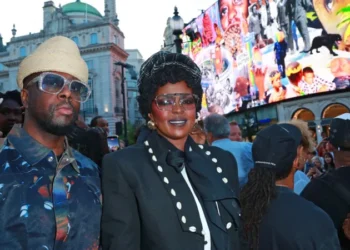
    On Friday in London’s Piccadilly Circus, the two Fugees founders surprised fans with an a cappella performance of _Ready Or Not_. A day later, they sat with BBC News ahead of Diaspora Calling! By Ms. Lauryn Hill_, a one-day festival making its UK debut Friday at Milton Keynes National Bowl.

    The occasion is the 30th anniversary of  1996 album that turned the Fugees into a global force. But the conversation kept circling back to the present. Could new music be comingLauryn Hill and Wyclef Jean Say The Fugees Are "In An Amazing Place" 30 Years After _
The Score

    Jean then broke into song mid-interview: “I’m back with my bandmate!”
    “We’re in an amazing place,” he continued. “I think the energy is very important. We’re going to keep projecting that love to the world.

    “As a band and as bandmates,” she said, “we just want to showcase that and give some of that energy to the world as well.”

    Neither confirmed that an album is currently being recorded. But after years of on-and-off reunions and very public tension, the tone was different. Warmer. Lighter.

    The Fugees’ third member, Pras Michel, was not present. He is currently serving a prison sentence in the US following a federal conviction for lobbying and fraud. His absence was not directly addressed during the interview.

    “I remember saying from a very young age, we’re not going to do music, we’re going to be a movement,” he recalled.

    That idea still drives them. He pointed to the group’s name — a play on “refugees” — and said the themes they rapped about 30 years ago feel urgent again.
    “When you talk about the idea of refugees, look where we are today. We were saying these things 30 years ago. It was never just about us.

    “Our different places of origin came together to unite culture, reflect culture and show people how beautiful, powerful and resourceful that culture is,” she said.

    *Bringing _Diaspora Calling_ To London*
    The anniversary is being marked with _Diaspora Calling!_, Hill’s curated festival. After launching in the US, it arrives in the UK for the first time at Milton Keynes National Bowl on Friday.

    The lineup reflects the festival’s name: Hill and Jean will perform, alongside Erykah Badu, Giggs, Fireboy DML, YG Marley and Zion Marley. Comedian Dave Chappelle will host.

    “There’s so much of the diaspora in London,” she said. “So many people are represented here. It felt like a full-circle moment for us.

    The pop-up in Piccadilly Circus earlier that day was part of that. No stage, no production — just voices. Fans gathered around as Hill and Jean performed _Ready Or Not_ without instruments, a reminder of the raw musicianship that made them famous.

    Thirty years later, the industry has changed completely. But Hill and Jean had the same message for young artists: slow down.

    Jean said he’s hearing a shift.
    “The kids are saying, ‘I don’t want to be on TikTok like that. I don’t want to be on Instagram. I’m not trying to go viral. I just need people to listen to my music and engage with my music.’

    “Art is not gone yet,” she said. “Patience is a virtue. You want it in 30 seconds, but it isn’t going to happen in 30 seconds.
    If you keep coming together with a positive plan and saying, ‘We want to be heard,’ then you’ll be heard. Find like-minded individuals. Respect your audience, respect yourself.”

    It’s advice that mirrors their own path. The Fugees didn’t blow up overnight. They toured, they wrote, they argued, they broke up, and now they’re finding their way back.

    *What Comes Next*
    For now, the focus is on Milton Keynes and on celebrating _The Score_. But the language both used suggests the door is open

    That uncertainty used to sound like a wall. This week it sounded like possibility.

    The Fugees haven’t released a studio album since 1996. If they do, it will arrive in a very different world — one still grappling with the same questions of identity, displacement, and community that they put on record 30 years ago.

    Whether it’s one song, a tour, or a full album, Hill and Jean seem to agree on one thing: the energy between them has changed.

  • Police Invite VeryDarkMan and Question AIG Moshood Jimoh Over Viral Allegations

    Police Invite VeryDarkMan and Question AIG Moshood Jimoh Over Viral Allegations

    The Nigeria Police Force has confirmed it has invited social media activist Martins Vincent Otse, popularly known as VeryDarkMan, and has also questioned Assistant Inspector-General of Police, AIG Moshood Jimoh, over allegations made by the activist.
    The development was announced on Tuesday in a statement by the Force spokesperson, CSP Ani Iniedu.
    According to the statement, the Assistant Inspector-General in charge of the Force Criminal Investigation Department, FCID, Abuja, formally invited AIG Jimoh for questioning in connection with the allegations raised by VeryDarkMan.
    VeryDarkMan has in recent days posted a series of videos and statements on social media accusing unnamed senior police officers of misconduct and abuse of office. While the activist did not initially name anyone, the posts generated widespread reactions online and calls for the police to respond.
    The Force said it decided to act in order to address the claims transparently and in line with due process.
    “Following the allegations made by Martins Vincent Otse, the Force has deemed it necessary to invite him to provide details and evidence to substantiate his claims,” CSP Iniedu said.
    She added that as part of internal procedure, AIG Moshood Jimoh was also invited by the FCID to respond to aspects of the allegations that mentioned his office.
    The Nigeria Police Force stressed that it does not condone misconduct by any officer, regardless of rank.
    “The Force remains committed to accountability, professionalism and upholding public trust,” the statement read. “All allegations, no matter the source, will be investigated thoroughly.”
    CSP Iniedu said the invitation of VeryDarkMan is to enable him to formally present the facts behind his claims so that the police can investigate properly. She urged members of the public to avoid spreading unverified information while investigations are ongoing.
    The Force also appealed to citizens with credible information to come forward through official channels rather than only on social media.
    Martins Vincent Otse rose to prominence as a social media commentator known for calling out fraud, injustice, and government lapses. He has millions of followers across TikTok, Instagram and X, and his videos often spark national debate.
    He has previously clashed with authorities and celebrities over various issues, but this is the first time the police have publicly confirmed inviting him over allegations involving senior officers.
    The Force said investigations have commenced and that both parties will be given a fair hearing.
    AIG Jimoh, who heads a key department within the police, was questioned at the FCID in Abuja on Tuesday. The police did not disclose details of what was discussed, citing the ongoing nature of the inquiry.
    VeryDarkMan is expected to honor the invitation in the coming days to provide statements and any evidence he has.
    The police said the outcome of the investigation will be made public once concluded.
    The case highlights the growing influence of social media activists in holding public institutions accountable in Nigeria. It also puts a spotlight on how the police handle internal allegations made in the public spaceNigeria:Police Invite VeryDarkMan and Question AIG Moshood Jimoh Over Viral Allegations
    Civil society groups have urged the Force to ensure the process is transparent and free from interference, noting that public confidence will depend on how fairly the matter is handled.
    For now, the police say the goal is simple: get the facts, investigate thoroughly, and take appropriate action based on findings.
  • Oshiomhole vs Umahi: The Spat That Exposes Bigger Questions About Nigeria’s Roads

    Oshiomhole vs Umahi: The Spat That Exposes Bigger Questions About Nigeria’s Roads

    The latest public clash between Senator Adams Oshiomhole and Minister of Works, David Umahi, is about more than just words. It has reopened a national conversation about how Nigeria’s roads are being built, who is accountable, and how government officials handle criticismNigeria:Oshiomhole vs Umahi: The Spat That Exposes Bigger Questions About Nigeria’s Roads
    The exchange began after Oshiomhole openly criticized the Ministry of Works over the state of federal roads and some of the decisions taken under Umahi’s leadership. Umahi fired back. What followed was a back-and-forth that quickly moved beyond policy and into personality.
    David Umahi came into office with a strong reputation. As former governor of Ebonyi State, he was known for visible infrastructure projects and a hands-on approach. He also has a background in private engineering. Those credentials raised expectations when he was appointed Minister of Works.
    From the start, Umahi signaled he wanted to run the ministry differently — more direct, more technical, and less tolerant of delays.
    But it did not take long for controversy to follow him. The biggest flashpoint has been the Lagos-Calabar Coastal Road project. The project is ambitious, but it has attracted criticism over cost, transparency, environmental concerns, and the pace of execution. For many Nigerians, it became the symbol of how the ministry is operating under Umahi.
    Senator Oshiomhole, former governor of Edo State and former labor leader, is not new to speaking bluntly. He used a recent public appearance to question some of the ministry’s priorities and the way contracts are being handled.
    His criticism struck a nerve because it came from within the ruling party and from someone who understands both governance and public pressure.
    Oshiomhole argued that Nigerians deserve to see value for money, and that the Minister of Works should be more open to scrutiny, especially at a time when road conditions across the country remain poor.
    Umahi did not hold back. He defended his record and the ministry’s approach, saying that tough decisions were needed to fix decades of neglect. He also suggested that some of the criticism was political and uninformed.
    This is where the trouble started. Umahi’s style — direct, sometimes dismissive — has often put him at odds with the press and with other public figures. Supporters say that is what makes him effective. Critics say it creates unnecessary friction and distracts from the work.
    The question many are asking is: does Umahi not see how he is being perceived, or does he simply not care? Is this confidence, or hubris
    The truth is, the performance of the Minister of Works is one of the easiest to judge. You don’t need a policy paper to know if roads are good or bad.
    People travel. They see potholes. They get stuck in traffic. They pay more for transport when roads are bad. They hear stories from drivers, traders, and families moving goods across the country.
    So when a minister and a senior senator argue in public, citizens listen — not for the drama, but for what it says about the roads.
    Are projects being prioritized correctly? Is money being spent wisely? Are contractors being monitored? Is there room for public input and press oversight? Those are the real issues behind the spat.
    Nigeria’s infrastructure deficit is huge. Fixing it will require big projects, big money, and big decisions. That will always create tension.
    But how that tension is managed matters. A ministry that shuts out criticism risks making mistakes that could have been avoided. A critic who only throws punches without offering solutions risks adding noise instead of clarity.
    Both Oshiomhole and Umahi have track records. Both believe they are fighting for the same goal: better infrastructure. The disagreement is about method, tone, and transparency.
    Umahi is clearly intelligent and committed. He came in prepared. But intelligence alone is not enough in public office. Perception, communication, and accountability matter just as much.
    Oshiomhole’s intervention may have been sharp, but it reflects a frustration many Nigerians feel: we want to see results, and we want to be part of the conversation about how we get there.
  • 2027 Nigerian Election: Primate Ayodele Says “Northern Voters Will Decide Outcome, Not INEC”  What It Means for the Polls!

    2027 Nigerian Election: Primate Ayodele Says “Northern Voters Will Decide Outcome, Not INEC” What It Means for the Polls!

    Reported by Musa Antiketu, | Journalist at Obaland magazine.

    LAGOS, NIGERIA — The Founder and Spiritual Leader of INRI Evangelical Spiritual Church, Primate Elijah Ayodele, has declared that the outcome of Nigeria’s 2027 presidential election will be determined by voters in Northern Nigeria, not by the Independent National Electoral Commission, INEC.

    Speaking during his annual press briefing in Lagos on Tuesday, Primate Ayodele said the political direction of the country has shifted and that any candidate seeking Aso Rock in 2027 must first secure the mandate of the North. He also warned INEC against manipulation, saying the commission’s credibility will be tested more than ever before.

    “The North holds the key to 2027,” Primate Ayodele said. “It is not INEC that will decide. It is the people of Northern Nigeria. If they vote together, no power can stop them. If they are divided, then the election will be open.”

    The statement comes 30 months before the next general elections and has already sparked debate among political analysts, civil society groups, and party strategists across the country. For Obaland Magazine, the comment reflects a larger conversation about regional voting blocs, electoral integrity, and the evolving dynamics of Nigerian democracy ahead of 2027.

    What Primate Ayodele Said: Full Context of the Prophecy

    Primate Ayodele is known in Nigeria for his yearly prophecies on politics, economy, and security. While many of his predictions are controversial, they are widely reported and discussed ahead of major national events.

    At the 2026 edition of his briefing, the cleric dedicated a significant portion to the 2027 elections.

    “Northern voters will decide 2027, not INEC,” he stated. “INEC can only count what people bring to the table. If the North speaks with one voice, the presidency will go there. If they scatter, then southern candidates have a chance.”

    He added that INEC must remain neutral and resist pressure from the ruling party and opposition. “INEC should not become a weapon. If they do, there will be crisis. Nigeria cannot afford another flawed election.”

    Primate Ayodele also warned political parties against relying on “godfathers and money” alone. “2027 will be about hunger, insecurity, and education. The candidate who addresses these will get Northern support.”

    The cleric did not endorse any specific candidate or party. Instead, he urged Nigerians to begin voter education now and for the North to decide whether it wants to continue producing presidents or support a power shift.

    Why the North Matters in Nigerian Elections: The Numbers

    To understand Primate Ayodele’s statement, one must look at Nigeria’s electoral arithmetic.

    Nigeria has 36 states and the FCT. For presidential elections, a candidate must win a plurality of votes and secure at least 25% in two-thirds of states.

    According to data from INEC and the National Population Commission, Northern Nigeria comprises 19 states and the FCT  more than half of Nigeria’s 37 voting units. In the 2023 presidential election, over 52% of registered voters were in the North.

    In 2015 and 2019, the North voted overwhelmingly for President Muhammadu Buhari, delivering the margin of victory. In 2023, the vote split between APC, PDP, and NNPP candidates, which analysts say contributed to a closer race won by President Bola Tinubu with strong support from the Southwest and parts of the North.

    Political scientist Prof. Jibrin Ibrahim of the Centre for Democracy and Development, CDD, explains: “No one wins the Nigerian presidency without significant Northern votes. That has been true since 1999. The North is not a monolith, but when there is regional consensus, it is decisive.”

    This is the reality Primate Ayodele was referencing. His point was not new to political strategists, but his framing  “not INEC”  directly addresses public skepticism about electoral management.

    INEC and Public Trust Ahead of 2027

    The Independent National Electoral Commission has faced criticism after the 2023 general elections. Issues cited included late arrival of materials, BVAS glitches, and delays in uploading results to the IReV portal.

    Several petitions went to the Presidential Election Petition Tribunal and the Supreme Court. While the courts upheld the election of President Tinubu, the process left many Nigerians questioning the system.

    A 2024 Afrobarometer survey found that only 38% of Nigerians expressed “a lot” or “some” trust in INEC, down from 54% in 2019.

    Primate Ayodele’s comment taps into that sentiment. By saying “voters, not INEC, will decide,” he was both warning the commission and encouraging citizens.

    INEC Chairman Prof. Mahmood Yakubu has repeatedly said the commission is working to improve. In a recent briefing covered by Channels Television and Premium Times, he said INEC has begun early preparations for 2027, including voter register clean-up and procurement of new BVAS machines.

    “Elections are determined by voters,” Prof. Yakubu said. “Our job is to provide a level playing field.”

    Civil society groups like Yiaga Africa and the Transition Monitoring Group have also called for electoral reforms before 2027, including early transmission of results and stricter sanctions for electoral offenders.

    Northern Politics in 2026: Unity or Division?

    The North is not politically uniform. It includes the Northwest, Northeast, and North Central, with diverse ethnic, religious, and economic interests.

    Key factors shaping Northern voting in 2027 include:

    1. Economy and Security: Banditry, kidnapping, and farmer-herder clashes remain major issues in the Northwest and North Central. Inflation and food prices are also top concerns.
    2. Power Rotation Debate: Some Northern leaders argue it is the turn of the North to produce the president again in 2027, while others say the South should complete 8 years.
    3. Party Realignment: The APC, PDP, NNPP, and Labour Party are all courting Northern governors and traditional rulers. Defections are expected to increase from late 2026.
    4. Youth Vote: With over 60% of Nigerians under 35, youth mobilization in Kano, Kaduna, Katsina, and Benue will be critical.

    Dr. Amina Nurudeen, a lecturer in Political Science at Ahmadu Bello University, Zaria, told Obaland Magazine: “The North will not vote as a bloc automatically. It will depend on candidates, issues, and which party can manage the economy better. But yes, the numbers are there.”

    The Sultan of Sokoto, His Eminence Sa’ad Abubakar, and the Northern Governors Forum have not made any official pronouncements on 2027. However, behind-the-scenes consultations are already underway, according to reporting by Daily Trust and The Guardian Nigeria.

    Reactions to Primate Ayodele’s Statement

    The statement has drawn mixed reactions.

    APC Chieftains said the North remains a stronghold of the ruling party but warned against complacency. “We are working to deliver on security and agriculture so Northerners will vote for continuity,” an APC National Working Committee member told The Punch.

    PDP Leaders said the North is open to alternatives. “People are suffering. If we present a credible candidate with a clear economic plan, the North will listen,” a PDP Board of Trustees member said.

    Civil Society: Yiaga Africa Executive Director Samson Itodo said the focus should be on INEC’s independence. “Whether it is North or South, votes must count. That is what democracy requires.”

    Religious Leaders: The Christian Association of Nigeria, CAN, and Jama’atu Nasril Islam, JNI, have both called for peaceful campaigns and warned against religious profiling in 2027.

    On social media, the hashtag NorthernVote2027 trended for 24 hours after the prophecy. Many users debated whether regional voting helps or hurts national unity.

    The Pan-African Context: Elections, Ethnicity, and Democracy

    Across Africa, elections are often shaped by regional and ethnic blocs. In Kenya, the “mountain vote” and “Nyanza vote” are discussed openly. In Ghana, the Ashanti and Volta regions are key battlegrounds. In South Africa, KwaZulu-Natal and Gauteng determine outcomes.

    Nigeria is no different. But the difference is scale. With over 93 million registered voters, Nigeria’s election is the largest democratic exercise on the continent.

    The African Union and ECOWAS have both urged Nigeria to strengthen institutions ahead of 2027. In a 2025 report, the AU Election Observation Mission said Nigeria should “depoliticize INEC and improve transparency.”

    Primate Ayodele’s message, whether viewed as prophecy or political commentary, fits into this broader African conversation: how do we ensure that votes, not institutions or money, decide leaders?

    What Needs to Happen Before 2027: 5 Key Issues

    Based on interviews with analysts and stakeholders, Obaland Magazine identifies five issues that will shape whether “Northern voters decide 2027”:

    1. Electoral Reform: The National Assembly is expected to review the Electoral Act to address IReV transmission and party primaries.
    2. Security: The Federal Government must reduce banditry and insurgency in the North to enable free voting.
    3. Economy: Inflation, food prices, and unemployment will drive voter anger or approval.
    4. Candidate Selection: Both APC and PDP are yet to zone their tickets. Who emerges will influence regional alignment.
    5. Voter Education: INEC and NGOs must educate voters on PVC collection, voting procedures, and rejecting vote-buying.

    INEC’s Response and Preparationso

    INEC has said it is not distracted by prophecies or political statements. In a statement to Vanguard News, an INEC National Commissioner said: “We are focused on our mandate. We will conduct free, fair, and credible elections.”

    The commission has set up a 2027 Election Plan

    Conclusion: The Ballot, Not Prophecy, Will Decide

    Primate Ayodele’s declaration that “Northern Voters Will Decide 2027, Not INEC” is both a political observation and a call to action.

    It is an observation because Nigeria’s electoral history shows the importance of Northern votes. It is a call to action because it puts responsibility back on citizens: to register, to vote, and to hold leaders accountable.

    For INEC, the message is clear  protect your independence. For political parties, the message is  go to the North with solutions, not just slogans. For voters, the message is  your PVC matters more than any prophecy.

    As Nigeria moves closer to 2027, Obaland Magazine will continue to monitor developments with an independent, factual, and Pan-African lens. Elections are not just about who wins. They are about whether the process reflects the will of the people.

    Whether the North votes as one bloc or splits, whether INEC delivers a credible poll or not, one thing is certain: 2027 will define the next decade of Nigerian democracy.

    The countdown has begun.

    Primate Ayodele says Northern voters will decide Nigeria’s 2027 election, not INEC. Obaland Magazine analyzes the prophecy, electoral data, INEC’s role, and what it means for Nigerian democracy.

  • UK Court Sentences Nigerian Student Anderson Ishiekwene to 3 Years Over Online Grooming Sting: Deportation Looms!

    UK Court Sentences Nigerian Student Anderson Ishiekwene to 3 Years Over Online Grooming Sting: Deportation Looms!

    Reported by Musa Antiketu, | Journalist at Obaland magazine.

    LONDON, UNITED KINGDOM — A 25-year-old Nigerian student, Anderson Ishiekwene, has been sentenced to three years in prison by a United Kingdom court after pleading guilty to attempting to engage in sexual activity with a child following an online sting operation. The court also ruled that he will face automatic deportation upon completion of his sentence.

    Ishiekwene, who was studying in the UK on a student visa, was arrested in early 2026 after he arranged to meet who he believed to be a 14-year-old girl. The account was operated by a child protection group conducting proactive online monitoring to identify and report adults seeking to exploit minors.

    The case has drawn attention in both the UK and Nigeria, reigniting conversations around online child safety, the responsibilities of international students, and the legal consequences of digital sexual offenses across borders.

    For Obaland Magazine, the case underscores a critical Pan-African concern: how African students abroad navigate legal systems, digital accountability, and the global fight against child exploitation  while also ensuring due process and dignity are upheld.

    The Court Proceedings: Guilty Plea and Sentencing

    The matter was heard at a Crown Court in the UK in July 2026. According to court records, Anderson Ishiekwene admitted to three offenses under the UK Sexual Offences Act 2003: attempting to engage in sexual communication with a child, attempting to cause a child to engage in sexual activity, and attempting to meet a child following grooming.

    Prosecutors told the court that Ishiekwene had engaged in weeks of online communication with the decoy profile. During the exchanges, he was made aware multiple times that the person was 14 years old. Despite this, he continued the conversation and arranged to meet at a public location.

    The meeting never involved a real child. It was coordinated by a recognized child protection organization that works with UK law enforcement to gather evidence and refer cases for prosecution. Upon arrival, Ishiekwene was arrested by police officers.

    In sentencing, the judge noted that the offenses were serious and carried a high degree of culpability. The three-year custodial sentence reflects UK sentencing guidelines for attempted sexual offenses against children where grooming is involved.

    The court also issued a Sexual Harm Prevention Order and placed Ishiekwene on the UK Sex Offenders Register for 10 years. Because he is a non-UK national, the Home Office confirmed that deportation proceedings will begin automatically after he serves his sentence, in line with UK immigration rules that mandate removal for foreign nationals sentenced to 12 months or more.

    Who Is Anderson Ishiekwene? The Student Context

    Ishiekwene, 25, had been residing in the UK on a student visa. Court documents and university records indicate he was enrolled in a postgraduate program at a university in England.

    UK universities host over 135,000 Nigerian students as of 2025, making Nigeria one of the largest sources of international students in Britain, according to data from the UK Higher Education Statistics Agency, HESA. These students contribute an estimated £2.3 billion annually to the UK economy.

    The case has therefore prompted concern among Nigerian student associations in the UK. The Nigerian Students’ Union UK issued a statement urging members to “understand UK laws, seek support when facing mental health or social challenges, and avoid any conduct that violates host country laws.”

    Legal experts note that being a student does not provide immunity. Under UK law, anyone on a student, work, or visitor visa is subject to the same criminal statutes as British citizens.

    How the Sting Operation Worked: UK’s Approach to Online Child Protection

    The arrest of Ishiekwene was part of a broader strategy by UK police and child protection charities to combat online grooming.

    Groups such as the NSPCC and regional police cyber units routinely monitor online platforms where adults may attempt to contact minors. Some also work with volunteer organizations that pose as children online to identify offenders, gather chat logs, and hand evidence to law enforcement.

    This method has become increasingly common since the 2015 amendment to the Sexual Offences Act, which criminalized sexual communication with a child and “meeting a child following sexual grooming” even if no physical meeting occurs.

    The Crown Prosecution Service, CPS, has stated that these operations are targeted and evidence-based. “Our priority is the protection of children,” a CPS spokesperson said in a 2025 briefing. “Where there is clear intent and steps taken to meet a child, prosecution follows.”

    The approach is not unique to the UK. Similar decoy operations exist in the US, Canada, and Australia. In Africa, countries like South Africa, Kenya, and Nigeria are also expanding cybercrime units to address online exploitation, though resources and legal frameworks vary.

    Context: Online Child Exploitation and the Nigerian Diaspora

    Child sexual exploitation online is a global crime, and Nigeria is both a victim country and a country of origin for offenders.

    According to the 2024 Internet Watch Foundation report, Nigeria was listed among countries where web hosting and payment infrastructure have been used in cases of child sexual abuse material. The Nigerian government, through NAPTIP  the National Agency for the Prohibition of Trafficking in Persons  and the Nigeria Police Force Cybercrime Unit, has increased prosecutions and public awareness campaigns.

    For the Nigerian diaspora, cases like Ishiekwene’s carry reputational weight. Community leaders in London, Manchester, and Birmingham have expressed concern that isolated criminal cases can lead to stereotyping of African students.

    Dr. Emeka Eze, chair of the Central Association of Nigerians in the UK, CANUK, said: “One person’s actions do not define 200,000 Nigerians in the UK. But it is a reminder that we must do more on orientation, mental health support, and legal education for students arriving in Britain.”

    The Nigerian High Commission in London confirmed it is monitoring the case to ensure consular access and due process, in line with the Vienna Convention on Consular Relations.

    Legal and Immigration Consequences: What Automatic Deportation Means

    Under the UK Borders Act 2007, any foreign national sentenced to 12 months or more in prison is subject to automatic deportation. There are limited exceptions, such as asylum claims or human rights appeals, but these are rarely successful in sexual offense cases.

    For Ishiekwene, this means that after serving three years, he will be transferred to immigration detention and removed to Nigeria unless a successful legal challenge is mounted.

    Immigration lawyers say the deportation process typically takes 3 to 6 months after release. He will also face a re-entry ban to the UK for a minimum of 10 years.

    The university where he was studying has also confirmed that his admission has been terminated in accordance with student conduct policies.

    Reactions from UK Media and Rights Groups

    The case was reported by several UK outlets. The BBC reported that the judge described the defendant’s actions as “a calculated attempt to exploit a child.” The Guardian noted that the sentencing sends “a clear message that online grooming will be prosecuted with the same seriousness as in-person offenses.”

    Child protection charities welcomed the conviction. The NSPCC said in a statement: “This case shows that the internet is not a safe space for offenders to target children. We urge parents and schools to continue conversations about online safety.”

    In Nigeria, the story was picked up by Channels Television, Premium Times, and The Punch. Editorial commentary in Nigerian media has focused on two themes: condemning child exploitation and calling for better pre-departure orientation for students.

    The Broader Pan-African Lens: Accountability and Prevention

    Obaland Magazine approaches this story not with sensationalism, but with a responsibility to inform and protect. Across Africa, digital access is expanding rapidly. UNICEF estimates that 1 in 3 internet users globally is a child. In Nigeria, over 60% of internet users are under 30.

    That creates opportunity, but also risk. Experts argue that African governments, schools, and diaspora groups must collaborate on:

    1.  Digital Literacy: Teaching young people about consent, boundaries, and legal consequences in different jurisdictions.
    2. Mental Health Support: Providing counseling for students abroad who may face isolation, financial pressure, or cultural adjustment issues.
    3. Legal Orientation: Pre-departure briefings for students on the laws of host countries, particularly around sexual offenses, drugs, and immigration.
    4. Victim Protection: Strengthening reporting mechanisms so that children in Nigeria and abroad can report abuse safely.

    Professor Amina Bello of the University of Lagos, who researches cybercrime in Africa, told Obaland Magazine: “We cannot separate technology from values. As more Africans go abroad to study and work, we must export our best values and also learn the legal expectations of where we go.”

    What UK Law Says: Key Offenses Explained

    To provide clarity for readers, here is what the UK charges mean:

    – Sexual Communication with a Child, Section 15A: It is illegal for an adult to communicate sexually with a child under 16. This includes texts, chats, and calls.
    – Meeting a Child Following Grooming, Section 15: It is illegal to meet or travel to meet a child under 16 after sexual communication.
    – Attempted Offenses: Under UK law, attempting the crime carries the same penalty as completing it.

    Penalties can include up to 10 years in prison for grooming offenses. The court may also impose notification requirements, travel restrictions, and deportation for non-citizens.

    The Path Forward for Nigerian Students in the UK

    With over 40,000 new Nigerian students arriving in the UK each year, organizations are calling for proactive measures.

    The Nigerian High Commission in London has announced plans to partner with UK universities to hold quarterly legal awareness sessions for Nigerian students. Topics will include UK criminal law, visa compliance, and support services.

    Student groups are also launching peer-mentorship programs. “We want new students to know where to go if they are struggling,” said a representative of the Nigerian Students’ Union UK. “There is no excuse for crime, but there are also resources to prevent people from reaching that point.”

    Conclusion: Justice, Deterrence, and Community Responsibility

    The sentencing of Anderson Ishiekwene to three years in prison is a legal outcome, but it is also a social signal. The UK has made clear that online crimes against children will be investigated and prosecuted. Nigeria, as a country with a large and growing global student population, has an interest in ensuring its citizens understand those boundaries.

    This case does not diminish the contributions of Nigerian students, academics, and professionals in the UK. From the NHS to tech startups to academia, Nigerians continue to make significant contributions. But it does remind us that accountability is part of global citizenship.

    As Obaland Magazine, our role is to report factually, provide context, and promote the dignity and safety of children everywhere  in Ibadan, in London, and across the African diaspora.

    The court has spoken. The law has been applied. Now the work of prevention, education, and community engagement continues.

    UK court sentences Nigerian student Anderson Ishiekwene to 3 years for online grooming. Obaland Magazine reports on the case, deportation, legal context, and what it means for Nigerian students abroad.