


Colombia Gold Mine Collapse Kills 14, Injures Seven as Illegal Mining Crisis Deepens.
At least 14 people have been killed and seven others injured following the collapse of an illegal gold mine in southwestern Colombia, exposing the persistent dangers associated with unregulated mining operations and inadequate workplace safety measures.
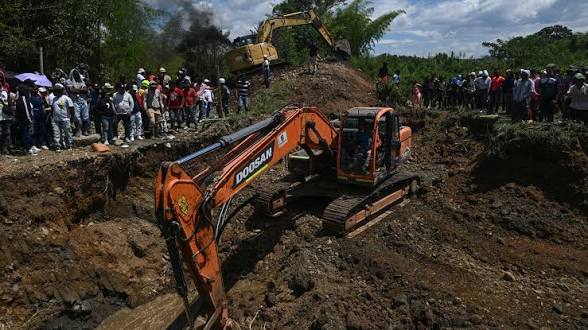
The incident occurred on Monday, October 19, in the rural Chambero sector of Santa Bárbara de Iscuandé, in Colombia’s Nariño department. Local authorities confirmed the casualties as emergency responders worked to assess the aftermath of the disaster. According to reports by Reuters, Associated Press (AP) and NDTV, the mine was operating without the necessary permits, raising renewed concerns about the safety of workers engaged in informal gold extraction.
Rescue Operations End Amid Difficult Conditions
The remote location of the mine presented significant challenges for rescue teams. Santa Bárbara de Iscuandé is surrounded by dense rainforest, with access largely restricted to boats and small aircraft. Authorities also reported security concerns linked to the presence of armed groups in the wider region, complicating emergency response efforts.
Nariño Governor Luis Alfonso Escobar confirmed that search and rescue operations had concluded. The regional government has called on Colombia’s national authorities, including the National Mining Agency and the Ministry of Mines and Energy, to accelerate efforts to formalized small scale mining operations and improve working conditions.
The seven injured people were among those affected by the collapse, although further details about their medical conditions were not immediately available in the initial reports.
Illegal Mining Continues to Claim Lives
The tragedy highlights a longstanding challenge facing Colombia, where informal and illegal mining remains widespread in several rural areas. Many operations function outside established regulatory frameworks and may lack adequate infrastructure, engineering safeguards and emergency response systems.
The latest disaster is particularly concerning because it follows another fatal mining accident in Nariño in August 2026, when 13 people died in a separate mine collapse in the municipality of Policarpa. According to the Associated Press, the two incidents have claimed a combined total of 27 lives in the department in less than three months.
The repeated loss of life underscores the risks faced by miners working in poorly regulated environments, where the absence of effective safety standards can turn routine extraction activities into deadly emergencies.
Poverty, Armed Groups and the Challenge of Regulation
Illegal mining in parts of Colombia is closely connected to broader economic and security challenges. In remote communities, limited employment opportunities can push residents towards dangerous mining activities as a means of earning a living.
The Nariño department, which borders Ecuador, has also experienced the influence of armed groups involved in illicit economic activities, including illegal gold trading, drug trafficking and extortion. Their presence creates additional obstacles for authorities attempting to regulate mining and protect vulnerable communities.
However, addressing the crisis requires more than enforcement operations alone. The formalization of small scale mining, access to safer working conditions, stronger regulatory oversight and the development of alternative livelihoods are important components of a sustainable response.
For communities dependent on mining, effective reforms must balance environmental protection and worker safety with the economic realities that sustain informal extraction.
Calls for Stronger Safety Measures
The collapse has renewed pressure on Colombian authorities to strengthen mining oversight and accelerate efforts to bring informal operators into the legal framework.
Formalization could help establish clearer safety requirements, improve monitoring and give workers greater access to protections. Nevertheless, the effectiveness of such measures will depend on consistent enforcement, adequate resources and practical support for small scale miners.
Beyond the immediate casualties, the disaster raises questions about how governments can prevent repeated mining tragedies in isolated communities where poverty, insecurity and weak regulatory coverage intersect.
For Colombia, the challenge is not only to respond to individual emergencies but also to address the conditions that allow dangerous mining operations to continue. The deaths in Nariño serve as another reminder that economic survival should not come at the cost of workers’ lives.