

Edo’s ₦3.8bn MOWAA Investment Under Scrutiny as Assembly Probe Raises Ownership, Funding Questions.
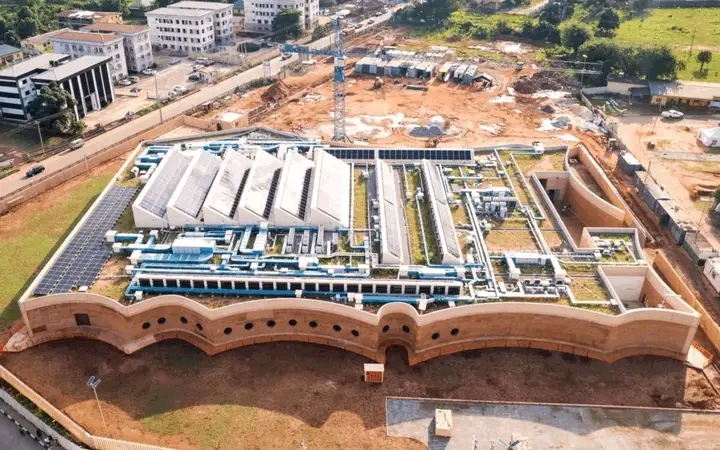
The controversy surrounding the Museum of West African Art (MOWAA) in Benin City has deepened following findings by authorities in Edo State over the government’s ₦3.8 billion financial contribution to the project during the administration of former Governor Godwin Obaseki.
The issue centres on the nature of Edo State’s financial interest in MOWAA, the management of funds committed to the project and the legal ownership structure of the museum, which has become a subject of sustained political and cultural debate.
The ₦3.8 billion figure was initially disclosed in December 2024 by the Edo State Assets Verification Committee established by Governor Monday Okpebholo. The committee reported that the Obaseki administration had contributed ₦3.8 billion to MOWAA despite the state having no equity stake in the project, which it described as an independent private trust located on government land.
The issue was subsequently examined by an Edo State House of Assembly ad-hoc committee investigating the funding and ownership of MOWAA and the Radisson Blu hotel project. During a public hearing in November 2025, Edo State Accountant General Julius Anelu told lawmakers that the government released ₦3.8 billion between March 2022 and April 2024 as its counterpart contribution to MOWAA.
According to Anelu, the contribution was intended to help attract about $18 million in international donor and investor funding. However, he told the committee that the state Treasury had no record confirming that the anticipated $18 million had been received. He also explained that the initial ₦800 million allocation for the project was captured in the 2022 budget, while subsequent payments were made through documented vouchers.
The funding controversy has consequently raised broader questions about whether Edo State’s contribution should be understood as an investment conferring ownership rights or as a contribution to a non profit cultural institution.
MOWAA’s structure has been defended by proponents of the project, who argue that it operates as a charitable, not for profit institution. The Nation, in its analysis of the controversy, noted that contributions to charitable trusts generally do not function like conventional commercial equity investments, meaning that financial contributions do not automatically translate into ownership shares.
The dispute, however, extends beyond financial accounting. It also involves the historical identity of the project and the role of the Benin Royal Palace in the preservation and eventual custody of Benin artefacts.
Governor Okpebholo’s administration established a special committee chaired by Senator Adams Oshiomhole to determine the legal and operational status of MOWAA and clarify the rights and interests of the Benin Royal Palace and traditional institution in the project. Channels Television reported that the committee was tasked with engaging donors, partners and MOWAA trustees and submitting recommendations to the state government.
The controversy later moved to the Edo State House of Assembly, which investigated the project’s financing and ownership. The Assembly’s committee also summoned former Governor Obaseki and other officials and stakeholders. Obaseki declined to appear, arguing through his media adviser that the matter was already before the courts and therefore sub judice. MOWAA’s management similarly declined to appear before the committee, according to reports by The Guardian and TVC News.
In December 2025, the Assembly committee threatened to seek an arrest warrant for Obaseki over his failure to honour its invitation. The committee said it possessed powers to compel attendance as part of its investigation.
The controversy has remained politically and culturally sensitive because MOWAA is tied to Benin’s global heritage and ongoing efforts surrounding the return and preservation of artworks taken from the Kingdom during the 1897 British invasion.
In November 2025, Oba Ewuare II said the original concept was intended as the Benin Royal Museum and called for continued investigation into the project’s funding and ownership. The Federal Ministry of Information and National Orientation subsequently reported Governor Okpebholo’s declaration that the project would be restored to its original purpose as the Benin Royal Museum.
Despite the competing positions, the ₦3.8 billion figure itself is not merely a political allegation: Edo’s Accountant-General confirmed before the Assembly committee that the amount was released as the state’s counterpart contribution between 2022 and 2024. The central unresolved questions concern the legal implications of that contribution, the project’s ownership structure, the use and documentation of the funds, and the rights of the state and Benin traditional institution.
As of August 2026, the controversy has not been fully settled. The Nation reported this month that the Edo State Government had yet to act on the House of Assembly’s findings concerning MOWAA and the Radisson project, despite Governor Okpebholo previously saying the recommendations would be implemented and that the Economic and Financial Crimes Commission could be invited to examine issues raised.
For Edo State, the dispute goes beyond a single cultural institution. It raises fundamental questions about transparency in public spending, the governance of heritage projects, the protection of Benin’s cultural patrimony and the appropriate relationship between government, traditional institutions, private trusts and international cultural partners.
Any final determination over the ₦3.8 billion contribution and MOWAA’s ownership will therefore carry implications not only for Edo’s public finances but also for Nigeria’s broader approach to cultural heritage management and the preservation of African history.