



Reported by Musa Antiketu,| Journalist at Obaland magazine.
A beneficiary of Kano State’s government-sponsored mass wedding programme has expressed joy after taking another wife, bringing the number of his wives to three, in a development that has drawn attention to the diverse family circumstances represented among participants in the state’s marriage-support initiative.
The beneficiary’s experience emerged against the backdrop of Kano State’s latest mass wedding programme, through which 1,500 couples were brought together in a government-supported ceremony designed to reduce the financial barriers associated with marriage and provide assistance to vulnerable residents.
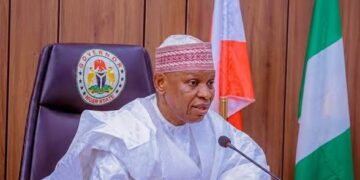
The programme, coordinated with the Kano State Hisbah Board, has been presented by the administration of Governor Abba Kabir Yusuf as a social intervention intended to support marriage, strengthen families and reduce the economic pressures that prevent some residents from establishing formal households.
The initiative has attracted significant public attention because of both its scale and the financial commitment involved. According to reports by The PUNCH, The Guardian, Premium Times, Vanguard and other Nigerian media organisations, the state government earmarked N1.5 billion for the latest programme, targeting 3,000 beneficiaries or 1,500 couples.
The programme also received international attention, with The Associated Press reporting on the mass wedding and highlighting the experiences of beneficiaries who were given an opportunity to begin or rebuild family life.
A different meaning of marriage support
For some beneficiaries, the Kano mass wedding was more than a ceremonial event. It represented an opportunity to overcome financial obstacles that had delayed marriage or made remarriage difficult.
The programme was designed particularly to assist people considered vulnerable, including widows, divorcees, spinsters and other residents who met the established conditions.
The Kano State Government has argued that the rising cost of marriage ceremonies has become an increasingly important social and economic issue. In many communities, families face substantial expenses associated with dowry, clothing, household equipment, food and other traditional requirements.
By absorbing some of these expenses, the government says it is attempting to make marriage more accessible while discouraging excessive spending on wedding ceremonies.
The latest edition therefore represents an intersection between social welfare and cultural practice, with government resources being deployed to help residents establish households.
The PUNCH reported that the government planned to spend approximately N1 million per couple under the programme. The support package included N100,000 for the groom to present as dowry, N100,000 in empowerment support for the bride, as well as household items including beds, mattresses, furniture and food.
Earlier reports also showed that thousands of people expressed interest in the programme before the final beneficiaries were selected.
Beneficiary’s third marriage attracts attention
The reported case of a beneficiary who said he now has three wives after marrying another woman through the programme has added an unusual dimension to public discussion around the initiative.
In the context of northern Nigeria, polygamous marriage exists within Islamic and cultural traditions, although its practice also generates continuing conversations about economic responsibility, fairness among spouses, child welfare and the capacity of husbands to provide adequately for their families.
The reported beneficiary’s decision to enter another marriage therefore highlights the fact that government-sponsored marriage initiatives can involve participants with very different family histories and circumstances.
While some participants are entering marriage for the first time, others may be widows, divorcees or people joining an existing polygamous household.
This distinction is important in understanding the purpose and reach of the programme.
The mass wedding should not necessarily be viewed as a uniform experience for all participants. For one person, it may represent a first marriage. For another, it may mark remarriage after the death of a spouse. For another, it could mean joining an already existing family structure.
The government and the Hisbah authorities have repeatedly maintained that participation is voluntary and subject to conditions designed to ensure that the unions are properly constituted.
Medical screening forms part of the process
One of the most significant features of the Kano programme has been the medical screening required before marriage.
Reports from The PUNCH, The Guardian and Vanguard said prospective participants were subjected to tests including HIV, hepatitis B, genotype and pregnancy screening.
Officials said the medical checks were intended to establish the health status and compatibility of prospective couples before the marriages were conducted.
The requirement reflects an attempt to incorporate public-health considerations into a large-scale marriage programme.
The Hisbah Board also said prospective grooms were expected to demonstrate that they had a means of livelihood and suitable accommodation for their prospective wives.
These conditions are particularly important given concerns that marriage-support programmes should not merely facilitate weddings but also help create sustainable family environments.
Marriage, after all, represents a long-term social and economic commitment. The cost of the ceremony may be removed or reduced, but the responsibility of providing food, housing, education, healthcare and other necessities remains with the family.
Government defends the programme as social intervention
Governor Abba Kabir Yusuf’s administration has described the mass wedding programme as part of a broader social welfare strategy.
The governor has argued that supporting vulnerable residents to establish families can contribute to social stability and strengthen the institution of marriage.
The Associated Press, in its report on the latest ceremony, said the programme brought together widows and young women and was aimed at easing the financial burden of marriage for vulnerable families.
The AP report also highlighted the case of Haruna Bashir, a widower who lost his first wife and six children in a deadly attack earlier in the year and subsequently participated in the mass wedding.
His case illustrates the profound personal circumstances behind some of the statistics surrounding the programme.
Rather than being simply a large public ceremony involving thousands of couples, the initiative has brought together people carrying different forms of economic and emotional hardship.
For widows and widowers, remarriage may represent a new beginning after bereavement. For divorcees, it may offer an opportunity to rebuild their lives. For young people facing economic difficulties, government assistance may remove some of the financial barriers associated with marriage.
Kano’s mass wedding tradition
Kano’s mass wedding programme is not a new concept.
The initiative gained prominence under successive state administrations and has been used as a social intervention aimed at helping vulnerable residents marry without bearing the full financial burden of a conventional wedding.
Premium Times reported in April 2026 that the programme, popularly known as “Auren Gata,” was being organised under the Kano State Government’s Marriage Social Welfare Initiative.
The report said the government regarded earlier exercises as sufficiently successful to justify continuing the programme.
The PUNCH also reported that the initiative was initially associated with efforts to support less-privileged residents, including widows, divorcees and spinsters.
The latest programme has consequently been presented as a continuation and expansion of an established state policy rather than an entirely new experiment.
Programme opened to Muslims and Christians
Another notable development is the reported decision to make the programme available to both Muslims and Christians.
In July, P.M. News and other Nigerian outlets reported comments from Kano Hisbah officials that the mass wedding was open to intending couples from both religious communities.
Officials said three Christian couples participated in the previous edition conducted in 2023.
That development is significant in a state where Islam is the dominant religion and where the Hisbah Board plays an important role in coordinating the programme.
Opening the initiative to Christians reflects an attempt to frame the scheme as a broader social-welfare intervention rather than a programme exclusively restricted to one religious group.
At the same time, the religious and cultural context remains important because the programme is coordinated through institutions that operate within Kano’s predominantly Muslim social environment.
Questions around long-term sustainability
Despite the positive experiences reported by many beneficiaries, the programme has also generated questions about its long-term sustainability.
Leadership, in an editorial published amid preparations for the programme, questioned whether government-sponsored weddings alone could address the deeper economic challenges confronting newly established families.
That concern deserves attention.
Marriage expenses constitute only one part of the economic pressures facing households. After the wedding ceremony comes the continuing responsibility of providing shelter, food, healthcare, education and employment opportunities.
For this reason, the effectiveness of a programme such as Kano’s should ultimately be assessed not only by the number of couples married but also by the welfare of those families months and years afterwards.
The empowerment component for brides is therefore potentially important. The N100,000 capital support is intended to enable beneficiaries to begin small businesses and contribute to household income.
However, the long-term success of such assistance would depend on whether beneficiaries receive additional support, training, access to markets and financial services that can help them turn small capital into sustainable livelihoods.
A wider conversation about marriage and poverty
The Kano initiative also reflects a wider Nigerian debate over the relationship between poverty and marriage.
Across many communities, the cost of marriage ceremonies has increased significantly, while young Nigerians face unemployment, inflation and declining purchasing power.
In such circumstances, traditional expectations surrounding marriage can become difficult for low-income families to meet.
Kano’s approach seeks to address part of that challenge by reducing the upfront financial cost.
But the broader policy question remains whether government intervention should stop at facilitating marriage or extend into programmes that improve employment, housing, healthcare, education and household income.
The answer could determine whether mass weddings become primarily ceremonial interventions or comprehensive family-support programmes.
Balancing celebration with responsibility
The reported joy of the beneficiary who added another wife to his household provides a human face to an otherwise large government programme.
Yet responsible journalism requires the story to be placed within its broader context.
The central issue is not simply that one man now has three wives. It is that the Kano government has created a mechanism through which thousands of people facing economic barriers can formalise family relationships with substantial public assistance.
For participants in polygamous households, the same expectations of financial provision, fairness, housing, healthcare and child welfare remain relevant.
For monogamous couples, similar responsibilities apply.
Ultimately, the success of Kano’s mass wedding programme will depend on what happens after the ceremonies end.
The wedding day may mark the beginning of a new chapter, but sustainable families require much more than dowry payments, furniture and ceremonial support. They require livelihoods, responsible parenting, mutual respect, access to healthcare and the economic capacity to meet everyday needs.
Kano’s initiative has nevertheless demonstrated how government can intervene in a culturally significant area of life when economic hardship becomes a barrier to marriage.
As the state continues to implement the programme, transparent monitoring of beneficiaries and follow-up support could provide valuable evidence about whether the initiative is delivering its intended social outcomes.
For now, the mass wedding has given thousands of Kano residents an opportunity to begin, rebuild or formalise family life. Among them are beneficiaries whose personal circumstances vary considerably—including those entering additional marriages within existing family structures.
The story of the beneficiary celebrating his third wife is therefore only one part of a much larger story: Kano’s continuing experiment with using public resources to reduce the financial burden of marriage while seeking to strengthen family and social stability.
Sources
Kano’s mass wedding programme has brought 1,500 couples together as government support eases marriage costs, with beneficiaries including vulnerable residents and participants from diverse family backgrounds.