


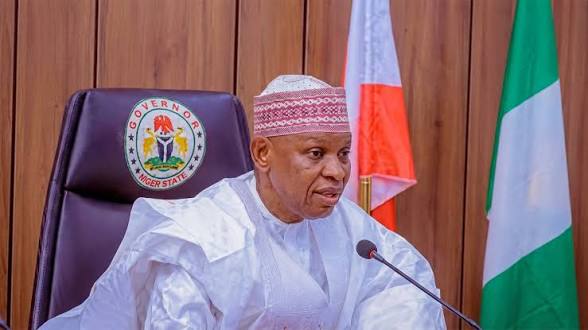
Kano Proposes ₦332 Billion for Education in 2027 Budget, Pledges Major Investment in Human Capital.
The Kano State Government has proposed allocating ₦332 billion to the education sector in its 2027 budget, representing approximately 30 per cent of the state’s proposed ₦1.107 trillion fiscal plan.
Governor Abba Kabir Yusuf announced the proposed allocation on Wednesday, November 11, 2026, while presenting the 2027 budget estimates to the Kano State House of Assembly for legislative consideration.
The proposed allocation makes education the largest beneficiary of the state’s spending plan, reflecting the administration’s stated commitment to improving access to quality education, strengthening educational institutions and investing in human capital development.
Governor Yusuf described the investment as part of efforts to consolidate existing achievements and sustain reforms aimed at improving learning outcomes across Kano State.
Highlighting progress recorded during the 2026 fiscal year, the governor disclosed that his administration recruited 8,588 teachers, comprising 4,900 permanent teachers and 3,688 teachers engaged under the Better Education Service Delivery for All (BESDA) programme.
He also highlighted government interventions targeting examination costs and students’ access to higher education opportunities.
According to the governor, the state government paid examination fees for more than 150,000 students sitting for the National Examinations Council (NECO), National Board for Arabic and Islamic Studies (NBAIS) and National Business and Technical Examinations Board (NABTEB) examinations.
Other initiatives included settling outstanding boarding school feeding obligations, rehabilitating educational facilities and supporting students preparing for the Joint Admissions and Matriculation Board (JAMB) Unified Tertiary Matriculation Examination (UTME) through registration assistance, application forms and preparatory training.
Yusuf further stated that Kano maintained its leading position on the 2026 NECO performance chart for the second consecutive year, describing the achievement as evidence of progress in the state’s education sector.
He assured residents that the government would continue investing in teacher development, school infrastructure, instructional materials and digital learning facilities to strengthen the quality of education.
Beyond the Education Allocation
The proposed education investment forms part of a wider development strategy under the administration’s 2027 fiscal plan, tagged the Budget of Consolidating Gains and Accelerated Rural Development.
The budget, valued at ₦1,107,024,004,244.48, also prioritizes infrastructure, healthcare, water supply, rural development and agriculture.
According to news reports these sectors collectively account for a substantial proportion of the proposed expenditure, highlighting the administration’s focus on essential public services and economic development.
The proposal will now undergo legislative scrutiny by the Kano State House of Assembly before it can be passed into law.
Implementation Remains the Critical Test
While the proposed 30 per cent allocation represents a significant commitment to education, its actual impact will depend on effective budget implementation, transparent spending and measurable improvements in schools across the state.
Kano, like several states in northern Nigeria, continues to face educational challenges, including out of school children, inadequate school infrastructure, teacher shortages and disparities in access to quality learning.
Consequently, stakeholders will be watching to see whether the proposed investment translates into improved classroom conditions, better teacher welfare, increased enrolment and stronger academic performance.
The allocation also compares favourably with UNESCO’s long standing recommendation that governments devote approximately 15 to 20 per cent of public expenditure to education.
Ultimately, the success of Kano’s 2027 education spending will not be determined by the size of the proposed allocation alone, but by how effectively the resources improve educational opportunities and outcomes for children and young people across the state.