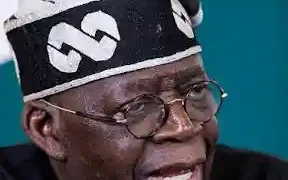
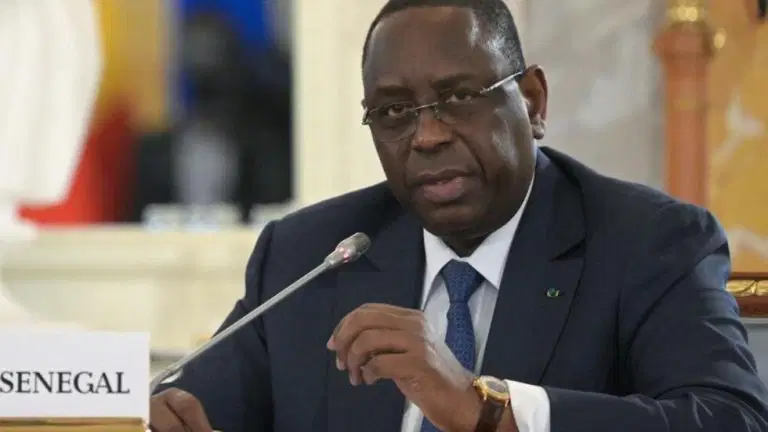
Former Senegalese President Macky Sall has withdrawn his candidacy for United Nations secretary-general, citing growing indications that the UN Security Council favours a candidate from Latin America and the Caribbean, potentially a woman.
Sall announced his decision on Saturday, October 17, 2026, following the latest informal Security Council ballot held a day earlier. He said the withdrawal was intended to help facilitate the emergence of a consensus candidate to succeed outgoing UN Secretary-General António Guterres, whose term ends on December 31, 2026.
In his statement, Sall said he made the decision after consultations with Burundi’s President Évariste Ndayishimiye, the African Union’s rotating chairperson, and Senegalese President Bassirou Diomaye Faye, who also chairs the Economic Community of West African States (ECOWAS).
Sall expressed appreciation to Ndayishimiye for sponsoring his candidacy and to Faye for supporting his bid. He also thanked Security Council members who backed him, his campaign team and supporters across Senegal, Africa and the international community.
The former president said his ambition had been driven by a desire to bring nearly four decades of public service experience to the United Nations at a time of growing international instability.
The withdrawal follows a challenging selection process in which candidates have struggled to secure the support needed from the Security Council’s permanent members. According to Agence de Presse Africaine, Sall received five favourable votes and ten unfavourable votes in the October 16 informal ballot, including opposition from three permanent members.
The five permanent members the United States, the United Kingdom, France, China and Russia hold veto power over the Council’s recommendation for the next secretary-general. A candidate must secure at least nine votes from the 15-member Council and avoid opposition from any of the five permanent members to obtain its recommendation.
Sall’s departure comes as the selection process increasingly favours candidates from Latin America and the Caribbean, in keeping with longstanding expectations surrounding regional rotation in the UN’s top diplomatic position. Costa Rican economist Rebeca Grynspan has emerged as a leading contender in recent informal ballots, although she has also faced opposition from permanent members.
The next secretary-general will inherit an institution confronted by armed conflicts, geopolitical rivalries, financial pressures and questions about the effectiveness of multilateral cooperation.
Despite withdrawing, Sall reaffirmed his commitment to international peace, security, economic and social development, and dialogue among nations. He also stressed that Africa must continue pressing for a stronger voice in global governance.
His exit narrows Africa’s representation in the contest and renews attention on the continent’s longstanding demand for greater influence within international institutions, including the UN Security Council.
Former Senegalese President Macky Sall withdraws from the UN secretary-general race after an unfavourable Security Council poll, citing support for a consensus candidate from Latin America and the Caribbean.