



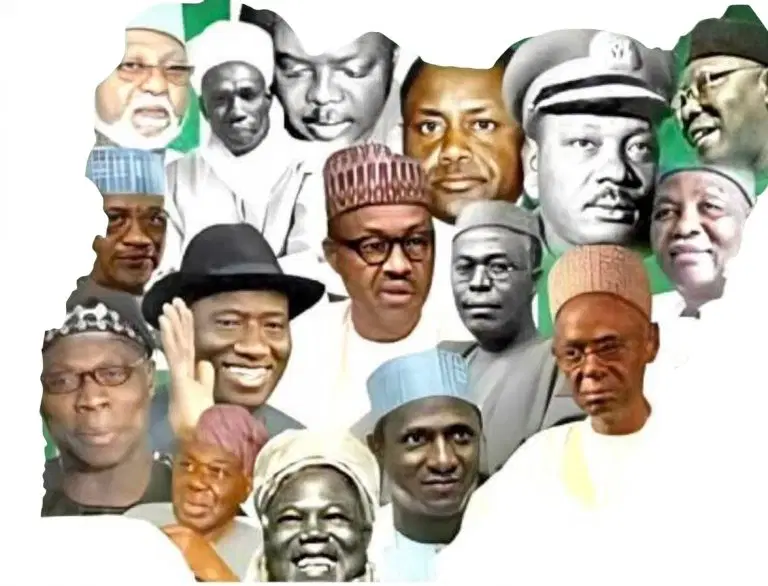
Nigeria’s 66-year journey since independence has been marked by repeated political disruptions, institutional weaknesses, corruption concerns, insecurity and uneven public-sector performance. While the country has recorded important democratic, economic and institutional milestones, persistent governance challenges have continued to affect citizens’ access to security, justice, infrastructure and economic opportunity.
Nigeria became independent from British colonial rule in 1960, but its early democratic experiment was interrupted by military coups in 1966. Decades of military rule subsequently shaped the country’s political institutions before civilian government was restored in 1999. The return to democracy created stronger opportunities for constitutional governance, electoral participation and institutional reform, but significant challenges have remained.
Corruption has been one of the most persistent issues. Successive administrations have introduced anti-corruption measures and established institutions including the Independent Corrupt Practices and Other Related Offences Commission and the Economic and Financial Crimes Commission. However, research continues to identify institutional practices, informal networks and weak accountability mechanisms as factors that can allow corrupt practices to persist.
Nigeria’s governance difficulties have also intersected with insecurity. Criminality, terrorism, banditry, kidnapping and communal violence have placed additional pressure on state institutions and security agencies. Where citizens experience inadequate protection, weak justice systems or limited economic opportunities, public confidence in government institutions can be weakened.
Economic management has also influenced the country’s development trajectory. Nigeria’s heavy dependence on oil revenues during important periods generated substantial government income but also exposed the economy to international oil-price shocks. Economic difficulties following the oil boom contributed to policy adjustments, including the Structural Adjustment Programme introduced in the 1980s.
The governance question therefore cannot be reduced to the actions of individual political leaders. Institutional capacity, civil-service effectiveness, rule of law, electoral integrity, accountability and the ability of governments to consistently implement public policy are equally important. The Institute for Security Studies notes that government effectiveness depends on public-service delivery, professional administration, policy implementation and the credibility of government commitments, while highlighting persistent governance weaknesses across much of Africa.
Nigeria’s experience over 66 years consequently reflects both progress and unfinished institutional development. The country has maintained democratic rule since 1999 and possesses significant human, economic and natural resources. Yet sustained improvements in governance require stronger institutions, transparent public administration, effective accountability, credible elections, economic diversification and improved security.
The central challenge for Nigeria is not simply the passage of time, but whether its institutions can increasingly deliver security, justice, economic opportunity and accountable government to the population. Its next phase of national development will depend substantially on the strength and independence of those institutions.
Nigeria’s 66-year journey has been shaped by military rule, democratic transitions, corruption concerns, insecurity and institutional challenges, alongside significant progress and reform efforts.