


NSCIA Calls for Security Architecture Overhaul.
The Nigerian Supreme Council for Islamic Affairs (NSCIA) has called for an urgent and comprehensive overhaul of Nigeria’s security architecture, while backing decentralized policing subject to constitutional safeguards, professionalism, accountability and respect for fundamental rights.
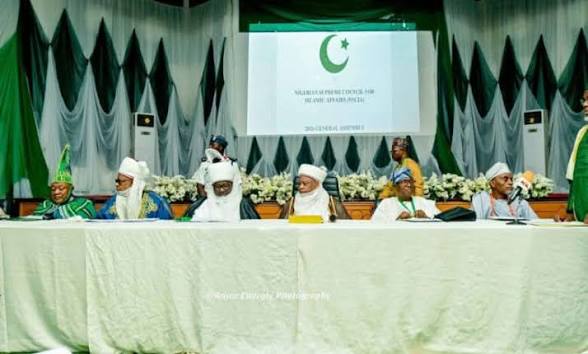
The position was contained in a communique issued following the NSCIA General Assembly held on October 1, 2026, at the National Mosque in Abuja. The assembly was presided over by the Sultan of Sokoto and President-General of the council, Alhaji Muhammad Sa’ad Abubakar, and brought together Islamic scholars, traditional rulers, Chief Imams, leaders of Islamic organisations and delegates from across the country.
According to the council, Nigeria’s insecurity should be treated as a national challenge affecting citizens irrespective of their religious affiliation. It therefore urged the Federal Government to undertake broad security reforms capable of improving the effectiveness and responsiveness of the country’s security institutions.
A key element of the council’s position was its support for decentralized policing. However, the NSCIA stressed that transferring policing responsibilities closer to the states must not come without adequate safeguards.
It said any decentralized policing arrangement should be founded on professionalism, constitutional protection, impartiality, accountability, sustainable funding, respect for fundamental human rights and effective coordination between federal and state security institutions.
The call comes amid an intensifying national debate over the proposed establishment of state police as Nigeria continues to confront terrorism, banditry, kidnapping, communal violence and other forms of insecurity.
The Federal Government has itself backed the principle of state policing as part of wider efforts to strengthen grassroots security. President Bola Ahmed Tinubu had earlier called for constitutional amendments to provide a legal framework for state police, while the Presidency said consultations on the proposed framework had made significant progress.
The NSCIA’s position also reflects concerns surrounding how policing powers would be exercised at the sub-national level. While supporters of decentralized policing argue that states could respond more quickly to local security threats and make better use of community based intelligence, critics have warned about possible political interference, uneven funding and human-rights abuses without effective oversight.
Earlier in 2026, civil society organisations similarly called for strong accountability mechanisms, independent oversight and safeguards against the misuse of state policing powers.
Beyond security, the NSCIA urged the Federal Government to accelerate measures aimed at reducing the cost of food and transportation, citing the economic pressure facing ordinary Nigerians.
The council also called for stronger respect for fundamental rights and national cohesion, maintaining that security and governance reforms should protect Nigerians regardless of religion, ethnicity or region.
The NSCIA’s call adds the voice of one of Nigeria’s major religious umbrella bodies to an increasingly prominent national conversation over the future of policing and internal security. The central issue now remains how any move towards decentralized policing can improve local security while maintaining constitutional order, professional standards, accountability and protection of citizens’ rights.