



Reported by Musa Antiketu,| Journalist at Obaland magazine.
ABUJA — Human rights lawyer and Senior Advocate of Nigeria (SAN), Femi Falana, has backed the legal authority of the Economic and Financial Crimes Commission (EFCC) to investigate public funds belonging to state governments, arguing that the anti-graft agency does not act outside the law merely because the funds under investigation are controlled by a state government.
Falana’s position has renewed attention on the legal boundaries of the EFCC’s investigative powers, particularly amid continuing controversy surrounding the freezing of accounts connected with public finances in Osun State.
The debate has become increasingly significant as Nigeria approaches the August 15, 2026 Osun State governorship election, with competing political interests trading allegations over the management, protection and possible misuse of public funds.
At the centre of the legal argument is a fundamental question: Can a federal anti-corruption agency investigate or restrict access to state-controlled funds where there are reasonable grounds to suspect financial crimes?
Falana’s answer is yes.
The prominent lawyer has previously argued that the EFCC and the Independent Corrupt Practices and Other Related Offences Commission (ICPC) possess legal authority to investigate the finances of state governments where suspected economic and financial crimes are involved.
In a position reported by the Osun State Broadcasting Corporation (OSBC) in December 2022, Falana relied on decisions of Nigeria’s appellate courts to reject arguments that state ownership of funds places such money beyond the reach of federal anti-corruption agencies.
His argument is particularly relevant to the current Osun controversy because it places the issue within the broader constitutional and statutory framework governing public accountability in Nigeria rather than reducing it to a dispute between political parties.
Falana’s Legal Argument
Falana’s position is anchored largely on judicial precedents concerning the investigation and prosecution of alleged diversion of public funds belonging to state governments.
One of the cases he referenced is Kalu v. Federal Republic of Nigeria, involving former Abia State Governor Orji Uzor Kalu and allegations surrounding the diversion and laundering of funds belonging to the Abia State Government.
According to Falana’s interpretation of the case, the fact that money allegedly diverted belonged to a state did not deprive the EFCC of jurisdiction to investigate or prosecute alleged criminal conduct involving those funds.
The Court of Appeal rejected the argument that state ownership of the money prevented federal authorities from pursuing alleged financial crimes. The matter eventually reached the Supreme Court, which upheld the competence of the EFCC to investigate and prosecute economic and financial crimes.
Falana specifically pointed to Sections 6 and 46 of the EFCC Establishment Act as part of the statutory foundation for the commission’s investigative responsibilities.
The significance of the argument extends beyond Osun.
Nigeria operates a federal system in which states manage substantial public resources, including allocations, internally generated revenue, grants and other funds. Yet those resources remain public funds and can become the subject of criminal investigation where there are allegations of fraud, diversion, money laundering or other economic and financial offences.
The legal distinction, therefore, is between legitimate governmental control of public resources and alleged criminal conduct involving those resources.
Why the Osun Account Issue Matters
The controversy surrounding Osun’s finances has emerged against the backdrop of allegations over payroll management and purported irregularities involving the state’s civil service.
In June 2026, the Osun APC Governorship Campaign Council’s Diaspora Committee called on the EFCC to freeze accounts allegedly connected with an alleged ₦13.7 billion ghost-workers payroll scheme. The group claimed that money associated with allegedly irregular salary payments could potentially be diverted for political purposes ahead of the governorship election.
Those allegations remain allegations and should not be treated as established facts in the absence of a final finding by a competent authority or court.
The Osun State Government has previously rejected allegations surrounding the payroll audit, describing claims of a ₦13 billion payroll fraud as politically motivated and insisting that the audit contained serious flaws. The state government also said Governor Ademola Adeleke had welcomed investigations by anti-corruption agencies into the matter.
That distinction is important.
An investigation by the EFCC does not, by itself, establish guilt. Likewise, an allegation made by a political party or campaign organisation is not equivalent to a judicial finding.
For Obaland magazine, the central issue is therefore not whether allegations have been made, but whether the institutions involved can demonstrate that their actions are supported by law, evidence and due process.
EFCC Powers Do Not Mean Unlimited Powers
While Falana’s position supports the EFCC’s authority to investigate state finances, that authority should not be interpreted as giving the commission unrestricted power to interfere with public accounts without legal safeguards.
The distinction between investigative authority and unlimited executive discretion remains critical.
Financial restrictions, freezing orders and other measures affecting access to funds must operate within the applicable legal framework and, where required, receive judicial authorization.
This is particularly important in a constitutional democracy where government institutions must be accountable not only for the fight against corruption but also for the manner in which anti-corruption powers are exercised.
Nigeria’s anti-corruption architecture is built around the principle that public officials and institutions must be subject to the law.
Consequently, the EFCC’s legitimacy in cases involving state funds depends on its ability to demonstrate a credible connection between the financial restrictions imposed and a legitimate investigation into suspected economic or financial offences.
This is also why judicial oversight remains essential.
The Kalu Precedent and State Funds
The precedent cited by Falana is significant because it addresses a recurring argument in Nigerian corruption cases: that federal agencies cannot investigate alleged crimes involving money belonging to state governments.
The Supreme Court’s position in the Kalu litigation undermined that argument.
The court recognised the statutory responsibilities of the EFCC to investigate and prosecute persons reasonably suspected of economic and financial crimes, regardless of the fact that the funds in question originated from a state government.
That precedent provides an important legal foundation for Falana’s current argument.
It also reflects a broader principle: public money does not become immune from criminal investigation simply because it is held or administered by a sub-national government.
If a state-controlled account contains public funds and there is credible evidence suggesting that those funds have been diverted, laundered or otherwise unlawfully dealt with, the existence of state ownership does not automatically terminate the jurisdiction of federal anti-corruption authorities.
Politics and the Osun 2026 Election
The timing of the controversy has inevitably added a political dimension.
Osun is preparing for a keenly contested governorship election, and allegations involving public finance can have significant political consequences.
The ruling Peoples Democratic Party (PDP), the All Progressives Congress (APC) and other political actors have continued to position themselves for the contest, making accusations involving financial management particularly sensitive.
The APC’s Diaspora Committee, for example, linked its call for account freezes to concerns about possible diversion of public money for electoral purposes. The Nation and Vanguard both reported the group’s demand and its allegations concerning the purported ₦13.7 billion payroll issue.
However, responsible journalism requires separating political claims from verified facts.
There is currently a significant difference between saying that a political organisation alleged financial irregularities and saying that investigators or a court established those irregularities.
That distinction is especially important during an election season, when financial allegations can easily become political weapons.
A Longstanding Position from Falana
Falana’s position on the jurisdiction of anti-corruption agencies over state finances is not new.
In December 2022, he publicly rejected the argument that the EFCC and ICPC were legally barred from investigating state-government accounts.
At the time, he cited judicial precedents to argue that anti-graft agencies could investigate public officers and private individuals suspected of diverting state funds.
His argument therefore represents a continuation of an established legal position rather than an entirely new interpretation prompted by the current Osun political contest.
Falana has also previously spoken about the role of the EFCC in electoral offences. In an interview reported by THISDAY in November 2022, he noted that the EFCC had participated in arrests connected with alleged vote buying during the Osun and Ekiti elections and stressed the importance of enforcing electoral laws.
His broader position has consistently placed emphasis on the rule of law and institutional accountability.
What the Public Should Watch
For Osun residents and Nigerians following the controversy, the critical questions should now move beyond political accusations.
First, what precisely prompted the EFCC’s action?
Second, what accounts or funds are affected?
Third, what statutory provisions or court orders underpin the action?
Fourth, what evidence is available to support the underlying investigation?
And finally, how long will any restriction remain in place, and what judicial or administrative mechanism exists for affected parties to challenge it?
These questions matter because public funds are ultimately resources belonging to citizens.
Whether managed by the Federal Government, a state government or a local government, public money carries an obligation of accountability.
At the same time, government institutions must exercise their powers responsibly. An anti-corruption agency must not only be legally empowered to investigate suspected financial crimes; it must also demonstrate that its procedures are transparent, evidence-based and consistent with constitutional protections.
The Larger Nigerian Question
The Osun controversy illustrates a much larger challenge confronting Nigeria’s anti-corruption system.
For years, debates over the EFCC have oscillated between two extremes.
One side argues that the commission must be given sufficient authority to investigate powerful political and public figures without interference.
The other warns that anti-corruption powers can themselves be abused if they are not subjected to strong judicial and constitutional checks.
Both concerns are legitimate in a democratic society.
An effective anti-corruption institution must therefore be strong enough to investigate public officials but sufficiently accountable to prevent arbitrary action.
Falana’s argument addresses the first part of that equation: the EFCC has legal competence to investigate suspected economic and financial crimes involving state funds.
The second part remains equally important: every investigative action must remain subject to the law and due process.
For Osun, the issue has become particularly consequential because the state is simultaneously dealing with allegations concerning public finance, intense political competition and an approaching governorship election.
The best outcome for citizens would be a transparent process in which evidence, not political affiliation, determines the course of the investigation.
If wrongdoing is established, those responsible should face the law.
If allegations are found to be unsubstantiated, those affected should receive appropriate vindication.
And if the EFCC’s action is challenged, the courts should provide the constitutional forum for determining whether the commission complied with the law.
That, ultimately, is the principle at stake.
Falana’s intervention does not amount to a judicial conviction of any Osun official, nor does it settle every factual question surrounding the account-freeze controversy. What it does provide is a legal argument grounded in existing judicial precedent: state ownership of public funds does not place those funds beyond the reach of lawful federal anti-corruption investigations.
For Obaland magazine, the broader lesson is clear: Nigeria’s fight against corruption must be pursued firmly, but always within the boundaries of law, evidence, judicial oversight and constitutional rights.
That balance is essential not only to the credibility of the EFCC, but also to public confidence in Nigeria’s democratic institutions.
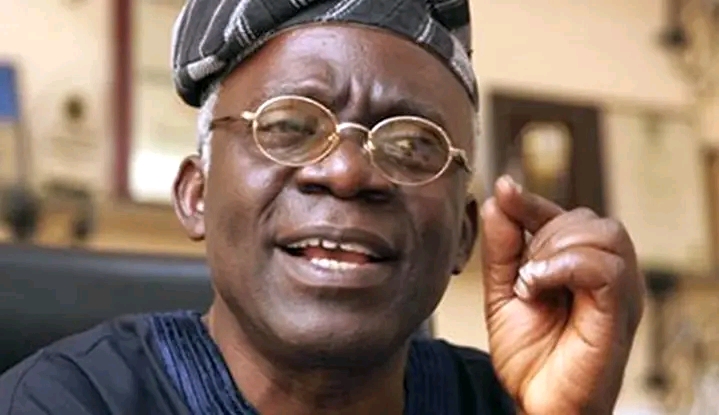
Femi Falana SAN says the EFCC has legal authority to investigate state funds, as controversy over Osun accounts and alleged financial irregularities intensifies ahead of the 2026 governorship election.
Breaking news/Trending/Feature
-

Tree falls in Kwara, 2 dead, 10 injured
-
Nigerian man that was beaten to death on the street in Italy
-
Breaking News : STEWART EFE’S well deserved appointment as Edo State image Maker
-
Biography of Edo Funk Super star- Esther .O. Edokpayi
-
Stephanie O. Linus appointed as National OPS-WASH Ambassador by the Honourable Minister of Water Resources
-
NAOMI GOLD- ON A RED LIGHT TALK SHOW FINGERED BY COUNSELOR
-
INTERNAL SECURITY: EDO POLICE LAUNCH HOUSE-TO-HOUSE ARREST OF CULTISTS, RAID BLACKSPOTS
-
BENIN KINGDOM STANDS FIRM: “NO LAND TO SPARE” FOR PROPOSED ANIOMA/TORU-EBE STATE
Breaking news News
-
Tree falls in Kwara, 2 dead, 10 injured
-
Nigerian man that was beaten to death on the street in Italy
-
Breaking News : STEWART EFE’S well deserved appointment as Edo State image Maker
-
Biography of Edo Funk Super star- Esther .O. Edokpayi
-
Stephanie O. Linus appointed as National OPS-WASH Ambassador by the Honourable Minister of Water Resources
Popular News
-
Tree falls in Kwara, 2 dead, 10 injured
-
Nigerian man that was beaten to death on the street in Italy
-
Breaking News : STEWART EFE’S well deserved appointment as Edo State image Maker
-
Biography of Edo Funk Super star- Esther .O. Edokpayi
-
Stephanie O. Linus appointed as National OPS-WASH Ambassador by the Honourable Minister of Water Resources