


Sowore Advocates Drone Led Security Strategy, Says Technology Should Drive Nigeria’s Defence Future
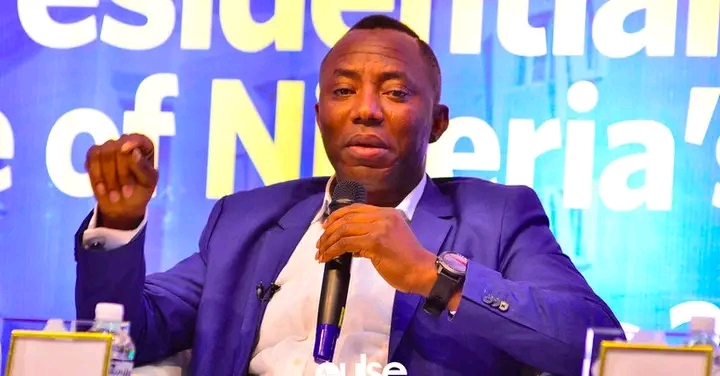
Human rights activist and presidential candidate of the African Action Congress (AAC), Omoyele Sowore, has sparked fresh debate on the future of Nigeria’s security architecture after declaring that he would appoint a drone as his defence minister if elected president.
Speaking during a public engagement on national security and governance, Sowore used the statement to underscore his belief that advanced technology, rather than traditional bureaucratic structures, should play a central role in addressing Nigeria’s growing security challenges. According to him, modern warfare and intelligence gathering increasingly rely on technological tools such as drones, surveillance systems, and artificial intelligence, making innovation essential for effective national defence.
The former presidential candidate argued that Nigeria’s security institutions require a significant overhaul to respond more effectively to threats including terrorism, banditry, kidnapping, and cross border criminal activities. He maintained that embracing technology driven solutions would enhance intelligence collection, improve rapid response capabilities, and reduce operational inefficiencies within the country’s security framework.
Sowore’s remarks have generated widespread reactions across political and social circles, with supporters describing the comment as a symbolic call for modernization, while critics argue that security reforms require a broader institutional approach beyond technological deployment. Nevertheless, the statement has reignited discussions about the role of emerging technologies in strengthening national security and protecting citizens across Africa’s most populous nation.
Across the world, drones have become increasingly important in military operations, border surveillance, intelligence gathering, and emergency response. Countries including the United States, Türkiye, China, and Israel have invested heavily in drone technology, reflecting a broader global shift toward technology-driven security systems.
As Nigeria continues to confront complex security threats, debates surrounding innovation, defence modernization, and the integration of advanced technologies into military operations are expected to remain central to national policy discussions ahead of future elections.