


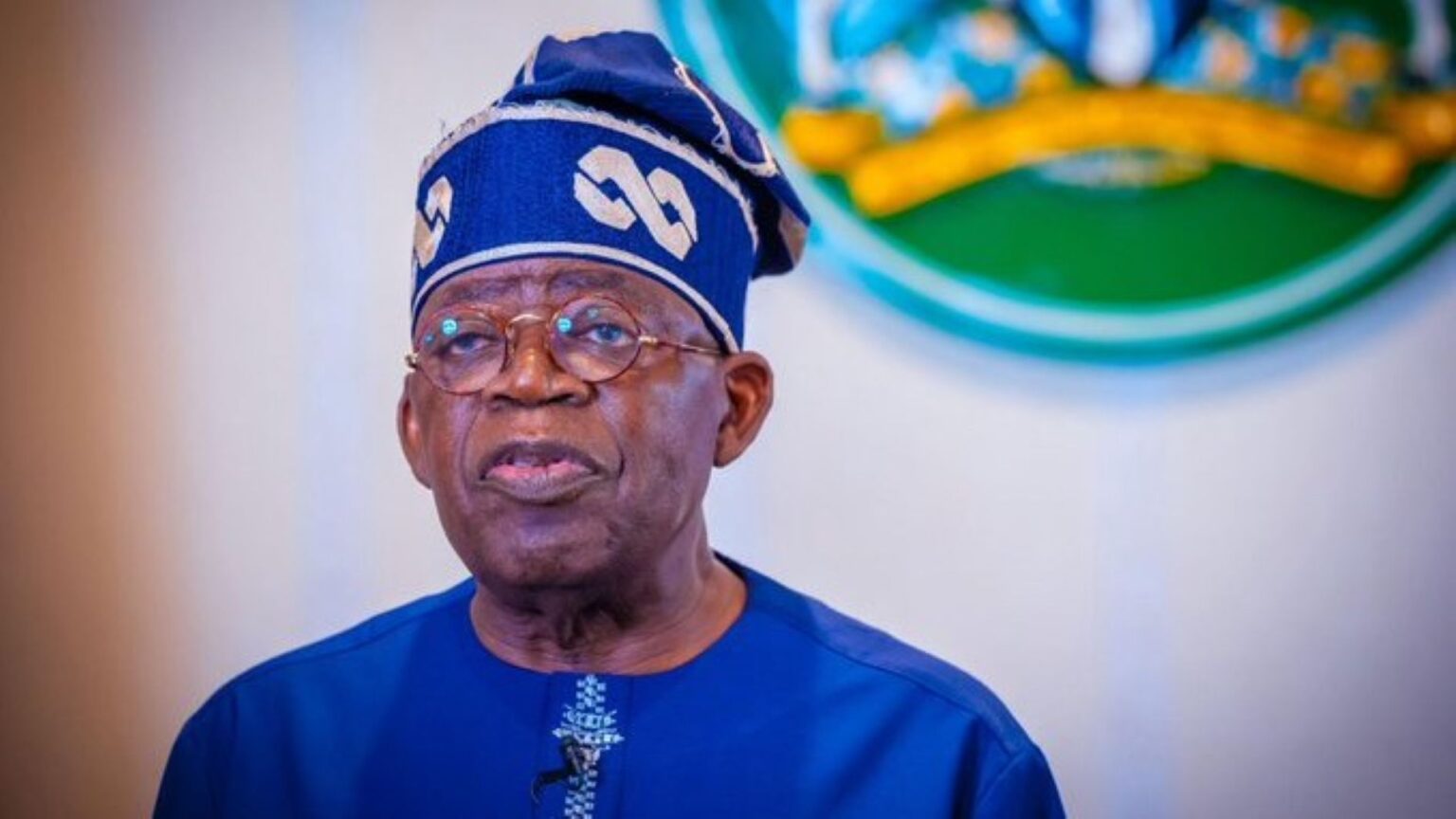
President Bola Ahmed Tinubu has defended his administration’s plan to obtain fresh external loans, arguing that borrowing is necessary to finance critical infrastructure and support Nigeria’s ambition of becoming a $1 trillion economy by 2030.
The President’s defence comes amid growing criticism from the Nigeria Labour Congress (NLC) and opposition figures, who have questioned the justification for additional borrowing despite claims of increased government revenue following the removal of the petrol subsidy.
In an essay titled “From Reforms to Delivery: Our Infrastructure Investment and Growth Strategy,” Tinubu maintained that the economic value generated by borrowed funds should be the primary consideration rather than the amount of debt accumulated.
The President identified major infrastructure projects, including the Lagos-Calabar Coastal Highway, Sokoto-Badagry Superhighway, Trans-Sahara Superhighway, electricity grid upgrades and the modernisation of commercial ports in Lagos, as investments expected to strengthen Nigeria’s productive capacity.
He argued that improved transportation networks, electricity supply and port infrastructure would reduce business costs, expand trade, create employment opportunities and attract private investment.
Tinubu also maintained that the administration’s borrowing strategy was shifting towards long-term investments capable of generating economic returns, with repayment arrangements designed to align with the useful lives of infrastructure assets.
The Federal Government is seeking National Assembly approval for external borrowing facilities of $20.52 billion and €1.045 billion under its 2026–2027 Supplementary External Borrowing Rolling Plan.
However, Nigeria Labour Congress President, Joe Ajaero, has challenged the government to explain why it continues to seek external loans despite announcing increased revenue following the removal of petrol subsidy payments.
Ajaero questioned the government’s reliance on international financial institutions, including the International Monetary Fund and World Bank.
He argued that Nigerians deserved an explanation of why additional borrowing remained necessary when the government had repeatedly highlighted increased revenue and higher allocations to state governments.
Ajaero also referenced rising international crude oil prices, questioning whether the government should continue borrowing when oil prices had reportedly exceeded the $70-per-barrel benchmark used in preparing the 2026 budget.
Although he acknowledged that the NLC had no constitutional authority to approve or reject government borrowing, he urged Nigerians and relevant institutions to demand accountability.
Opposition figures have also questioned the proposed borrowing, demanding comprehensive information about previous loans and the projects they were intended to finance.
Paul Ibe, media aide to former Vice-President Atiku Abubakar, called for the publication of detailed information on the proposed projects, including their costs, locations, implementing agencies, procurement records and completion timelines.
He also demanded disclosure of interest rates, repayment schedules and the financial risks associated with the borrowing arrangements.
Similarly, the National Democratic Congress (NDC) Presidential Campaign Council raised concerns about Nigeria’s rising debt profile.
The council, through its spokesperson, Dr Chiogo Constance Ikokwu, said Nigeria’s external debt increased from $43.16 billion in June 2023 to $54.52 billion in June 2026.
It also cited an increase in total public debt from ₦87.38 trillion to ₦166.79 trillion within the same period.
The NDC called on the Federal Government to publish a comprehensive register of external loans obtained since May 2023, showing the amounts borrowed, funds disbursed, repayment obligations, project implementation status and independently verified outcomes.
The opposition group also urged the National Assembly to scrutinise the proposed borrowing and assess its implications for future debt servicing obligations.
The growing disagreement highlights the challenge facing the Tinubu administration as it seeks to balance infrastructure financing with concerns about Nigeria’s public debt and the economic pressures confronting citizens.
While the President maintains that strategic borrowing can stimulate economic growth and improve national infrastructure, labour leaders and opposition figures insist that Nigerians must be able to assess the actual benefits of previous and proposed loans.
The debate is expected to place greater scrutiny on the National Assembly’s consideration of the borrowing request, particularly regarding project costs, implementation timelines, financing conditions and the government’s capacity to meet future repayment obligations.
Ultimately, the central issue is not only how much Nigeria borrows but whether the funds are transparently managed, efficiently utilised and translated into measurable improvements in the lives of citizens.
President Tinubu defends Nigeria’s proposed $20.52 billion external borrowing, while the NLC and opposition figures demand transparency, accountability and details of loan repayment.