



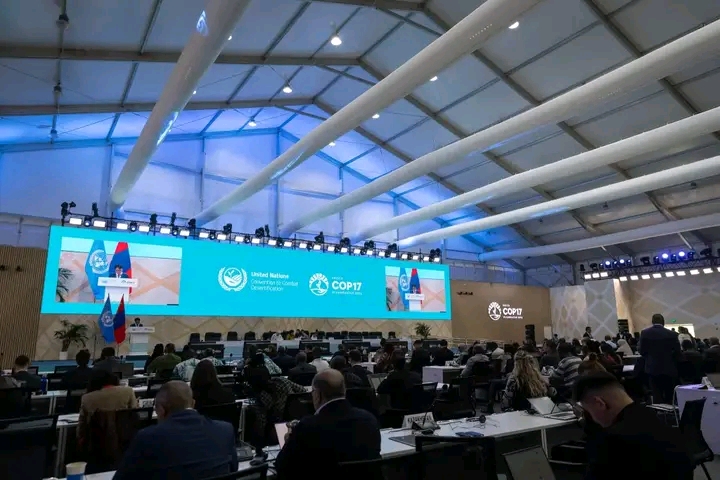
Reported by Musa Antiketu, | Journalist for Obaland magazine.
ULAANBAATAR, Mongolia-di 17th Conference of di Parties to di United Nations Convention to Combat Desertification (UNCCD COP17) don finish for Ulaanbaatar as governments, development institutions, investment funds and businesses gather $1.3 billion portfolio of new and pipeline finance for land restoration and drought resilience for 23 countries for five continents.
Di financing commitment come out as one of di major outcomes of di two-week conference, wey happen from August 17 to 28, 2026, under di theme “Restoring Land. Restoring Hope.” Di summit bring together representatives of di UNCCD’s 197 Parties alongside development banks, businesses, civil society organisations, scientists, Indigenous Peoples, pastoralists and other stakeholders.
According to di UNCCD and organisations wey dey monitor di negotiations, di $1.3 billion package dey meant to support projects wey wan restore degraded land, improve drought preparedness and strengthen di resilience of communities and ecosystems wey dey face worsening environmental pressures. Di World Resources Institute talk say $644.5 million of di portfolio don identify as new finance, wey show di difference between newly committed resources and finance wey don dey for di project pipeline.
Di outcome come against significant global financing challenge. UNCCD estimates show say about $355 billion dey required every year between 2025 and 2030 to meet land-restoration objectives and tackle desertification, land degradation and drought. Current annual investment dey estimated at about $77 billion, wey leave financing gap of roughly $278 billion every year.
One central feature of COP17 na di increased focus on rangelands and pastoralist communities, especially during di United Nations International Year of Rangelands and Pastoralists. Rangelands cover more than half of di Earths land surface and dey provide livelihoods and ecosystem services for billions of people, but large areas dey under increasing pressure from degradation, unsustainable land use and climate-related stresses.
Di conference also see di launch of di Rangelands Flagship Initiative, wey mobilise about $1.2 billion across 45 projects wey dey aimed at improving di condition and resilience of rangelands. Di initiative dey put more emphasis on sustainable management, restoration and investment for landscapes wey dey critical to food security and pastoral livelihoods.
Another significant development na di launch of di Drought Resilience Investment Facility (DRIF), wey dey designed to help mobilise public and private capital for drought resilience, water infrastructure, sustainable agriculture and land restoration. UNCCD describe di facility as new global financing instrument wey dey meant to move drought management from mostly reactive responses to preparedness and long-term resilience.
Di Asian Development Bank also announce major financing push for land restoration and resilience for di Asia-Pacific region, adding to di broader financial momentum wey don dey generated at di summit.
Despite di financial announcements, COP17 no produce agreement on comprehensive global framework for drought management. Negotiations on legally binding drought instrument don dey postponed, with discussions wey go continue for di next UNCCD conference for Egypt in 2028.
Di unresolved drought framework dey show di gap between financial mobilisation and international policy consensus. While di new financing fit support practical interventions, experts don caution say di $1.3 billion portfolio still dey small compared to di estimated annual financing deficit wey dey required to tackle global land degradation and drought at scale.
For Africa, where drought, desertification, soil degradation and water stress dey affect agriculture, pastoral livelihoods and rural economies more, di developments for COP17 get particular significance. Di continent dey face substantial environmental and socioeconomic pressures linked to degraded land, making access to predictable international climate and development finance crucial for restoration, food security and community resilience.
Di challenge now dey move beyond pledges to implementation. Effective monitoring, transparent financing, strong national institutions and meaningful participation by affected communities go dey essential if COP17s commitments wan turn into restored landscapes and improved livelihoods.
For Obaland magazine, di significance of COP17 no dey just for di size of di financial announcements, but for whether di commitments fit deliver measurable improvements for communities wey dey live for di front lines of drought and land degradation. Di real test go be di implementation of projects and di ability of governments and financial institutions to close di much larger funding gap wey dey confront global land restoration.