



US, China Establish AI Incident Communication Channel as Trump Xi Summit Expands Cooperation on Emerging Technology
The United States and China have agreed to establish a bilateral communication channel for addressing incidents involving artificial intelligence, marking a significant step toward managing the security risks associated with increasingly advanced AI systems.
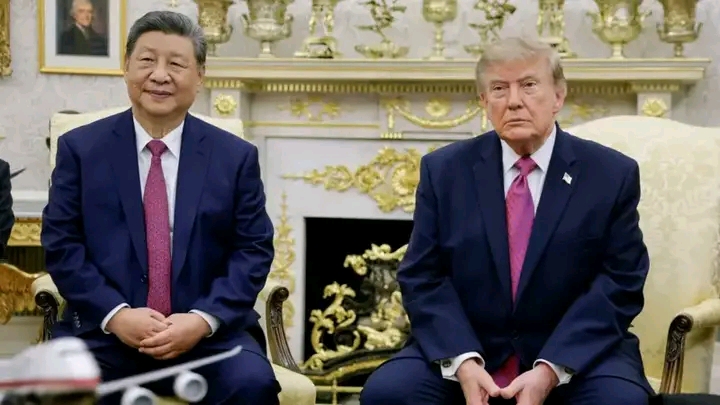
The agreement was announced by the White House following Chinese President Xi Jinping’s state visit to Washington and his meetings with US President Donald Trump from September 23 to 25, 2026. The two leaders discussed the risks and potential benefits of artificial intelligence as part of broader efforts to manage competition between the world’s two largest economies.
According to reports, the communication mechanism is intended to provide a direct avenue for the two countries to exchange information when significant AI-related incidents occur. The initiative follows preparatory discussions between senior American and Chinese officials, including US Treasury Secretary Scott Bessent and Chinese Vice Premier He Lifeng.
Before the presidential summit, Bessent said Washington and Beijing were working toward an “incident line” that could facilitate communication during AI safety emergencies. Reuters reported that the proposed framework was designed to address issues including national-security risks, uncontrollable AI systems and potential threats involving cyber operations.
The development comes as the United States and China continue competing for technological leadership while confronting concerns that increasingly capable AI systems could create risks extending beyond national borders. The Associated Press reported ahead of the summit that both governments were increasingly focused on potential dangers involving cyber attacks, biological misuse, loss of control over advanced systems and disruption of critical infrastructure.
The planned communication channel does not remove the broader strategic differences between Washington and Beijing over artificial intelligence. Both countries remain competitors in advanced computing, semiconductor technology and AI development, while US restrictions on certain advanced technologies exported to China remain an important point of tension.
The agreement nevertheless creates a formal avenue for communication at a time when governments and technology experts are increasingly calling for international coordination on AI safety. Reuters previously reported that US and Chinese security experts had advocated direct communication mechanisms and other safeguards to reduce the possibility of AI related incidents escalating into wider security crises.
The two sides are also expected to continue high level discussions on the risks and benefits of advanced AI. Reuters reported that American and Chinese officials planned to meet again in Shenzhen within about two months to continue discussions on AI safety and communication protocols.
For Africa and other regions outside the two major AI powers, the development underscores the growing importance of international cooperation over technologies whose effects increasingly cross national borders. AI systems are being adopted in areas including finance, healthcare, education, security and public administration, making questions around safety, accountability and cross-border incident response increasingly relevant to governments worldwide.
The US China arrangement therefore represents an initial communication framework rather than a comprehensive agreement on AI governance. Its practical significance will depend on how the mechanism is implemented, what incidents qualify for notification and whether the two governments can maintain communication despite their wider technological and geopolitical rivalry.


