

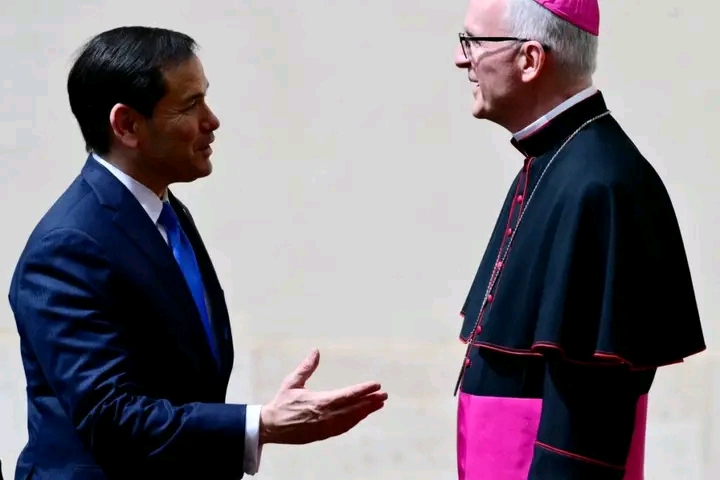
“US Diplomat Meets Pope Leo XIV Amid Efforts to Ease Growing Washington Vatican Tensions”
A high-level diplomatic meeting between senior United States officials and Pope Leo XIV has drawn global attention as both sides seek to ease growing tensions surrounding international conflicts, peace advocacy, and political rhetoric linked to President Donald Trump’s administration.
The meeting, held at the Vatican City, comes amid increasing disagreements between Washington and the Vatican over global security issues, humanitarian concerns, and the Pope’s vocal anti-war position. According to diplomatic sources, the discussions focused on restoring constructive dialogue and preventing further deterioration in relations between the United States and the Holy See.
Recent remarks attributed to President Donald Trump criticizing the pontiff’s peace-centered messaging reportedly intensified the strain between both sides. Pope Leo XIV has repeatedly called for diplomacy, restraint, and peaceful conflict resolution in ongoing global crises, positions that have resonated widely among religious leaders and humanitarian organizations worldwide.
Analysts say the diplomatic engagement signals an effort by Washington to maintain strategic ties with the Vatican, which continues to wield significant moral and geopolitical influence across Europe, Africa, Latin America, and other regions. The Vatican has historically played a mediating role in international conflicts, often advocating for humanitarian intervention, refugee protection, and multilateral cooperation.
Political observers also note that the meeting reflects broader concerns about rising global polarization and the growing intersection of religion and international politics. As conflicts continue to reshape global alliances, both the United States and the Vatican appear keen to avoid a prolonged diplomatic standoff that could further deepen divisions on critical global issues.
While no formal agreements were announced after the talks, officials described the discussions as “constructive” and emphasized the importance of continued engagement between political and religious institutions in addressing international instability.