



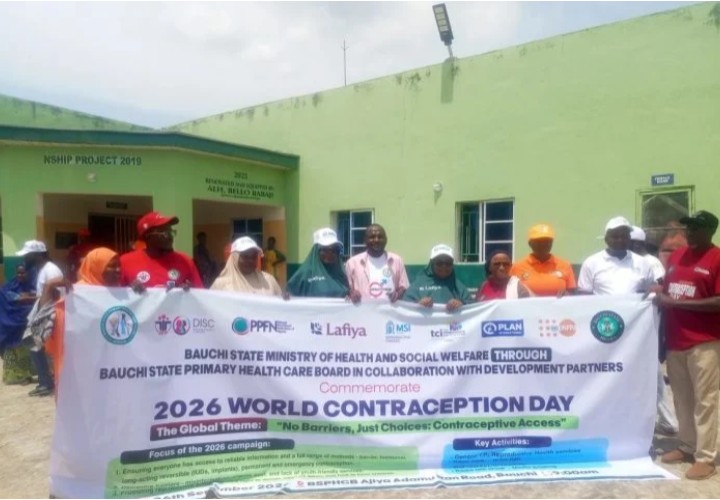
Bauchi State authorities have raised fresh concerns about unplanned pregnancies among married women, saying the situation highlights the need for stronger awareness and access to family-planning services across the state.
The Executive Chairman of the Bauchi State Primary Healthcare Board, Dr Rilwanu Mohammed, made the disclosure on Saturday during a media briefing organised to mark the 2026 World Contraception Day in Bauchi. Mohammed was represented at the event by the Director of Primary Health, Dr Safiyan Jibrin.
According to Mohammed, observations from health facilities in the state indicate that unplanned pregnancies are occurring more frequently among married women than unmarried women. He said contraception remains important because it gives couples an opportunity to plan the timing and spacing of pregnancies.
The official also said some people visit health facilities after experiencing unplanned pregnancies and may seek ways to terminate them. He therefore encouraged couples to discuss family planning and make informed decisions about the timing and spacing of their children.
The issue has broader public-health implications. The United Nations Population Fund says access to contraception enables individuals and couples to make informed decisions about whether, when and how many children to have. UNFPA also notes that sustained investment in family planning can contribute to better health outcomes and reduce pressure on households and health systems.
In Bauchi, efforts to improve access to family-planning services have continued. the state expanded family-planning service delivery points from 610 to 713 facilities, alongside the receipt of contraceptive commodities through support involving the United Nations Population Fund and the Children’s Investment Fund Foundation.
At the World Contraception Day event, a representative of the Society for Family Health, Pharmacist Nufin-Allah Alhamdul, said contraception could help families determine the interval between births and manage household resources. He also noted that adequate spacing between pregnancies can give mothers time to recover physically while supporting the wellbeing, nutrition and education of children.
The Bauchi official urged residents to make use of family-planning and contraceptive services available at primary and secondary healthcare facilities across the state. He said many of the services are available at little or no cost, while lack of awareness remains one of the barriers preventing some residents from accessing them.
The comments came as communities around the world marked World Contraception Day on September 26. The 2026 campaign has focused on improving access to reliable information, contraceptive options and reproductive-health services, while addressing misinformation and other barriers to informed choice.
For Bauchi and other parts of Nigeria, the discussion goes beyond preventing pregnancy. Family planning also involves informed decision-making, birth spacing, access to appropriate healthcare and the ability of couples to plan according to their circumstances.
It is important, however, to note that the claim concerning the higher occurrence of unplanned pregnancies among married women in Bauchi was presented by a state health official based on observations from hospitals.
Obaland magazine understands that continued public education, reliable health information and accessible family-planning services remain important parts of addressing unintended pregnancies and improving maternal and family health across Nigeria.
Bauchi health officials raise concerns over unplanned pregnancies among married women as World Contraception Day highlights the importance of contraception, family planning and informed reproductive-health choices.


