Breaking news/Trending/Feature

  • Tree falls in Kwara, 2 dead, 10 injured

    Tree falls in Kwara, 2 dead, 10 injured

    0 shares
    Share 0 Tweet 0
  • Nigerian man that was beaten to death on the street in Italy

    0 shares
    Share 0 Tweet 0
  • Breaking News : STEWART EFE’S well deserved appointment as Edo State image Maker

    0 shares
    Share 0 Tweet 0
  • Biography of Edo Funk Super star- Esther .O. Edokpayi

    0 shares
    Share 0 Tweet 0
  • Stephanie O. Linus appointed as National OPS-WASH Ambassador by the Honourable Minister of Water Resources

    0 shares
    Share 0 Tweet 0
  • Sibling grabbed for attacking sister in Lagos

    0 shares
    Share 0 Tweet 0
  • INTERNAL SECURITY: EDO POLICE LAUNCH HOUSE-TO-HOUSE ARREST OF CULTISTS, RAID BLACKSPOTS

    0 shares
    Share 0 Tweet 0
  • The Edo State Government has debunked claims by the Indigenous People of Biafra (IPOB) alleging that Governor Monday Okpebholo approved N6 billion as compensation to so-called “Fulani terrorists” following the recent Uromi killings. In a strongly-worded statement on Thursday, the Chief Press Secretary to the Governor, Fred Itua, described the accusation as a reckless falsehood designed to incite ethnic conflict and destabilise the peace of Edo State. The controversy stems from the events of 28 March, when sixteen hunters from Kano State were killed in the Udune Efandion community of Uromi. In the aftermath, Governor Okpebholo visited Kano to sympathise with the families of the victims and appeal for calm, while a delegation from Kano later travelled to Edo to engage in peace discussions. IPOB, in a statement released on 21 April, alleged that the Governor had secretly approved a N6 billion compensation package to appease the bereaved families a claim which the Edo State Government swiftly dismissed as baseless and inflammatory. “There is no truth whatsoever in the claim that Governor Monday Okpebholo approved or paid N6 billion to any group,” Itua said. “This is a fictitious and malicious lie concocted by IPOB to sow seeds of discord and destabilise the harmony we have nurtured in Edo State.” The government warned that IPOB’s repeated attempts to manipulate public sentiment and incite ethnic hostility under the cover of activism would not succeed in Edo State. “It has become a known tactic of this proscribed group to exploit tragic situations to spread hate and misinformation,” the statement added. “Their agenda of violence and ethnic disintegration has no place here.” Emphasising its commitment to unity, security and justice for all residents, the Edo State Government reaffirmed its stance against any form of ethnic or religious discrimination. The statement also urged security agencies to investigate the source of the inciting publication and prosecute those behind it, stressing that public order and peace must not be jeopardised by dangerous propaganda. “We remain resolute in our commitment to justice, peace and the protection of all Edo people, regardless of background,” the government declared. “We will continue to uphold the values of unity, tolerance and truth in the face of reckless attempts to destabilise our state.”

    0 shares
    Share 0 Tweet 0

Breaking news News

  • Tree falls in Kwara, 2 dead, 10 injured

    Tree falls in Kwara, 2 dead, 10 injured

    0 shares
    Share 0 Tweet 0
  • Nigerian man that was beaten to death on the street in Italy

    0 shares
    Share 0 Tweet 0
  • Breaking News : STEWART EFE’S well deserved appointment as Edo State image Maker

    0 shares
    Share 0 Tweet 0
  • Biography of Edo Funk Super star- Esther .O. Edokpayi

    0 shares
    Share 0 Tweet 0
  • Stephanie O. Linus appointed as National OPS-WASH Ambassador by the Honourable Minister of Water Resources

    0 shares
    Share 0 Tweet 0
https://obalandmagazine.com/wp-content/uploads/2025/10/Edos-Fight-Against-Cult-Violence.mp4

Popular News

  • Tree falls in Kwara, 2 dead, 10 injured

    Tree falls in Kwara, 2 dead, 10 injured

    0 shares
    Share 0 Tweet 0
  • Nigerian man that was beaten to death on the street in Italy

    0 shares
    Share 0 Tweet 0
  • Breaking News : STEWART EFE’S well deserved appointment as Edo State image Maker

    0 shares
    Share 0 Tweet 0
  • Biography of Edo Funk Super star- Esther .O. Edokpayi

    0 shares
    Share 0 Tweet 0
  • Stephanie O. Linus appointed as National OPS-WASH Ambassador by the Honourable Minister of Water Resources

    0 shares
    Share 0 Tweet 0

Subscribe to Obaland Magazine

Retail
Saturday, October 17, 2026
Login/Register
Advertise
  • Login
  • Home
  • News
  • About Us
  • Entertainment
  • Music
  • Magazine
  • Contact us
No Result
View All Result
Obaland Magazine
No Result
View All Result
Home News

World Food Day: Rising Poverty and Food Prices Deepen Nigeria’s Hunger Crisis

Musa Antiketu by Musa Antiketu
October 17, 2026
in News
0
Tweet
Share
Share


Nigeria’s worsening poverty and persistent food insecurity are placing millions of households under growing pressure, raising fresh concerns about the country’s ability to guarantee access to affordable, nutritious food.

YOU MAY ALSO LIKE

Top 5 African Passports Offering the Most Visa-Free Travel in 2026

Akande Disputes Babachir Lawal’s Claims, Says Buhari Offered to Back Osinbajo Four Times

The crisis comes as the country marks World Food Day, observed annually on October 16 to promote efforts to end hunger, improve nutrition and build sustainable food systems. This year’s theme, “Innovate Today, Nourish Tomorrow,” highlights the importance of agricultural innovation in securing food supplies for future generations.

However, the challenges facing Nigerian households remain substantial. Rising living costs, high agricultural production expenses, insecurity and climate-related disruptions continue to undermine food production and weaken the purchasing power of vulnerable families.

According to the United Nations Food and Agriculture Organization (FAO), nearly 36.3 million people in Nigeria were projected to face severe acute food insecurity during the June–August 2026 lean season. The figure reflects the combined effects of conflict, economic pressures and disruptions to agricultural livelihoods.

The World Bank also reported in April 2026 that Nigeria’s poverty rate had risen from 56% in 2023 to 63% in 2025, leaving approximately 140 million people living in poverty. The figures underscore the difficulty many households face in meeting basic needs, including food, healthcare and education.

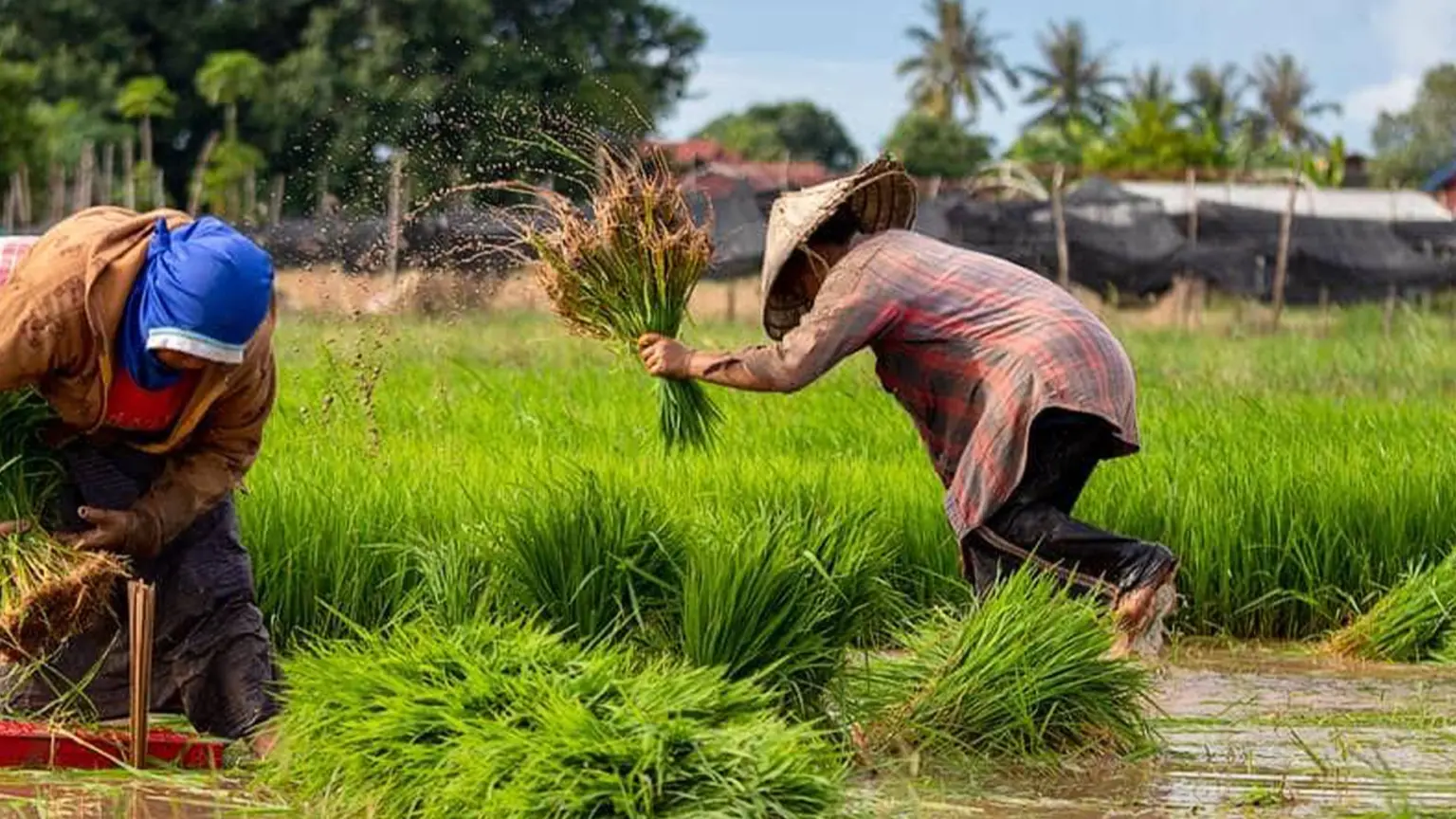
Nigeria’s food crisis is closely linked to challenges confronting farmers across several agricultural regions. Insecurity has restricted access to farmland in parts of the North-East, North-West and North-Central regions, forcing some farming households to abandon their fields or reduce cultivation.

The FAO has also warned that high agricultural input costs are likely to constrain cereal production in 2026. Rising fuel and fertiliser prices have increased production and transportation expenses, placing additional pressure on farmers and food distributors.

Climate variability presents another challenge. Flooding, prolonged dry spells and irregular rainfall can damage crops, reduce harvests and make agricultural planning more difficult. These pressures are particularly damaging to smallholder farmers, who often have limited access to irrigation, affordable credit, modern equipment and agricultural insurance.

When production costs rise and harvests fall short, the effects extend beyond farming communities. Traders face higher operating expenses, food prices come under pressure, and low-income households struggle to maintain adequate diets.

Nigeria has considerable agricultural potential, supported by its extensive arable land, diverse climatic conditions and large domestic market. However, unlocking that potential requires more than policy announcements and occasional agricultural interventions.

Investment in mechanisation, improved seeds, irrigation, research, extension services and climate-resilient farming could help increase productivity and strengthen food supplies. Better rural roads, storage facilities, processing infrastructure and market access are also essential to reduce post-harvest losses and improve farmers’ earnings.

Agricultural financing must reach genuine producers, particularly smallholder farmers who play a significant role in domestic food production. Transparent implementation, effective monitoring and accountability are necessary to ensure that public resources translate into measurable improvements in agricultural output and household food access.

Food safety must also remain part of the response. Stronger oversight of pesticides and other agricultural chemicals, alongside farmer education and responsible farming practices, is necessary to protect consumers while supporting higher production.

As food insecurity deepens, government policies must address both the supply of food and the ability of citizens to afford it. Increasing agricultural output alone will not eliminate hunger if household incomes remain insufficient to cover essential expenses.

Targeted assistance for vulnerable families, effective social protection programmes, support for local food producers and measures to improve market efficiency can help ease immediate pressures. Conflict-affected communities also require sustained humanitarian assistance and interventions that restore livelihoods and enable farmers to return safely to their fields.

World Food Day therefore provides an opportunity to assess whether commitments to agricultural development are producing tangible results. For Nigeria, the challenge is not simply to produce more food, but to ensure that safe, nutritious and affordable food reaches households across all regions.

The country’s response will require sustained investment, reliable data, effective coordination between federal and state governments, and meaningful participation by farmers, researchers, businesses and development partners.

Without decisive action, poverty and food insecurity will continue to threaten household welfare, nutrition and long-term economic development. Turning agricultural potential into food security remains essential to ensuring that no Nigerian is left unable to afford a decade.

Tweet
Share
Share
Tags: agricultural developmentRising povertyfood insecurity in Nigeriahigh food pricesinsecurity and climate pressures are deepening Nigeria’s hunger crisis as World Food Day highlights the urgent need for sustainable agricultural solutions.Nigeria food crisisrising poverty in NigeriaWorld Food Day 2026

Related Posts

Top 5 African Passports Offering the Most Visa-Free Travel in 2026
News

Top 5 African Passports Offering the Most Visa-Free Travel in 2026

October 17, 2026
Akande Disputes Babachir Lawal’s Claims, Says Buhari Offered to Back Osinbajo Four Times
News

Akande Disputes Babachir Lawal’s Claims, Says Buhari Offered to Back Osinbajo Four Times

October 17, 2026
2027 Elections: Sule Lamido Vows to Challenge APC Over Jigawa’s Governance Record
News

2027 Elections: Sule Lamido Vows to Challenge APC Over Jigawa’s Governance Record

October 17, 2026
Breast Cancer Awareness: Early Detection, Timely Treatment and Support Can Save Lives.
News

Breast Cancer Awareness: Early Detection, Timely Treatment and Support Can Save Lives.

October 17, 2026
Davido Faces Fan Backlash as Fans Threaten to Boycott Lagos Concerts Over Uncle Adeleke’s Support for Tinubu.
News

Davido Faces Fan Backlash as Fans Threaten to Boycott Lagos Concerts Over Uncle Adeleke’s Support for Tinubu.

October 17, 2026
ADC Accuses Kwankwaso of Undermining Opposition Unity, Allegedly Advancing Tinubu’s 2027 Re Election Bid.
News

ADC Accuses Kwankwaso of Undermining Opposition Unity, Allegedly Advancing Tinubu’s 2027 Re Election Bid.

October 17, 2026

Search

No Result
View All Result

Recent Posts

  • Top 5 African Passports Offering the Most Visa-Free Travel in 2026 October 17, 2026
  • Akande Disputes Babachir Lawal’s Claims, Says Buhari Offered to Back Osinbajo Four Times October 17, 2026
  • World Food Day: Rising Poverty and Food Prices Deepen Nigeria’s Hunger Crisis October 17, 2026
  • 2027 Elections: Sule Lamido Vows to Challenge APC Over Jigawa’s Governance Record October 17, 2026
  • Breast Cancer Awareness: Early Detection, Timely Treatment and Support Can Save Lives. October 17, 2026
  • Davido Faces Fan Backlash as Fans Threaten to Boycott Lagos Concerts Over Uncle Adeleke’s Support for Tinubu. October 17, 2026
  • ADC Accuses Kwankwaso of Undermining Opposition Unity, Allegedly Advancing Tinubu’s 2027 Re Election Bid. October 17, 2026
  • Australia Confirms First H5N1 Bird Flu Detection on Macquarie Island, Raising Fears for Vulnerable Wildlife. October 17, 2026
  • DSS Arrests Faisal Maina in Abuja After Six Years on the Run, Hands Him Over to EFCC. October 17, 2026
  • NAFDAC Uncovers Fake Alcohol Operation in Lagos, Seizes Products Worth Over ₦2 Billion. October 16, 2026

Categories

  • Community (7)
  • CRIME NEWS (1)
  • culture (8)
  • Education (6)
  • Electrical (17)
  • Entertainment (496)
  • fashion (13)
  • Feature (33)
  • Gist (25)
  • Gossip (36)
  • Government (381)
  • Headlines (1)
  • health (83)
  • history (13)
  • International (30)
  • INTERVIEW (9)
  • music (47)
  • Nature (5)
  • News (5,281)
  • news (2,007)
  • Non profit (19)
  • PHOTO (4)
  • Political (305)
  • press release (32)
  • Property (14)
  • review (21)
  • Science (9)
  • Sport (48)
  • Sports (322)
  • TECHNOLOGY (14)
  • Video (4)
  • world (105)

About

About Obaland Magazine

Obaland Magazine is Nigeria’s trusted source for entertainment, political, and social news. We connect readers with verified stories that matter.

Contact Us

obaland podcast radio

Obaland Podcast

Listen to engaging talk shows and interviews from Obaland Multichoice Media House.

🎧 Listen Now

Support us Today

Support Us

Your donations help us maintain free and independent journalism.

Donate Now
No Result
View All Result
  • Login
  • Home
  • News
  • About Us
  • Entertainment
  • Music
  • Magazine
  • Contact us

All right reserved© 2023 Obaland magazine

1
WhatsApp
Hello 👋
Can we help you?
Open chat