Kenya Confirms Seven Ebola Cases as Three Healthcare Workers Test Positive.
Kenya has confirmed four additional cases of Ebola, bringing the country’s total number of confirmed infections to seven, including one death, as health authorities intensify efforts to contain the outbreak.
The Kenyan Ministry of Health announced on Saturday, October 17, 2026, that the latest cases include three healthcare workers who treated the country’s first confirmed Ebola patient and a male relative of the deceased.
The four patients had already been placed under quarantine because of their exposure to the initial case. Authorities said they developed fever, were immediately isolated, and subsequently tested positive for the Bundibugyo strain of the Ebola virus. All four are receiving supportive medical care at a designated treatment facility.
Healthcare Workers Among Newly Infected
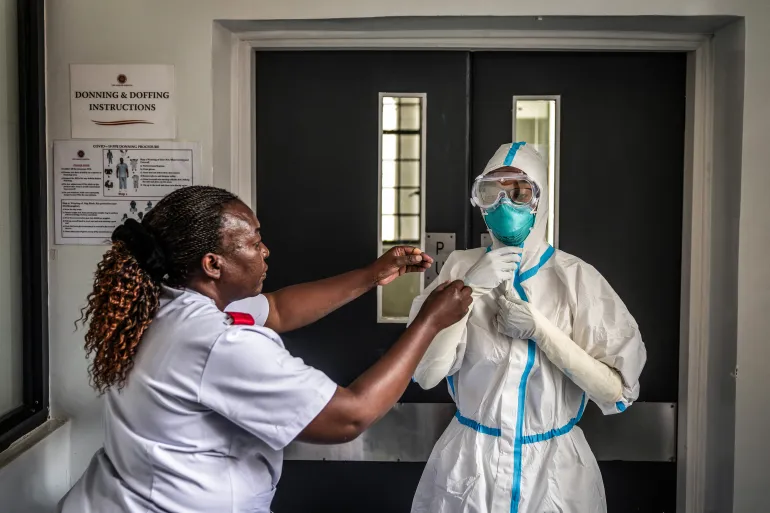
The infections among healthcare workers have heightened concerns about the risks faced by medical personnel during infectious disease outbreaks.
According to the Ministry of Health, the three healthcare workers two men aged 29 and 35 and a 32 year old woman had attended to the first patient on October 3 and 4. They had been under quarantine since October 9.
The male relative of the deceased patient had also been in quarantine since October 6.
Health authorities said the early identification of these cases demonstrates the importance of contact tracing, isolation and continued monitoring of individuals exposed to the virus.
Authorities Trace Nearly All Identified Contacts
Kenyan authorities have identified 130 contacts linked to the initial patient. As of October 17, 128 people, representing approximately 98.5 per cent of the identified contacts, had been traced and placed under quarantine.
Efforts were continuing to locate the remaining two contacts.
The government has maintained that the risk to the general public remains low because there is no evidence of wider community transmission. Officials have also strengthened screening measures and established an emergency hotline for people concerned about possible exposure.
The initial patient, a Kenyan man who had been living in the Democratic Republic of the Congo (DR Congo), travelled through Uganda before arriving in Nairobi on October 3. He died on October 5 after testing positive for Ebola.
His arrival raised questions about the effectiveness of health screening at regional borders and Nairobi’s international airport.
Ebola Outbreak in DR Congo Raises Regional Concerns
Kenya’s infections are linked to the ongoing Ebola outbreak in neighbouring DR Congo, where the Bundibugyo strain has caused thousands of infections and deaths.
The situation has renewed concerns about cross-border disease surveillance, particularly in East and Central Africa, where population movement and regional travel can complicate efforts to contain infectious diseases.
The Bundibugyo strain is particularly concerning because there is currently no approved vaccine or specific treatment for the disease. Patients receive supportive medical care aimed at managing symptoms and complications.
Ebola spreads primarily through direct contact with the blood or other bodily fluids of an infected person, or through contaminated materials. It does not spread through casual proximity alone.
The World Health Organization and Africa Centres for Disease Control and Prevention continue to support regional preparedness and response efforts.
Public Health Vigilance Remains Essential
Kenya’s latest cases underscore the importance of protecting healthcare workers, maintaining effective infection prevention measures and identifying exposed individuals quickly.
Although authorities say there is currently no evidence of community transmission, continued surveillance will be essential to determine whether additional infections emerge.
For African countries, the development also highlights the need for stronger cross-border coordination, adequately equipped health facilities and transparent public communication during infectious disease emergencies.
The situation remains under monitoring as Kenyan authorities continue contact tracing and treatment efforts.