
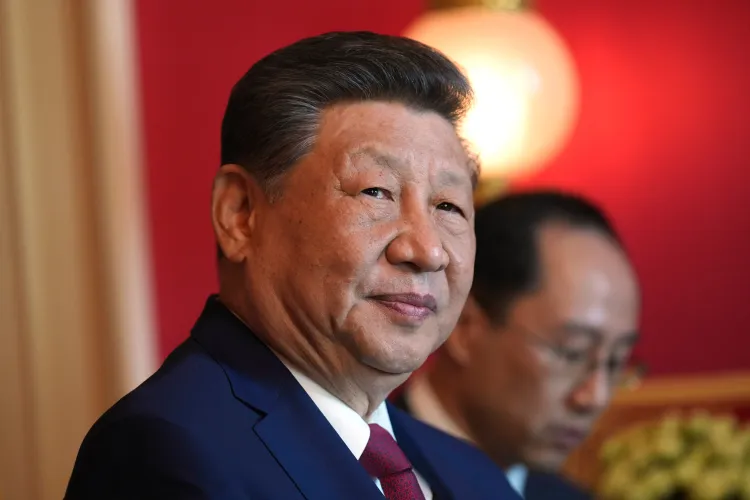
China is closely watching the November 3, 2026, United States midterm elections, with the outcome carrying significant implications for its diplomatic, economic and strategic relationship with Washington under President Donald Trump.
The elections will determine whether Trump’s Republican Party retains control of Congress or whether Democrats gain control of one or both chambers, potentially changing the political environment in which the administration conducts its foreign policy.
For Beijing, the strength of Trump’s Republican Party matters because his administration’s approach to China has combined trade negotiations, tariff measures and diplomatic engagement, creating opportunities for cooperation as well as uncertainty over the future of bilateral relations.
A strong Republican presence in Congress could give Trump greater political room to pursue his diplomatic engagement with Chinese President Xi Jinping and maintain the current framework of US-China strategic stability.
However, a weakened Republican majority could complicate that approach. Democratic lawmakers may intensify congressional scrutiny of Trump’s trade policies, diplomatic decisions and approach to Chinese technology and national security.
China could potentially benefit from increased political pressure on Trump if it creates room for further trade negotiations. Nevertheless, a change in congressional control would not automatically translate into a softer American position towards Beijing.
China policy has traditionally attracted bipartisan attention in Washington, particularly on issues involving advanced technology, semiconductor restrictions, military security and Taiwan.
Some Republican lawmakers have also advocated stronger measures against China, potentially creating additional pressure on the administration if Trump’s political influence weakens.
Trade remains one of the most important areas of the US-China relationship. Both countries have used tariffs, export restrictions and other economic measures to protect their interests and strengthen their negotiating positions.
The outcome of the midterms could influence congressional oversight of these policies, although a Democratic victory would not automatically reverse Trump’s trade measures or remove presidential authority over foreign policy.
Taiwan also remains a major point of disagreement. Washington’s security relationship with the self-governed island continues to concern Beijing, which considers Taiwan part of its territory.
Analysts have warned that congressional pressure for stronger support for Taiwan and tighter restrictions on Chinese technology could complicate Trump’s efforts to maintain stable relations with Xi.
On November 3, Chinese analysts believe a Republican loss in the House could put the existing framework of strategic stability between Washington and Beijing under pressure.
Nevertheless, Trump is expected to retain considerable influence over American foreign policy regardless of the midterm outcome.
The November 3 elections therefore represent more than a domestic political contest for control of Congress. Their consequences could shape US-China relations, international trade, technology competition and security calculations across the Indo-Pacific region.
China is closely watching the 2026 US midterm elections as Republican control of Congress could shape Trump’s trade policies, diplomatic engagement with Beijing and tensions over Taiwan.