


Reported by Musa Antiketu,| Journalist at Obaland magazine.
The German football establishment has joined a growing chorus of opposition to FIFA’s controversial proposal to bring private investors into a new commercial entity responsible for managing the business operations surrounding the World Cup and other major competitions.
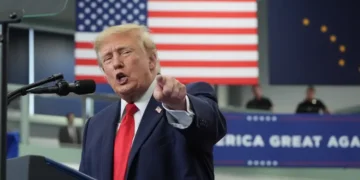
Hans-Joachim Watzke, vice-president of the German Football Association (DFB) and a senior figure within German professional football, has reportedly described the proposal as an “outright attack on football,” adding his voice to concerns over the increasing commercialisation of the sport and the potential implications for football governance.
The controversy follows FIFA’s announcement of plans to establish a new commercial subsidiary, the FIFA Forward Enterprise (FFE), which could be valued at approximately $20 billion and offer minority stakes of up to 20 per cent to external investors.
According to reports by Reuters and other major international media organisations, the proposed structure could enable FIFA to raise as much as $4.2 billion from outside investors. The organisation has presented the initiative as a way of unlocking additional resources for football development while retaining control over sporting decisions and the governance of competitions.
However, the plan has quickly become a source of friction between FIFA and several major stakeholders in world football.
UEFA, European football’s governing body, has already expressed strong opposition, warning that the proposal could cross a line that football’s governing institutions should not cross. The European body has questioned the transparency surrounding the proposed arrangement and raised concerns about who could ultimately benefit financially from the commercialisation of football’s most valuable competitions.
Watzke’s reported criticism further intensifies the debate, particularly because of his influential position within German football and his role in representing the interests of professional leagues at the DFB.
The dispute is not simply about the mechanics of raising capital. At its heart is a broader question about who owns the commercial future of football, who should benefit from the enormous revenues generated by global competitions, and how much influence private investors should have over the economic ecosystem surrounding the sport.
FIFA’s proposed commercial restructuring
FIFA’s plan centres on the creation of the FIFA Forward Enterprise, a new commercial structure intended to consolidate and manage major commercial and event-related activities.
These activities reportedly include areas such as broadcasting rights, sponsorship, ticketing and licensing connected to FIFA’s competitions.
Under the proposal, external investors would be allowed to acquire minority, non-controlling stakes in the enterprise. FIFA maintains that it would retain control over football governance, competitions and sporting decisions.
The governing body has argued that the initiative could generate substantial additional funding for the development of football around the world.
The proposal comes at a time when FIFA is seeking to expand its commercial reach and maximise the economic value of its global competitions. The 2026 World Cup, which expanded to 48 participating teams and was hosted across the United States, Canada and Mexico, has further highlighted the enormous financial potential of international football.
FIFA has indicated that the proposed commercial structure could generate more than $10 billion in additional development funding over the coming years, although the exact financial arrangements remain subject to approval and further details.
The organisation is also seeking support from its 211 member associations.
Reports indicate that member associations could be offered access to additional financial support under a new funding arrangement. The proposal, however, still requires the necessary approvals within FIFA’s governance structure and the support of member associations.
The initiative has reportedly involved major financial institutions and commercial advisers as FIFA explores ways to structure the proposed investment.
Reuters reported that FIFA has been working with JPMorgan on the fundraising process, while Greg Maffei, the former chief executive of Liberty Media, has reportedly been involved as a commercial adviser.
The reported involvement of private capital has become one of the most contentious aspects of the proposal.
Why the proposal is facing resistance
Critics argue that FIFA’s plan could fundamentally change the relationship between football’s governing institutions and the commercial interests surrounding the sport.
The concern is that allowing private investors to acquire stakes in an entity linked to the commercial operations of FIFA competitions could create a precedent for greater external influence over the sport.
Although FIFA insists that investors would not gain control over competitions or sporting decisions, opponents argue that financial investment can create influence even when formal governance rights remain limited.
UEFA has been particularly vocal in its opposition.
The European governing body has questioned the transparency of the proposed structure and argued that the sport’s governing institutions should not treat the soul and governance of football as commercial assets.
The response reflects a wider concern across football that the sport’s commercial expansion could eventually outpace its traditional governance structures.
The debate is also taking place against the backdrop of years of tension over the growing influence of money in football.
European football has experienced repeated disputes over the expansion of international competitions, domestic league calendars, broadcasting rights and proposals to create new elite competitions.
The failed European Super League project of 2021 remains a major reference point in discussions about football’s commercial future. That proposal, which sought to create a breakaway competition involving some of Europe’s biggest clubs, was met with intense opposition from supporters, governing bodies and political leaders.
The FIFA proposal is fundamentally different because it does not seek to establish a breakaway competition. Nevertheless, critics see a common thread in the growing role of commercial finance in determining the future direction of football.
For Watzke and other opponents, the question is therefore not merely whether FIFA can raise billions of dollars, but whether the process could weaken the principle that football should ultimately remain accountable to its associations, clubs, players and supporters.
Watzke’s position adds weight to German concerns
Watzke’s reported condemnation is significant because of his prominent position in German football.
The DFB is one of the world’s most influential national football associations, while German professional football has historically maintained a strong emphasis on the relationship between clubs, supporters and institutional governance.
Watzke, who is also closely associated with Borussia Dortmund and German professional football, has frequently been involved in major debates concerning the commercial and structural development of the game.
His opposition therefore adds another important voice to the growing resistance against FIFA’s proposal.
The criticism also reflects a broader European concern that the most valuable assets in football should not be treated purely as financial instruments.
For many traditional football stakeholders, the World Cup is not simply another entertainment product.
It is a global sporting institution that carries enormous cultural, social and political significance. The tournament brings together national teams from across continents and has become one of the most important sporting events in the world.
That unique status is partly why proposals involving its commercialisation attract such intense scrutiny.
The debate is particularly relevant to Africa, where FIFA’s development programmes have played a major role in supporting football infrastructure, youth development and national associations.
Many African football federations rely heavily on FIFA funding to support grassroots programmes and football development.
Consequently, any proposal that could unlock billions of dollars in additional resources could potentially have significant implications for African football.
If FIFA’s projected revenues are ultimately channelled into development programmes transparently and effectively, the additional resources could support infrastructure, women’s football, youth academies, coaching education and grassroots competitions across the continent.
However, concerns over transparency and governance remain important.
African football stakeholders have a legitimate interest in understanding how such a commercial structure would operate, who would benefit from it and what safeguards would exist to ensure that development funding reaches the intended recipients.
For a continent with enormous football potential but significant infrastructure and funding gaps, the financial consequences of FIFA’s commercial decisions cannot be ignored.
FIFA insists it will retain control
FIFA has defended the proposed initiative and sought to distinguish the sale of minority stakes from the sale of control over football competitions.
The organisation’s position is that external investors would participate in a commercial enterprise but would not control the governance of football or determine sporting outcomes.
FIFA argues that the structure could create a new financial mechanism capable of generating more resources for football development without surrendering its authority over competitions.
That argument is central to FIFA’s defence of the proposal.
The organisation has presented the initiative as an opportunity to expand investment in football globally and potentially deliver billions of dollars in additional development funding.
From FIFA’s perspective, the commercial value generated by the World Cup and other competitions can be used to strengthen the sport at every level.
However, critics remain unconvinced that financial investment can be entirely separated from influence.
Even minority investors may have legitimate expectations regarding financial returns, commercial strategy and long-term growth. The question, therefore, is whether the proposed structure can guarantee that the interests of investors will never conflict with the wider interests of football.
That is one of the central issues that FIFA will need to address as the proposal moves through the approval process.
A defining test for football governance
The dispute over FIFA’s proposed stake sale comes at a pivotal moment for global football.
The sport has never been more commercially powerful. The value of broadcasting rights continues to rise, global audiences are expanding and major tournaments attract enormous sponsorship and advertising revenues.
At the same time, football faces questions about fixture congestion, player welfare, competitive balance and the growing financial gap between the richest clubs and the rest of the football ecosystem.
The challenge for football’s governing bodies is to balance commercial ambition with institutional responsibility.
FIFA’s proposal could potentially unlock new resources that benefit football development worldwide. But the concerns raised by UEFA, Watzke and other stakeholders demonstrate that financial innovation alone will not be enough.
The organisation will need to provide greater clarity about the ownership structure, investor rights, financial projections, governance safeguards and the precise mechanisms through which any additional revenue will be distributed.
For African football, these questions are particularly important.
The continent has some of the world’s most passionate supporters and produces elite football talent that contributes significantly to the global game. Yet many African football systems continue to face challenges involving infrastructure, youth development, administration and sustainable financing.
Any new FIFA commercial model that promises billions of dollars in additional funding could therefore represent a major opportunity.
But that opportunity must be matched by transparency, accountability and equitable distribution.
The concerns expressed by Watzke and other critics should consequently be viewed within the larger global debate about the future ownership and governance of football.
FIFA may argue that it is not selling football itself, but rather creating a commercial vehicle to generate greater value from its existing assets.
Opponents, however, fear that such a distinction could become increasingly difficult to maintain as private capital assumes a larger role in the sport.
The coming months are likely to determine whether FIFA can convince its member associations and wider football stakeholders that the proposal represents a responsible evolution of the game’s commercial model rather than a fundamental shift in who benefits from football’s most valuable competitions.
For now, the controversy has exposed a clear divide.
On one side are those who believe football must embrace innovative financing to expand the game’s reach and development potential. On the other are those who fear that the pursuit of commercial growth could gradually erode the principles and public character that have made football a global cultural institution.
Watzke’s reported description of the proposal as an “outright attack on football” captures the intensity of that disagreement.
Ultimately, the debate will not be settled by the size of the investment or the valuation placed on FIFA’s proposed commercial entity. It will be determined by whether football’s stakeholders can be assured that the sport’s economic future remains accountable to the people and institutions that make the game possible.
As FIFA seeks approval for its ambitious commercial restructuring, the question confronting world football is increasingly clear: How can the game attract the capital needed for global development without allowing commercial interests to overshadow football’s governance, identity and sporting integrity?
That is the question FIFA, its member associations, UEFA, national federations and football stakeholders will now have to DFB Vice-President, FIFA Forward Enterprise, World Football Governance
FB Vice-President Hans-Joachim Watzke reportedly condemns FIFA’s proposed sale of minority stakes in a new $20 billion commercial entity, amid growing concerns over football governance, transparency and private investment.