


Nigeria and Canada are working to deepen economic cooperation by focusing on data quality, policy predictability, and investor confidence, with Canadian officials saying these factors will determine how much capital flows into Africa’s largest economy.
Speaking at the Lagos Business School Fireside Chat in Lagos on Thursday, Canada’s Deputy High Commissioner to Nigeria, Carlos Rojas-Arbulú, said Canadian companies are interested in Nigeria, particularly in mining and oil and gas, but need clearer information and a more stable investment framework before making commitments
Rojas-Arbulú told the audience that Nigeria’s natural resource base is not in question. The challenge, he said, is turning potential into investment.
“And I always come back to the data,” he said. “Because you can say, and we say that in Canada as well, and I’ve seen it across the world, we have all of these resources, all of these proven resources and all of these projects. But when it comes to investing, it’s all about the data
He explained that Canadian firms compare Nigeria with other destinations when deciding where to deploy capital. Ghana, Mexico, Guatemala, and South Africa were cited as alternatives on investors’ radars.
“Canadian companies are looking at Ghana, they’re looking at Mexico, they’re looking at Guatemala, South Africa and beyond. And they’re looking for environments where there’s predictability, there’s stability, there’s an investment framework that allows for clarity, legislation in place, and of course, the data,” the diplomat said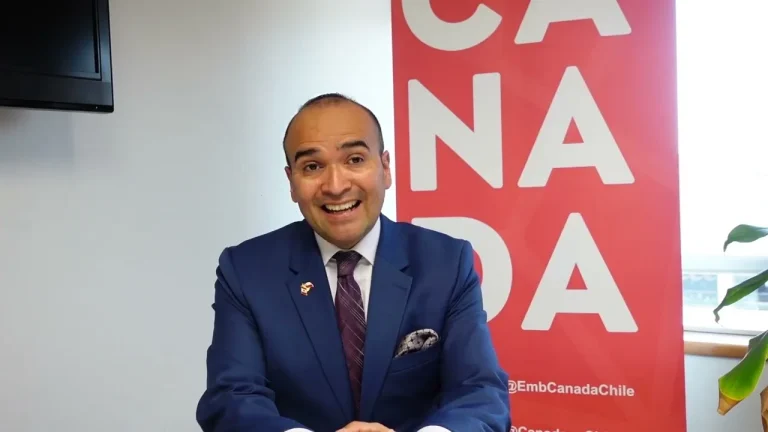
Nigeria has mineral deposits comparable to several African countries that have attracted significant Canadian mining investment. However, Rojas-Arbulú noted that gaps in data and uncertainty around policy have limited inflows to Nigeria.
Canada has increased its engagement with Nigeria in recent months. The High Commission hosted one of its largest business events in Nigeria last week, with about 220 participants and 31 Canadian companies in attendance. Sectors represented included mining, renewable energy, and agriculture.
“That gives you a sense of how important this relationship is from Canada,” Rojas-Arbulú said. “But the real measure of success is what happens next. Whether conversations become contracts, whether introductions become investments, and relationships become lasting partnerships.”
The event, themed ‘Leading Africa’s Future: Business, Purpose and the Canada-Nigeria Partnership’, brought together business leaders, academics, and policymakers to discuss how to convert interest into deals.
Beyond policy documents, the Deputy High Commissioner emphasized the role of trust and ethical leadership in building trade.
“Trade does not happen only through policy. It happens through trust, through relationships, and through people deciding to take the next step together,” he said.
He also pointed to a perception gap. Many Canadians, he argued, know Nigeria primarily through international media coverage that often focuses on insecurity. That narrow lens, he said, overlooks Nigeria’s entrepreneurial activity and the presence of more than 100 international companies already operating and employing locally.
“Many Canadians get their information on Nigeria from CNN. How do we work towards building a narrative where we tell those stories?” he asked. “People don’t deny that there are stories about insecurity, but they can see a story of success, a story with 100 plus international companies investing in this country, employing, building, entrepreneurship and beyond. I think that is part of the gap to close.”
He urged Nigerian stakeholders to do more to showcase investment opportunities and success stories to Canadian audiences, and for Canadians to invest time in seeing those opportunities firsthand
Rojas-Arbulú said Canada wants to broaden the relationship beyond traditional trade. Key areas include education, innovation, entrepreneurship, and responsible investment.
“We can deepen our educational partnerships, strengthen responsible trade and investment, connect our universities and entrepreneurs, and support women and young entrepreneurs whose ideas will shape the next generation,” he said.
He reaffirmed Canada’s intent to be a long-term partner. “Canada wants to be part of this story. We want to learn from Nigeria, innovate with Nigeria, invest with Nigeria and, above all, build with Nigeria,” he added
Also speaking at the event, Professor of Economics at Lagos Business School, Bongo Adi, said global economic realignment is creating room for stronger Canada-Nigeria ties.
“We no longer have a unipolar world, neither do we have a bipolar world, where America and some other countries determine the futures of other countries,” Adi said.
He noted that the rise of middle powers such as Canada, along with shifts in global value chains and the changing role of China, is reshaping how countries partner.
“We are seeing the disintegration of the old traditional economic relationship built over the colonial era. We are seeing the rise of China and the reshaping of global value chains,” he explained.
According to Adi, Canada is positioning itself for this new environment. “We see Canada taking the charge… Canada is willing and ready to forge its own future, forging new relationships with the rest of the world. That’s one of the things we are seeing today,” he said
Taken together, the messages from both speakers point to a clear set of priorities for Nigeria if it wants to convert Canadian interest into investment
The Canada-Nigeria relationship already has momentum, with dozens of companies engaging and multiple sectors under discussion. The next phase will be measured in contracts signed, projects financed, and partnerships sustained.
As Rojas-Arbulú put it, the importance of the relationship is evident in turnout at business forums. The test now is follow-through. With better data, clearer rules, and stronger narratives, both sides believe Nigeria can capture a larger share of Canadian investment at a time when global economic power is becoming more distributed