

A young Nigerian artist is going viral after creating a strikingly detailed portrait of Grammy-winning singer Burna Boy using only keyboard symbols. The artwork, shared on TikTok by @holy_the_artist_backup, has sparked admiration online and renewed interest in the digital art form known as ASCII art.
The video begins with the artist’s face on camera before cutting to a close-up of his phone keyboard. As he types, different characters and symbols appear on the screen, slowly building an image.
It takes time, but the result is unmistakable: a clean, well-proportioned portrait of Burna Boy rendered entirely with text characters. At the bottom of the piece, he also types the singer’s name using the same symbol-based technique.
The final reveal drew immediate reactions. Viewers praised the precision of the shading, the balance of the facial features, and the patience required to assemble the portrait from characters like slashes, brackets, dots, and numbers.
@holy_the_artist_backup on TikTok. While he has not shared extensive background details, his handle suggests he is part of a growing community of Nigerian digital artists who experiment with unconventional tools and formats.
His Burna Boy piece is not his first foray into portraiture. The viral moment builds on a broader trend of Nigerian creatives using accessible technology to produce high-impact art without expensive software or equipment.
ASCII art uses characters from the standard keyboard set to create images. The technique dates back to the early days of computing, when limited graphics forced designers to work with text. Today, it has been revived by digital creators who treat it as both a challenge and a statement.
The appeal lies in constraint. Instead of brushes or pixels, the artist must manipulate spacing, density, and character choice to suggest light, shadow, and contour. A portrait of a public figure like Burna Boy, with his distinctive features and expression, becomes a test of skill because the audience already knows exactly what he looks like
The TikTok post quickly filled with comments from Nigerians asking the same question: how did he find out he could do this?
“Wetin be my own talent self 😂 God I really need my talent now oo,” wrote one user. Another said, “It seems like my talent is to watch others’ talents… like how do u think of this
Some commenters connected it to tech literacy. “Na I understand how powerful 0 and 1 are to computer understanding human input. Big ups bro,” one person noted. Another added, “Been coding this lately,” referencing the algorithmic thinking often behind ASCII work.
A few offered practical advice for monetizing the skill: “Screenshot the Image. Put em for software. Increase the tone and bold em well. Print em out as picture and frame em. E go sharp
The Burna Boy portrait is the latest in a string of viral art moments from Nigerian creators.
Davido and asked fans to help it reach the singer. Another young artist gained attention for pencil drawings of Chris Brown and Drake, with viewers asking about pricing and time spent on each piece.
These stories reflect a larger pattern: Nigerian youth are using social media to bypass traditional gatekeepers, showcase skill directly to audiences, and build communities around art, music, and culture
Choosing Burna Boy as a subject was strategic. The “African Giant” is one of Nigeria’s most globally recognized musicians, with a distinctive image that resonates at home and abroad. Portraits of him tend to travel quickly online because fans immediately identify the subject and share out of pride.
The ASCII portrait taps into that same energy, but with a twist. It is not a photograph or a painted canvas. It is code made visible, fandom expressed through technical creativity.
The viral attention could open doors. Brands, fans, and fellow artists often reach out after moments like this, offering commissions, collaborations, or platforms to exhibit work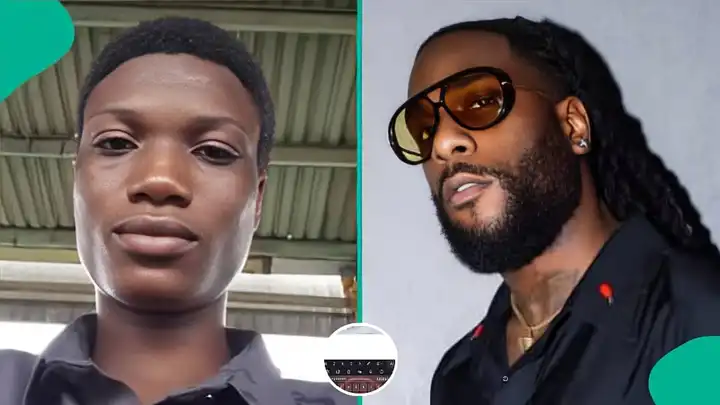
If he chooses to develop the craft further, @holy_the_artist_backup could explore larger ASCII compositions, animated text portraits, or tutorials teaching others how to start. The demand is clearly there, judging by the comment section.
As one commenter put it: “Bro you are going through a lot for you to discover this kind talent.” Whether that is true or not, the result speaks for itself.
In less than a minute of video, a young Nigerian turned ordinary keyboard symbols into a portrait that made thousands of people stop scrolling. That is the power of digital creativity in 2026.