

Breaking news/Trending/Feature

  • Tree falls in Kwara, 2 dead, 10 injured

    Tree falls in Kwara, 2 dead, 10 injured

    0 shares
    Share 0 Tweet 0
  • Nigerian man that was beaten to death on the street in Italy

    0 shares
    Share 0 Tweet 0
  • Breaking News : STEWART EFE’S well deserved appointment as Edo State image Maker

    0 shares
    Share 0 Tweet 0
  • Biography of Edo Funk Super star- Esther .O. Edokpayi

    0 shares
    Share 0 Tweet 0
  • Stephanie O. Linus appointed as National OPS-WASH Ambassador by the Honourable Minister of Water Resources

    0 shares
    Share 0 Tweet 0
  • Sibling grabbed for attacking sister in Lagos

    0 shares
    Share 0 Tweet 0
  • The Edo State Government has debunked claims by the Indigenous People of Biafra (IPOB) alleging that Governor Monday Okpebholo approved N6 billion as compensation to so-called “Fulani terrorists” following the recent Uromi killings. In a strongly-worded statement on Thursday, the Chief Press Secretary to the Governor, Fred Itua, described the accusation as a reckless falsehood designed to incite ethnic conflict and destabilise the peace of Edo State. The controversy stems from the events of 28 March, when sixteen hunters from Kano State were killed in the Udune Efandion community of Uromi. In the aftermath, Governor Okpebholo visited Kano to sympathise with the families of the victims and appeal for calm, while a delegation from Kano later travelled to Edo to engage in peace discussions. IPOB, in a statement released on 21 April, alleged that the Governor had secretly approved a N6 billion compensation package to appease the bereaved families a claim which the Edo State Government swiftly dismissed as baseless and inflammatory. “There is no truth whatsoever in the claim that Governor Monday Okpebholo approved or paid N6 billion to any group,” Itua said. “This is a fictitious and malicious lie concocted by IPOB to sow seeds of discord and destabilise the harmony we have nurtured in Edo State.” The government warned that IPOB’s repeated attempts to manipulate public sentiment and incite ethnic hostility under the cover of activism would not succeed in Edo State. “It has become a known tactic of this proscribed group to exploit tragic situations to spread hate and misinformation,” the statement added. “Their agenda of violence and ethnic disintegration has no place here.” Emphasising its commitment to unity, security and justice for all residents, the Edo State Government reaffirmed its stance against any form of ethnic or religious discrimination. The statement also urged security agencies to investigate the source of the inciting publication and prosecute those behind it, stressing that public order and peace must not be jeopardised by dangerous propaganda. “We remain resolute in our commitment to justice, peace and the protection of all Edo people, regardless of background,” the government declared. “We will continue to uphold the values of unity, tolerance and truth in the face of reckless attempts to destabilise our state.”

    0 shares
    Share 0 Tweet 0
  • INTERNAL SECURITY: EDO POLICE LAUNCH HOUSE-TO-HOUSE ARREST OF CULTISTS, RAID BLACKSPOTS

    0 shares
    Share 0 Tweet 0

Breaking news News

  • Tree falls in Kwara, 2 dead, 10 injured

    Tree falls in Kwara, 2 dead, 10 injured

    0 shares
    Share 0 Tweet 0
  • Nigerian man that was beaten to death on the street in Italy

    0 shares
    Share 0 Tweet 0
  • Breaking News : STEWART EFE’S well deserved appointment as Edo State image Maker

    0 shares
    Share 0 Tweet 0
  • Biography of Edo Funk Super star- Esther .O. Edokpayi

    0 shares
    Share 0 Tweet 0
  • Stephanie O. Linus appointed as National OPS-WASH Ambassador by the Honourable Minister of Water Resources

    0 shares
    Share 0 Tweet 0
https://obalandmagazine.com/wp-content/uploads/2025/10/Edos-Fight-Against-Cult-Violence.mp4

Popular News

  • Tree falls in Kwara, 2 dead, 10 injured

    Tree falls in Kwara, 2 dead, 10 injured

    0 shares
    Share 0 Tweet 0
  • Nigerian man that was beaten to death on the street in Italy

    0 shares
    Share 0 Tweet 0
  • Breaking News : STEWART EFE’S well deserved appointment as Edo State image Maker

    0 shares
    Share 0 Tweet 0
  • Biography of Edo Funk Super star- Esther .O. Edokpayi

    0 shares
    Share 0 Tweet 0
  • Stephanie O. Linus appointed as National OPS-WASH Ambassador by the Honourable Minister of Water Resources

    0 shares
    Share 0 Tweet 0

Subscribe to Obaland Magazine

Retail
Tuesday, October 27, 2026
Login/Register
Advertise
  • Login
  • Home
  • News
  • About Us
  • Entertainment
  • Music
  • Magazine
  • Contact us
No Result
View All Result
Obaland Magazine
No Result
View All Result
Home News

Nigeria Electricity Wahala: Why Privatisation Never Still Give Nigerians Steady Light!

Musa Antiketu by Musa Antiketu
September 23, 2026
in News
0
Tweet
Share
Share

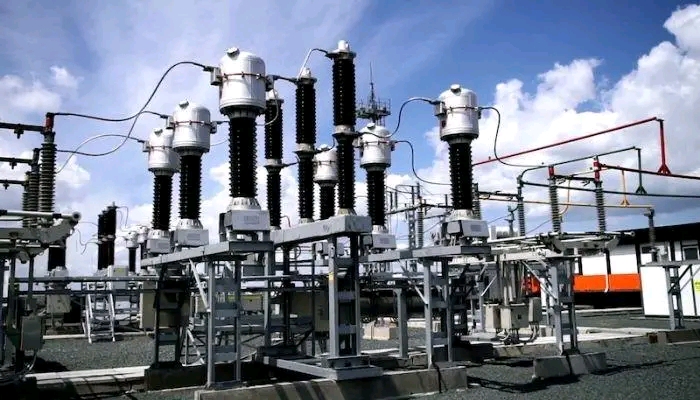
Nigeria don spend more dan one decade since government privatise parts of di electricity sector, but steady and reliable light still remain serious problem for millions of Nigerians. Di 2013 privatisation hand over generation and distribution assets to private investors with di hope say beta management, investment and competition go improve electricity supply. But today, many homes and businesses still dey depend heavily on generators, solar systems and oda alternative sources of power.

Di problem no be say Nigeria never try reform di electricity sector. Government don bring different policies, change regulation, restructure institutions and provide financial intervention, but challenges around generation, gas supply, transmission, distribution, metering, revenue collection and debt still dey affect di market.

YOU MAY ALSO LIKE

Oluremi Tinubu Hails Nigeria’s Health Team as Government Seeks Partnership to Tackle Child Malnutrition

Ballon d’Or 2026: Kane, Putellas Win Top Honours as Yamal, PSG and Barcelona Claim Awards.

One major wahala na di financial condition of di distribution companies, wey dem dey call DisCos. Di 11 DisCos togeda get about ₦1.3 trillion outstanding liabilities as of September 2025. Di heavy debt burden don put additional pressure on companies wey suppose maintain distribution networks and collect enough money to keep di electricity market running.

Revenue collection emself na anoda serious challenge. According to figures from Nigerian Electricity Regulatory Commission, NERC, DisCos receive electricity worth about ₦336.43 billion for January 2026, bill customers about ₦268.20 billion, but collect only ₦204.74 billion. Di average revenue recovery efficiency fall to 69.16 per cent, compared with 72.31 per cent for 2025.

Technical losses, electricity theft, old equipment, weak transformers, overloaded networks and poor metering too dey make di mata harder. Nigeria power sector reform say industry losses dey average around 34 to 35 per cent, while only about 70 per cent of billed revenue dey recovered. Millions of customers still dey face estimated billing, even as government dey push different metering programmes.

Transmission and generation too remain serious parts of di problem. Nigeria fit get installed generation capacity above 13,000 megawatts, but actual electricity wey reach consumers dey remain far below dat level. TheCable report say actual delivered power don rarely sustain 5,000 megawatts, showing di wide difference between what di system fit produce on paper and wetin Nigerians actually receive.

Government and regulators, however, say reforms still dey move forward. NERC recently issue new order wey require DisCos to use earned non-administrative operating expenditure for network upgrades and service improvement. Di commission say di measure na part of effort to improve reliability and make available revenue go into critical electricity infrastructure.

Di Federal Government too dey pursue anoda direction through decentralisation. Under di Electricity Act 2023, states don begin establish dia own electricity regulatory structures. By August 2026, 17 states had established state electricity regulatory commissions, according to di Bureau of Public Enterprises. Government too say about 668,000 meters don already dey installed unda di World Bank-supported Distribution Sector Recovery Programme.

Anoda recent development na di launch of a $300 million Distributed Renewable Energy Fund, wey Reuters report say government launch on September 21, 2026. Di programme dey target off-grid electricity, especially areas wey national grid supply never adequately reach.

Still, di central question remain: why steady electricity never become normal afta privatisation?

Di answer no dey inside one problem alone. Di electricity value chain involve gas suppliers, generating companies, transmission operators, distribution companies, regulators, government agencies and consumers. If one major part of di chain no function properly, e fit affect di whole system.

Private ownership alone no solve infrastructure shortages, unpaid debts, weak revenue collection or transmission limitations. Different reports and industry analyses don point to di need for long-term investment, stronger regulation, better coordination between federal and state authorities, improved metering, reliable gas supply and stronger financial discipline across di market.

For ordinary Nigerians, di effect of di electricity crisis dey go beyond darkness for house. Businesses wey depend on generators must spend more money on fuel and maintenance. Small manufacturers, traders, hospitals, schools and oda organisations also face higher operating costs when public electricity supply no reliable.

Di challenge remain both economic and developmental. Nigeria need electricity wey households fit depend on and businesses fit plan around. As government continue with privatisation reforms, state electricity markets, debt restructuring, metering programmes and renewable-energy investment, di real test go be weda all dis measures fit translate to more dependable electricity for ordinary pipo.

For now, di evidence show say Nigeria electricity sector don enta anoda stage of reform, but di long-running problem of unreliable supply never finish.

Nigeria electricity crisis still dey affect homes and businesses despite privatisation and new reforms. See di major challenges around DisCos, debt, metering, generation and transmission.

Tweet
Share
Share
Tags: DisCos Nigeriaelectricity privatisationNigeria electricity crisisNigeria power sectorpower supply Nigeria

Related Posts

Oluremi Tinubu Hails Nigeria’s Health Team as Government Seeks Partnership to Tackle Child Malnutrition
News

Oluremi Tinubu Hails Nigeria’s Health Team as Government Seeks Partnership to Tackle Child Malnutrition

October 27, 2026
Ballon d’Or 2026: Kane, Putellas Win Top Honours as Yamal, PSG and Barcelona Claim Awards.
News

Ballon d’Or 2026: Kane, Putellas Win Top Honours as Yamal, PSG and Barcelona Claim Awards.

October 27, 2026
Trump Fires Back at Obama Over ‘Cheesecake Factory’ White House Jibe
News

Trump Fires Back at Obama Over ‘Cheesecake Factory’ White House Jibe

October 27, 2026
APC, ADC Trade Accusations Over Unpaid Salaries, ₦1bn SUV Gifts
News

APC, ADC Trade Accusations Over Unpaid Salaries, ₦1bn SUV Gifts

October 27, 2026
Ebola: Nigeria Not Yet Out of the Woods as NCDC Intensifies Surveillance, Contact Tracing
News

Ebola: Nigeria Not Yet Out of the Woods as NCDC Intensifies Surveillance, Contact Tracing

October 27, 2026
25 States Endorse State Police Bill as Rights Abuse, Political Misuse Concerns Persist
News

25 States Endorse State Police Bill as Rights Abuse, Political Misuse Concerns Persist

October 27, 2026

Search

No Result
View All Result

Recent Posts

  • Oluremi Tinubu Hails Nigeria’s Health Team as Government Seeks Partnership to Tackle Child Malnutrition October 27, 2026
  • Ballon d’Or 2026: Kane, Putellas Win Top Honours as Yamal, PSG and Barcelona Claim Awards. October 27, 2026
  • Trump Fires Back at Obama Over ‘Cheesecake Factory’ White House Jibe October 27, 2026
  • APC, ADC Trade Accusations Over Unpaid Salaries, ₦1bn SUV Gifts October 27, 2026
  • Ebola: Nigeria Not Yet Out of the Woods as NCDC Intensifies Surveillance, Contact Tracing October 27, 2026
  • 25 States Endorse State Police Bill as Rights Abuse, Political Misuse Concerns Persist October 27, 2026
  • Ballon d’Or 2026: How Harry Kane Won Football’s Top Individual Prize Without a Champions League Title. October 27, 2026
  • Tinubu Says Reforms Are Rewriting Nigeria’s Economic Story at 32nd Nigerian Economic Summit October 26, 2026
  • Tinubu Congratulates Lula on Re-election, Seeks Stronger Nigeria-Brazil Partnership October 26, 2026
  • Tinubu Vows to Curb Doctors’ Japa, Calls for Better Conditions to Bring Nigerian Medics Home. October 26, 2026

Categories

  • Community (7)
  • CRIME NEWS (1)
  • culture (8)
  • Education (6)
  • Electrical (17)
  • Entertainment (496)
  • fashion (13)
  • Feature (33)
  • Gist (25)
  • Gossip (36)
  • Government (381)
  • Headlines (1)
  • health (83)
  • history (13)
  • International (30)
  • INTERVIEW (9)
  • music (47)
  • Nature (5)
  • News (5,420)
  • news (2,007)
  • Non profit (19)
  • PHOTO (4)
  • Political (305)
  • press release (32)
  • Property (14)
  • review (21)
  • Science (9)
  • Sport (48)
  • Sports (322)
  • TECHNOLOGY (14)
  • Video (4)
  • world (105)

About

About Obaland Magazine

Obaland Magazine is Nigeria’s trusted source for entertainment, political, and social news. We connect readers with verified stories that matter.

Contact Us

obaland podcast radio

Obaland Podcast

Listen to engaging talk shows and interviews from Obaland Multichoice Media House.

🎧 Listen Now

Support us Today

Support Us

Your donations help us maintain free and independent journalism.

Donate Now
No Result
View All Result
  • Login
  • Home
  • News
  • About Us
  • Entertainment
  • Music
  • Magazine
  • Contact us

All right reserved© 2023 Obaland magazine

1
WhatsApp
Hello 👋
Can we help you?
Open chat